Online Reporter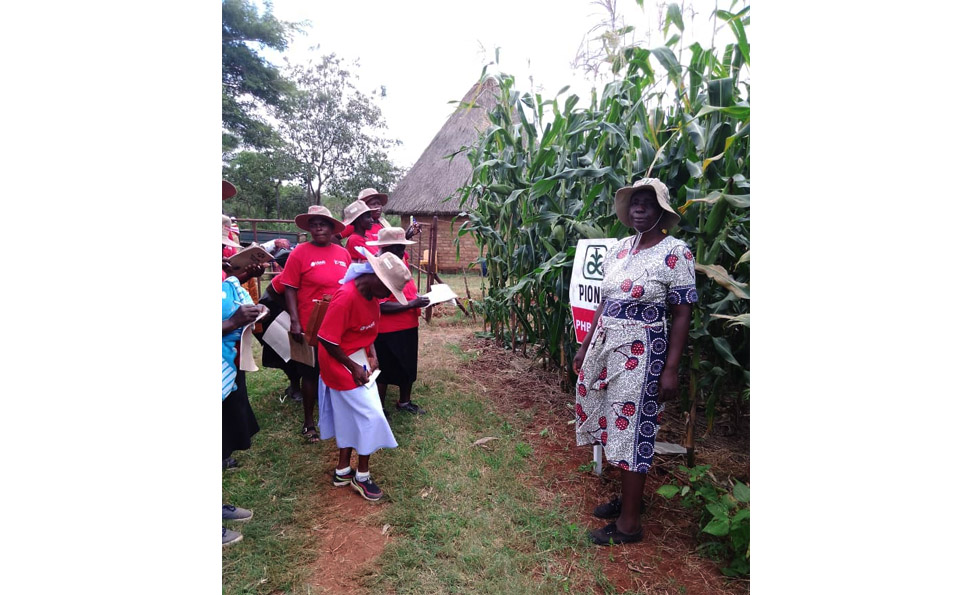
Samuel Kadungure
News Editor
IN the sun-kissed communal fields of Chiendambuya, where the green hills whisper tales of resilience and determination – a shining star has been extinguished – leaving behind a trail of inspiration and legacy that will continue to nourish the soil and souls of countless communities.
The demise of Ms Thandiwe Jordan Mukonyora last week, a trailblazing Pfumvudza heroine from Ward Five in Makoni, has left an enduring imprint on the nation’s agricultural fabric – weaving a narrative of hope, perseverance, and triumph.
Like a phoenix rising from the ashes, her remarkable journey in Pfumvudza agronomy, starting in 2019, has been a beacon of inspiration, illuminating the path for small-scale farmers across Manicaland.
Her unwavering dedication to the cause had etched an indelible legacy upon the hearts and fields of countless communities, transforming her homestead into a vibrant learning centre, heralding the transformative power of Pfumvudza.
Under the wise guidance of her Agricultural Business Advisory Officer, Mrs Lynette Samudzi, she soared to national prominence – with her name splashed in newspapers and television screens – after becoming synonymous with excellence and innovation in Pfumvudza farming.
Ms Mukonyora’s illustrious career was adorned with numerous accolades, including national field days, where dignitaries and policymakers converged to witness the majesty of Pfumvudza farming.
The 2019/2020 season will forever be etched in the annals of history, as she hosted a landmark national field day – graced by the Lands and Agriculture Deputy Minister, where the symbolic handover of a bicycle to extension staff served as a poignant reminder of her unwavering commitment to rural empowerment.
Her star continued to rise, welcoming Lands, Agriculture, Fisheries, Water and Rural Development Minister, Dr Anxious Masuka to her homestead in the 2020/21 and 2021/22 seasons, where he bore witness to the fruits of her meticulous labour and celebrated her outstanding Pfumvudza mastery.
A true daughter of the soil, Ms Mukonyora’s intrinsic motivation to prevail over climate change limitations and surpass set records propelled her to national recognition, earning herself the prestigious second-best Pfumvudza farmer in the country.
Her legacy extends far beyond her own achievements, as she inspired a generation of small-scale farmers to adopt Pfumvudza techniques, enhancing food security and livelihoods in rural communities.
Last season, this reporter was part of a delegation led by Lands and Agriculture Permanent Secretary, Professor Obert Jiri, that toured, and witnessed wonder first hand her exploits in Chiendambuya.
A quiet revolution was taking place as she led a growing number of farmers turn to regenerative agriculture techniques and organic fertilisers to boost yields, improve soil health, and enhance biodiversity.
She took Pfumvudza a gear up, with a combination of infiltration pits, tied ridges, and mulch in her plots, addressing key challenges of soil erosion, water scarcity, and declining soil fertility.
Despite the loss of her husband, Ms Mukonyora persevered, tending to eight plots of maize, paprika, sorghum, and pearl millet with unwavering dedication.
Her secret?
A combination of organic fertilisers, conservation tillage, and meticulous crop management. The results were nothing short of remarkable – healthier crops, improved soil fertility, and increased yields that have enabled her to send her daughter to university.
A stroll through her plots – with Professor Jiri, revealed stark contrast between organic and synthetic fertilisers.
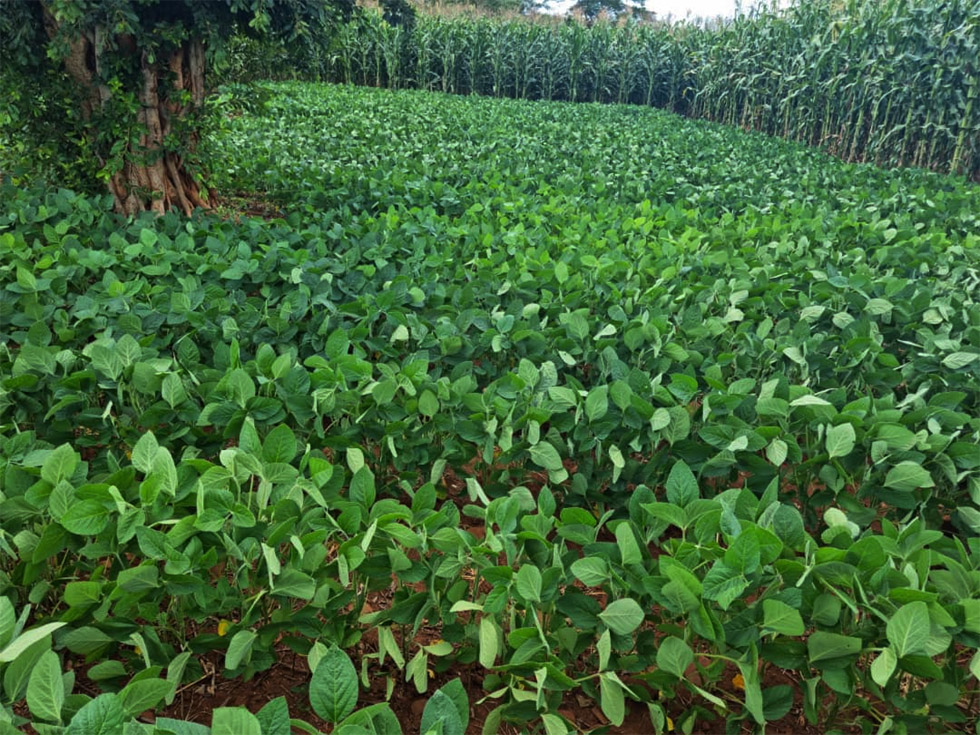
Side-by-side plots, planted on the same date, using the same seed variety and crop management practices, revealed a tale of the two fertilisers.
Her organic plot burst with vibrancy – the crops robust and resilient – while the synthetic plot struggles to keep pace, the crops yellowing, weakened and stunted. The evidence is clear – organic fertilisers, carefully crafted from natural materials, hold the key to unlocking the full potential of her fertile soils.
As rural agriculture continues to evolve, experiences of pioneering farmers like Ms Mukonyora offered a beacon of hope for sustainable future – but sadly fate has decided otherwise.
“I have, not only maintained our plot’s productivity, but have also continued to invest in my children’s education. Regenerative agriculture has been a game-changer for me. This approach has also helped me to cope with the challenges of climate change, which is essential for ensuring the long-term sustainability of our plot.
“As you can see, the plots with organic fertiliser have robust and healthier crop growth, with greener leaves, stronger stalks and huge cobs. In contrast, the plot with synthetic fertiliser appears to be struggling, with yellowing leaves, weaker stalks and smaller cobs. The results speak for themselves, and I am convinced that organic farming is the way forward for sustainable agriculture,” said Mrs Mukonyora in an interview last year, adding that Pfumvudza, which uses conservation agriculture principles, reduces nitrogen loss in the soil, promotes water and soil conservation and improves efficiency of applied nutrients.
“The digging of the planting basins, mulching and clearing of weeds are part of the process, and every part of the process is as important as the next one.
“If you cut corners on just one of them, the possibility of failure is high as the Pfumvudza concept works well when all steps are followed religiously,” she added.
Mrs Samudza said every field has its own heroes and heroines, and in the realm of Pfumvudza adaptation and commercialisation, Ms Mukonyora stood tall as a shining example. She embodied passion, resilience, and innovation, inspiring others with her remarkable journey in Pfumvudza agronomy.
Her legacy extends beyond her own achievements, as she has inspired a generation of small-scale farmers to adopt Pfumvudza techniques.
Her story serves as a powerful reminder of the impact one person can have on their community, and her influence will continue to be felt for years to come.
Her contributions to small-scale rural agricultural transformation will be deeply missed, but her legacy will live on, inspiring future generations of farmers and agricultural innovators,” she said, describing her as a passionate advocate for sustainable farming practices, promoting conservation agriculture and climate-smart techniques to improve food security and livelihoods in her community.
“Her work included advocating for conservation agriculture methods, enhancing soil health and resilience, and improving local food security. Her death leaves a significant gap in Zimbabwe’s sustainable farming and community development, resulting in the loss of expertise, leadership, and inspiration, with uncertainty around the continuation of her Pfumvudza advocacy,” said Mrs Samudzi.
Makoni District agronomist, Mr Knowledge Mahuni said despite her demise, Ms Mukonyora’s legacy will continue to illuminate the path of Pfumvudza practitioners across Manicaland.
“Her community reaped the rewards of her wisdom – improved crop yields, enhanced food security, strengthened livelihoods, and renewed hope. Families experienced better nutrition and economic stability, made possible by her devotion to community upliftment. Her selflessness uplifted spirits and ignited a culture of resilience and innovation.
“We honour Mrs Mukonyora for a life lived with purpose, dedication, and boundless generosity. Though her passing leaves a void impossible to fill, her legacy will continue to illuminate the path of Pfumvudza practitioners across Zimbabwe and beyond. Though she is no longer with us, her influence endures through – farmers she trained, communities she transformed and fertile fields she nurtured with unwavering passion. May her memory forever stand as a guiding light – galvanizing future generations to uphold her noble work and cultivate a food-secure, resilient Zimbabwe. Truly, a radiant beacon of Pfumvudza agronomy has fallen – we weep for an irreplaceable matriarch of the soil, tiri kuchema. Food security every day, everywhere.”