


 admin
admin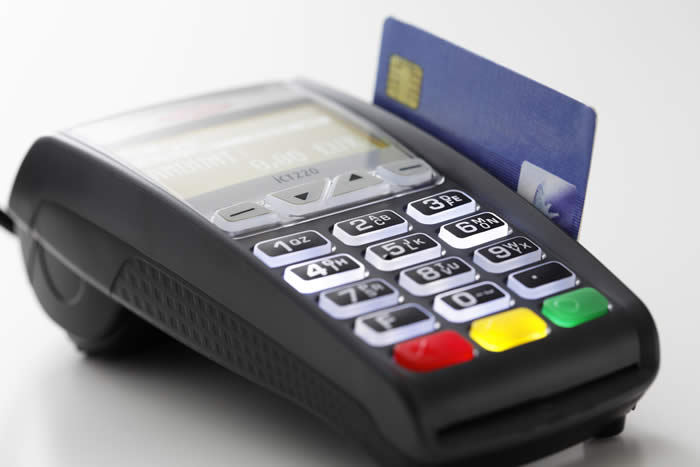
Amanda Ncube, Sunday News Reporter
THE recent cash shortage in the country has brought with it a lot of initiatives aimed at countering the liquidity crunch with the use of plastic money being the economic talk.
Point of Sale (PoS) machines have therefore been installed in almost every business institution for the ease of doing business while those that are yet to catch up with the development are losing out big business.
Churches have also not be left out, with some now using swipe machines. There are mixed feelings however, on the issue with people saying it is a good development whilst some condemn it saying churches are not supposed to act like they are looking for profits.
Some of the institutions such as retail sector, Zimbabwe Revenue Authority (Zimra) and hotels have already implemented the system and it has made a huge improvement considering the cash shortages.
Conventional churches have been paying their tithe – a tenth of someone’s earnings which goes to support the church and the community using cash but with the advent of plastic money they have gone with the tide also.
Previously, it wouldn’t be a church service without the sight of a collection plate or bowl being passed down the passageway as the congregation sings a hymn. But such methodology of raising the funds may be nearing an end as religious institutions wake up to reality of a new era.
Advancement in technology and the current situation in the country is forcing a shift from the conventional way of doing things hence the introduction of Point of sale, Real Time Gross System (RTGS) and ATMs in churches.
Sunday News talked to various churches, analysts as well as parties involved on whether it was a noble move for churches to move with the times and demand that tithes and offerings be paid using plastic money.
Most of the Pentecostal churches have installed swiping machines and they have been using them for quite some time and they said it was working for them while some of them are in the process of installing.
One of the churches, Abundant Life Revival Mission International (ALRMI) has installed PoS machines and said since then payment of tithes improved. ALRMI spokesperson Mrs Fadziso Kanyayi said they have been using POS system for two months.
“We have decided to use the swiping system since there is no hard cash in the country and the coffers had gone down, people were no longer paying their tithes not because they didn’t want, but because they couldn’t access money in banks. People now pay their tithes and offerings through the swipe machine and it goes straight into the church account,” said Mrs Kanyayi. She added that church congregants welcomed the development.
Pastor Ernest of Eagle Life Assembly Faith in God Ministries said his church was also planning to implement the swipe machine payment system in the next two months.
“We would be implementing this swiping system in two months as it will help us in dealing with cash crisis in the country. This system is also a security measure as we are running away from the process whereby ushers move around carrying money.”
Some conventional churches such as Roman Catholic and Methodist were also in support of the use of plastic money in churches. Archbishop Alex Thomas said it was okay for churches to install Point of Sale in churches.
He said as Roman Catholic, they have not yet installed one. However, he said they were not worried about the new economic developments.
“We are not yet worried about that, Roman Catholic has been around for a long time and we are not moved about these new trends. The country’s economy is a growing and developing economy and in technology you also need to move with the times because we are faced with the shortage of cash. I think swiping machines are the way to go. Of course many people may have challenges but we need to move with the time,” said Archbishop Thomas.
“Each church has got its way of doing things. Our core business is not of making money. All the services are free of charge. We are there to serve people, what our people give we welcome so we are not worried about cash shortages and we are happy with the little that we are getting,” he said.
He also said if there was a need for them to install PoS they would but as for now they were content with what they were getting.
Bishop Dimingo of Anglican Church said they have not yet installed the machines but they have discussed about it.
“Since the plastic money issue is a new trend we are left with no choice but to go through that way since technology is now just taking over. We haven’t yet implemented it, we are still in the process of consulting the members of the church but it’s something that we are considering because cash is hard to come-by yet people need to continue giving,” said Bishop Dimingo.
He however, warned that although the PoS method was important and makes it easy to transact, in some cases it might appear as commercialisation especially when it becomes the main thing and people start sidelining the main objective of the church.
“We are still looking at the advantages and disadvantages of the use of these machines to see if ethically it is the right thing to do,” he said.
Social commentator Mr Pathisa Nyathi said PoS were a method of payment and they made sense which was why they should be welcomed and embraced by those who deal with cash.
“POS should be understood as a medium not as a new phenomenon and it has been there for a very long time. Other institutions such as retail sector have been doing that for quite some time and there is no point why there should be any problem if churches are also doing the same,” he said.
He said churches are also adapting to the new situation.
However, another social commentator Mr Saul Gwakuba Ndlovu said he was not entirely in disagreement of the installation of PoS but the objective behind the system.
He said many churches that are emerging particularly in Africa were owned by individuals and families as opposed to the conventional situations where churches were owned by communities and nations.
“The aim being to raise as much financial resources as possible hence this method of collecting tithes by PoS. It is going to facilitate and accelerate collection of money for the individual. These churches use these finances for their own personal or material things such as luxurious lifestyles and means of transport as opposed to conventional churches whose resources are utilised for the benefit of the community in which they are located in and not for the benefit of the bishops and pastors.
“Here I am referring to social amenities such as schools, clinics, old people’s homes and so forth,” said Mr Ndlovu.
He also said it was because of the economic crisis that there was mushrooming of churches and unscrupulous people were taking advantage of the situation where churches have become agents of milking people.
“PoS is indeed a technological development to ease the liquidity crunch but it depends on who is benefiting from the money that they are getting from the congregants.
‘‘A pastor ought to be seen suffering and sharing with the people,” he continued.



 Online Reporter