Chronicle Editor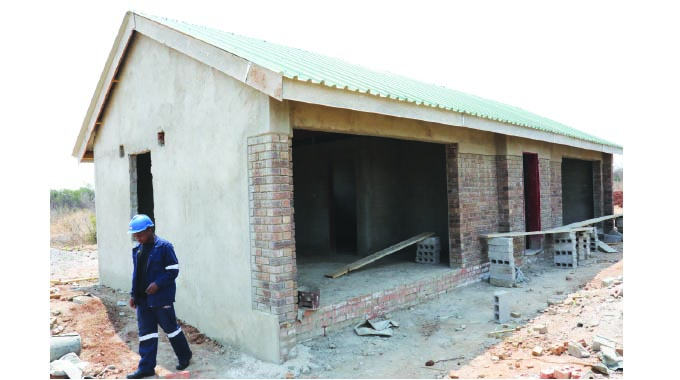
Robin Muchetu, Senior Reporter
THE yawning infrastructure gap at most tertiary institutions around the country which stands at around US$4 billion will soon be closed following a shift in approach where students in construction and engineering departments have been forming consortiums that are contracted to take up construction work with a number of projects currently under way.
Bulawayo Polytechnic students are involved in a number of construction projects in line with the changed approach to learning where there is emphasis on the practical aspect that ensures education responds to the socio-economic issues of local communities.
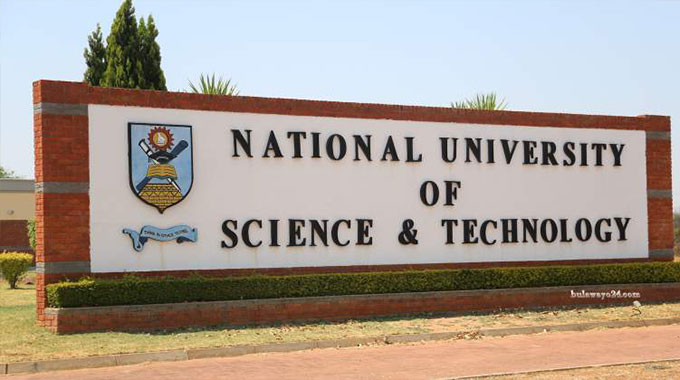
Projects being undertaken by Bulawayo Poly students include construction work being carried out at the National University of Science and Technology (Nust), Tshabalala Game Sanctuary, classroom blocks at Songwe Primary School in Binga as well as chalets and lodges for Lupane State University in Hwange district.
Higher and Tertiary Education, Science and Technology Development Minister Professor Amon Murwira said it was his desire to see all polytechnics and Vocational Training Centres in the country contributing to the reduction of infrastructure gaps through such projects.
He said a practical approach to learning was lacking in previous years but it had been corrected as seen by the formation of consortiums by students where they partner institutions to provide the much needed services at a relatively low cost.

“One of the weaknesses of our previous education system which was Education 3.0 was that people would read and talk about how to do work, now all the work that we are seeing is done by people who are learning construction, and what it means is that there is a practical approach to learning. The person that we will produce is a person who is able to build this country. We are seeing a transformation in our learning, in the past people would have qualifications without being able to do things practically and that was not good. Now we are making sure that people who say they have certificates in construction really do construction, those in engineering really do the engineering,” he said.
Prof Murwira said it was critical that education responds to the needs of communities through provision of solutions to the problems faced.
“There are a lot of construction gaps in the Ministry of Higher and Tertiary Education across all institutions. We quantified the gaps in 2018 with CBZ and we realised there is an infrastructure gap of about US$4 billion. President Mnangagwa gave us permission to build our own infrastructure, with our own lecturers, own students, and our own construction departments. But we also take it as part of education 5.0 of learning and while doing. This will reduce the infrastructure gap, and also reduce the cost of construction for us, and improve the learning environment in our institutions,” he added.
The Minister said indications were that the learning outcomes were going to be very positive because it was now becoming a tradition of how to learn in Zimbabwean tertiary institutions.
“We also are forming Graduate Employment Development Programmes where our graduates form startups and if we have taught them well it means these people will do well because they are experienced. They would have done things. It’s a whole revolution of constructing, industrialising, and modernising the country. This is done so that we do not have a mantra of nyika inovakwa nevene vayo/ilizwe lakhiwa ngabanikazi balo while doing nothing on the ground,” he said.
The quality of work by the students has also been described as top notch.
“All people in industry came from somewhere, I do not think anybody can doubt the quality of our people, they are good and well trained. We are bold. In all the construction we are doing we are inspected by the Ministry of Public Works to see if we meet the standards at any stage. When you go to Nust you can see the balustrade that was done by Bulawayo Polytechnic. It is amazing,” added Prof Murwira.
Education 5.0 is being implemented in all polytechnics, universities, and industrial training colleges.
“We want it to be ingrained as a culture, we are at the beginning of these things, we started in the first term of the Second Republic and now we are in the second term, it is time for consolidation and further development and we are positive about everything,” he added.
Bulawayo Poly Principal Mrs Chiedza Masanganise said they have roped in students — current and former to form consortiums and they were assisting them in getting tenders and equipment.
“We want them to fit into the demands of the industry. We have groups of students who have graduated and some who are still learning, we also identify those that are interested so that we work with them. Our first group comprised of students who were at the fabrication department, one from mechanical for machining purposes and ten from the fabrication department and that formed the first consortium for the Nust project. We have a second group that is working at Tshabalala Game Sanctuary, mostly sourced from the current students who are completing their studies this year. The students work with their lecturers who train and supervise them as they work to ensure they make and produce quality projects for the clients,” said Mrs Masanganise.
A tour of the Nust campus where the students are doing the steelwork of the technovation centre block showed great expertise at play.
Under the project, Mrs Masanganise said the students were manufacturing drain covers, grab rails for persons with disabilities, and balustrades for the stairs and other areas at the block. They are also coming up with a third project for the spiral stairs.
Mr Vasco Rwatida the Projects Co-ordinator at Bulawayo Polytechnic said the institution was following the Ministry’s Education 5.0 blueprint where the emphasis was on students forming consortiums.
“The whole idea is to train students that can produce through their own companies, so we incubate them until they are able to stand alone, then they are free to go and seek more and bigger contracts for themselves. We support them with tools and any other aid that they require, the Ministry is supporting these consortiums. The response has been encouraging from our students because we can see that from where we started and where we are now, we have recorded progress, they need minimum supervision as they work now,” he said.
Mr Rwatida said the students who were in their final year in the Construction Engineering Department were contracted to build two-bedroomed ensuite chalets that are complete with a laundry room at Tshabalala Game Sanctuary. They have so far constructed one sample chalet and are expected to build nine more.
The Principal — Mrs Masanganise said they also envisage forming more consortiums in other departments.
“We are trying the commerce department now, they can venture into consultancy and their lecturers will be supervising them, but this is still at the planning stage. We are also planning to take applied sciences; they are already making liquid soap and other laundry detergents. There is something brewing. In applied arts they are also doing garment making, they are already making graduation gowns, caps, t-shirts and are already selling so it is easier for us to form a consortium of students and form another company with them,” she added.
She said the learners would be incubated for a considerable amount of time so that they were able to work alone without supervision. She called on the industry to complement their efforts.
“We understand that competition is stiff, but as long as we have partners that support our training, we are good to go. We are funded by the Zimbabwe Manpower Development Fund (ZimDef) in most of our training and we already have an industry that is looking at our graduates, I want to believe that, looking into the future, the industry is going to support us more. We are training these students to a level where they can be employers,” she said. — @NyembeziMu


 Online Reporter