

 admin
admin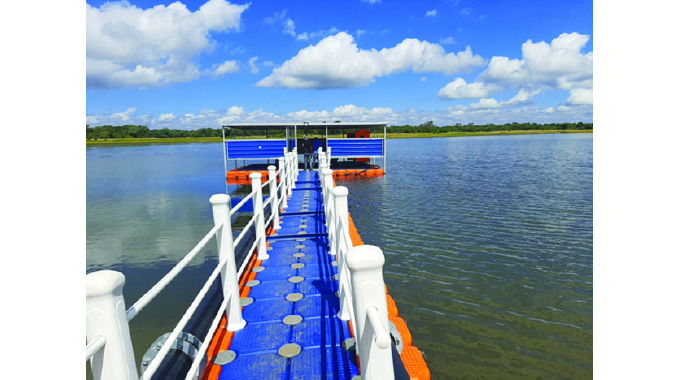
Edgar Vhera-Agriculture Specialist Writer
EVERY year, millions of cubic metres of water run through the country’s numerous river systems en route to the sea leaving flora and fauna plus humans with very little for their nourishment. In some cases, the rivers and the sporadically situated dams also remain without enough to sustain human activities.
This is a trend that the Government has astutely identified as an impediment to both national and household food security, as farmers sometimes watch helplessly as their crops wilt under the blistering sun yet there would have been a lot of run-off that could have been trapped for later use.
The Government is therefore seized with reversing the trend and has since partnered with development organisations to co-finance the Smallholder Irrigation Revitalisation Programme (SIRP) with the objective of reducing vulnerability of smallholder farmers to food and nutrition insecurity, climate change effects and economic shocks.
According to report from SIRP the interventions, which come to an end this year have sustainably increased rural household incomes in supported schemes with spillover effects on adjacent rain-fed areas and in some cases expanding targeted irrigation organisations.
Irrigation scheme farmers and those in surrounding rain-fed areas have increased productivity, production and income, with improved access to agricultural markets and financial services, said the report.
SIRP is targeting to rehabilitate 66 irrigation schemes in Matabeleland South, Midlands, Masvingo and Manicaland on 6 100 hectares with 19 of them having been completed by 2021 on 2 620ha.
To date, 27 500 households comprising irrigators, farmers, youths and extension officers have benefited from the programme. The rehabilitation of irrigation infrastructure as well as expansion of schemes, for instance, Rupangwana and Guyu has seen farmers expanding crop production.
The report highlighted that improved water availability and water-use efficiency have led to increased productivity citing the case of Banga where a new pumping system was installed to conserve water and reduce the time spent on irrigating the field.
Open canals were removed and replaced with a piped surface irrigation system that saves water ensuring year-round crop cultivation.
“Replacement of the water conveyancing system has helped farmers to conserve water, unlike the old system where they would run out of water due to leaks and high-water demand,” said the report.
In his testimony Masvingo’s Banga Irrigation Scheme chairperson, Mr Matina Munogwei said: “Before SIRP intervention, we would get our water from the dam from where it was released into the stream using old canals that leaked resulting in heavy water losses. This, in turn resulted in Banga Dam drying up early because we used to draw a lot of water from it.”

Mr Matina Munogwei of Banga irrigation scheme.
Mr Munogwei added that they would stop cultivation of crops in the scheme when the dam ran dry and only resume at the onset of the rainfall season.
“It is a different story now after SIRP provided us with new pipes and water is now conveyed straight to the scheme without losses.
“This is saving precious water and we expect to produce crops all-year round,” continued Mr Munogwei.
Banga irrigation scheme partnered some wheat farmers in the attainment of last year’s wheat bumper harvest of over 375 000 tonnes, ensuring that the country is wheat self-sufficient from local production.
Schemes such as Banga, Musaverema, Mayorca, Insukamini, Chikwalakwala and Sebasa that were rehabilitated by SIRP planted wheat in 2022 thereby contributing to national food security.
In another testimony, Sebasa irrigation scheme secretary Mr Albert Sibanda said: “Before SIRP came, only block A was under cultivation, the water was powered from Mashaba using submersible pumps and was not enough. Farmers had to buy a diesel-powered engine to supplement the water.”
He added that SIRP installed eight submersible solar pumps, 176 solar panels, three inverters and 28 batteries and rehabilitated the canals in blocks A, B and C and gave them NUA45 bean seeds. SIRP also gave them tree seedlings to establish an orchard within the scheme.
“Now farmers are happy, they no longer complain of hunger. There is food security, there are also part-time jobs during planting, weeding and harvesting. Our farmers now have hope for the future. Before SIRP came, we were not so hopeful. We used to depend on our sons and daughters in South Africa for food,” continued Mr Sibanda.
A member of Musikavanhu Irrigation Scheme only identified as Mr Marambidze commented: “The intervention by Government, SIRP and IFAD has helped us a lot. We received fencing material to fence off our scheme. Had it not been so, we would not have managed to plant our maize on time. We would have waited for the rains to start falling so that people start looking after their cattle. It was then that we would have planted our maize.”
His colleague at the same scheme Mrs Lydia Mangwanani said there were three consecutive droughts when she joined Musikavanhu Irrigation Scheme.
“The Government decided to chip in to alleviate the effect of these droughts by rehabilitating the irrigation scheme. Contractors came and repaired broken infrastructure. They also drilled boreholes and repaired the broken ones,” she said.
Mrs Mangwanani added that SIRP had changed their lives. They now had enough food for their families and can afford to send their children to good schools and colleges while parents were also upgrading their education.
“SIRP taught us to do away with low yielding crop varieties. We now buy high yielding hybrid varieties and we were also trained on post-harvest technologies that protect our yields from unnecessary losses,” continued Mrs Musikavanhu.
SIRP’s programme has climate-proofed agriculture against water shortages during droughts and dry winter months.
The report cited the case of Midlands province’s Exchange and Mayorca irrigation schemes, which were also rehabilitated. The scope of works at Mayorca included repairing the dam wall that now holds enough water for 76 farmers to cultivate crops all year round in the 76-hectare scheme.
The report said the new system has a floating water pump (pontoon) that increases suction efficiency and is easy to mobilise during flood events thereby preventing destruction of the scheme in extreme weather conditions
In Gwanda’s Sebasa irrigation scheme the conversion of the pumping system from diesel to solar has lowered the cost of power for the farmers and is climate friendly.

Sebasa irrigation scheme secretary Mr Albert Sibanda.
The expansion of irrigable land saw a 163 percent jump in irrigation area from 32ha to 84ha in Matabeleland South’s Guyu scheme. In addition to availing more land for irrigation, it allowed farmers to venture into dairy farming.
“To build resilience against climate change effects such as shortage of fodder during the dry months, farmers are able to grow fodder for their dairy cattle and even supply other farmers in the greater scheme areas who are heavily-dependent on cattle ranching in the drought prone province,” said the report.
And to ensure the continual existence of these scheme after project completion, SIRP trained farmers on operations and maintenance for sustainable management of irrigation equipment.
On the other hand, irrigation management committees (IMC) were also trained on scheme governance and leadership, which now contributes to viable production and increased income by the farmers. Within the IMCs is a marketing component whose purpose is to identify markets for crops before they are grown in the scheme.
SIRP also promoted the block irrigation concept where farmers work as a group and grow the same crop on an agreed hectarage within the scheme.
Wheat, sugar beans, groundnuts and other high value crops have been introduced across all schemes on block irrigation.
This has seen farmers at Musikavanhu, Biri and Hamamavhaire venturing into chilli production with those in Banga are growing groundnuts.
The advantage of the block irrigation notion rests in the lowering transaction costs as farmers procure large quantities of inputs wherein they negotiate for discounts. Also on the output side, farmers are able to access markets for their produce and make use of economies of scale.
Under the climate smart agriculture (CSA) and market access component farmers are trained on gender and inclusivity, natural resources management, nutrition, farming as a business and market access.
As part of the establishment of market links for high value crops, SIRP is constructing a post-harvest and cooling system at Insukamini Irrigation Scheme in Midlands, which will benefit farmers from Insukamini, Mkoba, Mambanjeni and London Farm, said the report.
When completed, farmers will be able to store perishable horticultural products such as peas and other vegetables before delivery to the market.
As part of gender mainstreaming, 52 percent of the beneficiaries are women. The programme continues to work towards changing attitudes on women participation in leadership positions in agriculture by encouraging them to take up leadership roles.
The promotion of inclusivity of previously marginalised groups such as persons with disabilities, single and widowed women in irrigation schemes remains the focus of the programme.
SIRP has come up with the natural resource management (NRMF) and rural poor stimulus (RPSF) facilities in an effort to build resilience among farmers in light of climate change. This will ensure that farmers are able to diversify their livelihoods in order to survive shocks such as drought and Covid-19.
To ensure soil and environmental conservation in schemes and in the adjacent rain fed areas, SIRP has conducted training in natural resource management (NRM) and conducted conservation works. The report further stated that farmers constructed gabions at Gudo and Sebasa to protect irrigation schemes from flooding and also planting vertiva and banner grass in the same areas.
Other NRM interventions include planting fruit trees for nutrition and for sale with SIRP supporting the establishment of a fruit orchard in Sebasa and planting of indigenous trees that provide fodder for livestock.
SIRP distributed 40 000 seed balls, which included 35 000 of guava and 5 000 acacias that went to Midlands schemes of Mayorca, Exchange, Lower Gweru, Hamamavhaire and Mundi Mataga.
The NRMF promotes income generating initiatives such as apiculture, goat production and cattle pen fattening. Under NRMF high impact projects, 4 200 point of lay indigenous chickens were distributed to 20 farmer groups in Musikavanhu. These groups will pass on the chickens to other farmers. SIRP also distributed 19 cattle to the Muteyo high impact project in Chiredzi, a number that has since grown to 41.
RPSF provided farmers with crop and livestock input support, water harvesting and PPE skills training. At least 4 175 commercial chicken layers were distributed to 835 households while 61 153 indigenous point of lay pullets were distributed to 6 394 households. This was augmented by 2, 33 tonnes of layer mesh, vet drugs and disinfectants delivered to the same households under the RPSF.
SIRP is also providing nutrition training to farmers in support of the Government’s bio-fortification policy, which was launched in 2019 to protect consumers against lack of nutrients such as iron, Vitamin A and zinc. SIRP is promoting the cultivation of bio-fortified varieties such as the orange maize, and orange sweet potatoes which are rich in Vitamin A,” disclosed the report.
The programme is also promoting cultivation and consumption of the iron rich NUA 45 sugar beans to address these deficiencies. Farmers are already multiplying sweet potato vines in various parts of Matabeleland South while several schemes have grown NUA45 sugar beans.
SIRP is a US$52 million seven year programme (2016-2023) co-financed by the Government of Zimbabwe, the International Fund for Agricultural Development (IFAD) and the OPEC Fund for International Development (OFID).



 Online Reporter