Chronicle Editor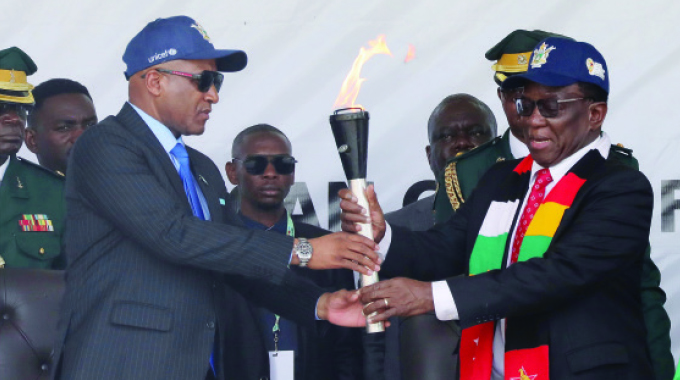
Vincent Gono in Victoria Falls
PRESIDENT Mnangagwa who is the current SADC chairperson has called for the region to broaden collaboration efforts and strengthen commitment to children’s rights to secure their future.
Speaking during the 2024 Regional World Children’s Day celebrations at Baobab Primary School in Victoria Falls yesterday, President Mnangagwa said there was a need for collaboration among SADC member states since most issues affecting children were cross-cutting.
“In the SADC region, most issues affecting children are cross-cutting. We need to strengthen instruments on child protection in order to address gaps and set specific measurable targets to achieve greater results,” he said.
President Mnangagwa emphasised that children are not only stakeholders in society but also agents of change who deserve platforms to express their views and contribute to decisions that affect their lives.
“This gathering is a testament to our shared dedication to children’s rights and their right to participate in decisions that affect their lives.”
He expressed his gratitude to South Africa and Mozambique who were attending the celebration for the first time, projecting hope for strengthened relationships within the region.
“We need our unity,” he said, underscoring the importance of collaboration in addressing the multifaceted and transboundary challenges facing children.
The celebration provided children the opportunity to engage with key issues, such as climate change, education and protection against violence, abuse and exploitation.
“The voices of our children on critical issues must never be silenced. It is imperative for us to create an environment where they can confidently share their perspectives,” President Mnangagwa said.
The President also pointed out that the liberation struggles of the past have left a common legacy that binds the children of the region.
He reminded the audience of the shared history and the collective challenges faced, noting, “We have a common future, and we must strive for sustainable economic growth, peace and social justice.”
President Mnangagwa showcased Zimbabwe’s dedication to children’s welfare through initiatives such as Education 5.0 which nurtures creativity, critical thinking and entrepreneurship anchored by science, technology and innovation.
He referenced the African Union’s declaration that 2024 be designated as the Year of Education calling for concerted efforts to enhance educational frameworks in the region. He urged children in the region to take pride in their identity as Africans and to remain alive to the rich African heritage.
He said his Government will continue supporting the vulnerable including those with disabilities and orphans so that they can access education through various initiatives such as the school feeding programme that came in the face of El Nino-induced drought.
He paid gratitude to various civil society organisations such as Angel of Hope Foundation whose patron is First Lady Dr Auxillia Mnangagwa for invaluable support in bringing moral upbringing in communities that dovetail with the African concept of Hunhu/Ubuntu.
“It is vital that we increase access to inclusive, lifelong and quality education that empowers the youth,” he said.
The President emphasised the role of partnerships in promoting children’s rights, particularly commending the work done by Unicef and various UN agencies.
“Our coordinated efforts can create an enabling environment for children and young people in Africa where securing their future is also a commitment to our national and regional development goals.”
In addressing the issue of child protection, President Mnangagwa underscored the need for stricter measures when dealing with the vulnerabilities of children, particularly those who are refugees or at risk of exploitation. He said Zimbabwe was taking care of 16 000 refugees and asylum seekers including children.
In the wake of climate change, he said the Presidential Borehole Drilling Scheme aims to drill 35 000 boreholes in 35 000 villages and 10 000 schools.

“Strengthening instruments for child protection is imperative, and we must set specific targets to achieve better results for our children.”
Drawing attention to the negative impact of substance abuse and crime, he urged regional co-operation to combat these issues and protect the rights and future of the youth.
“These threats endanger not only the wellbeing of our children but the stability of our societies,” he warned calling for a united front against such societal challenges.
He reiterated the importance of investing in the youth, emphasising that they are the leaders of tomorrow.
“By empowering our children, we empower the world to create a better future for all,” he said.
The event, which recognises the adoption of the United Nations Convention on the Rights of the Child, highlighted the urgent need for governments to prioritise and uplift the voices of children across the region.
The festivities shined the spotlight on the critical need for unity, protection and upliftment of children across SADC and inclusive education was one such area where President Mnangagwa dwells.
The President reminded leaders to adopt the Call to Action presented in Namibia last year, echoing a commitment to fostering environments that prioritise children’s rights and empower them to thrive through improvement in the quality and content of education to produce young people for Africa who are fit for the future.
President Mnangagwa called on SADC leaders to translate the commitments made into tangible actions that benefit children and advance their rights across the region.
The event concluded with the lighting of the Torch of Hope by Vice-President Constantino Chiwenga, in an atmosphere that brought together children from various backgrounds and cultures, all celebrating their rights and responsibilities in shaping a better future.


 Online Reporter