

 Online Reporter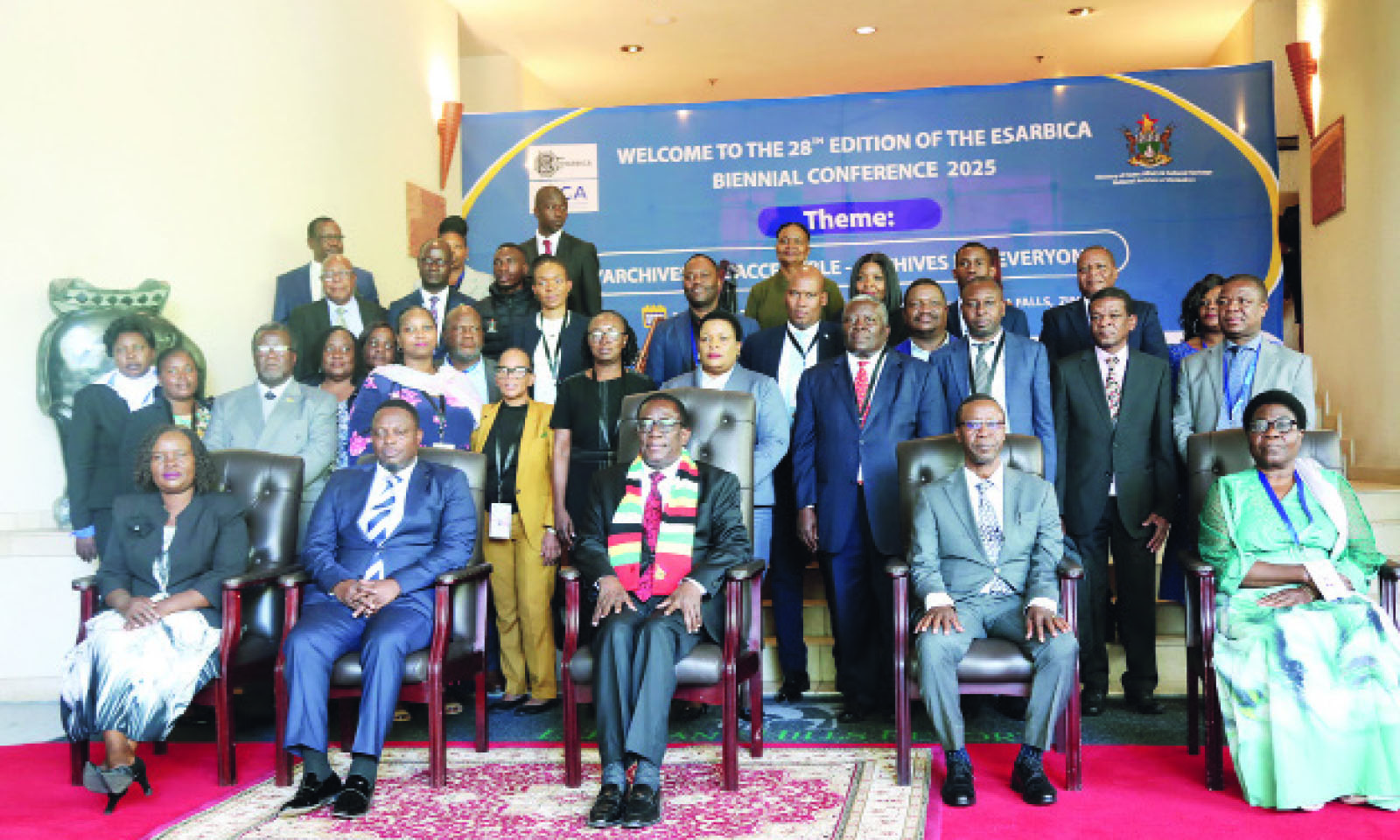
Rutendo Nyeve in VICTORIA FALLS
ZIMBABWE has made significant strides in modernising its archives and records sector, leveraging technology and community participation to ensure accessibility and preservation, President Mnangagwa has said.
Speaking during the official opening of the 28th Eastern and Southern Africa Regional Branch of the International Council on Archives (ESARBICA) General Conference here yesterday, the President highlighted the country’s commitment to digitisation, climate resilience and inclusive archiving practices.
He reiterated the importance of grassroots involvement in archiving, saying Zimbabwe’s Community Archives Project ensures records remain within their communities of origin.
“I urge you all to ensure that archived information is also made available in the respective languages spoken within our communities and nations. On its part, Zimbabwe’s Government has made significant strides towards the implementation of an Electronic Document and Records Management System for enhancing efficiency in the management of public sector records,” President Mnangagwa said.
Going forward, the President said, capacity building and skills development to support the preservation and accessibility of archival records for national, regional and international benefit would continue to be pursued.
This approach, he noted, ensures that archives reflect the diverse narratives of Zimbabwean communities, aligning with the national development philosophy of leaving no one and no place behind.
“The Community Archives Project being run by my Government recognises the need for archives to remain in the custody of their creators, rather than being transferred to a centralised archival institution. By so doing, our archives will adequately represent the diverse stories of our communities,” he said.
The event reaffirmed Zimbabwe’s leadership in modernising the sector, ensuring that archives remain a cornerstone of national heritage and development.
President Mnangagwa said the importance of community participation in archiving and heritage management cannot be overemphasised.
“My Government, through the Ministry of Home Affairs and Cultural Heritage, has rolled out programmes to broaden community involvement and benefits in heritage-based activities,” he said.
President Mnangagwa also underscored the need for archivists to embrace digital technologies.
“In our case as Zimbabwe, the national constitution recognises the importance of access to information as one of the key ingredients towards empowering communities. The availability of information is a catalyst to sustainable development and a basic right for each citizen.
“In this era of the Fourth Industrial revolution and the attendant deployment of ICT-enabled platforms, accessibility to information is now a necessity which must be facilitated by institutions such as yourselves. Our archival institutions and professionals must navigate the digital space, while guaranteeing that access and security of archival collections is enhanced,” he said.


