Online Reporter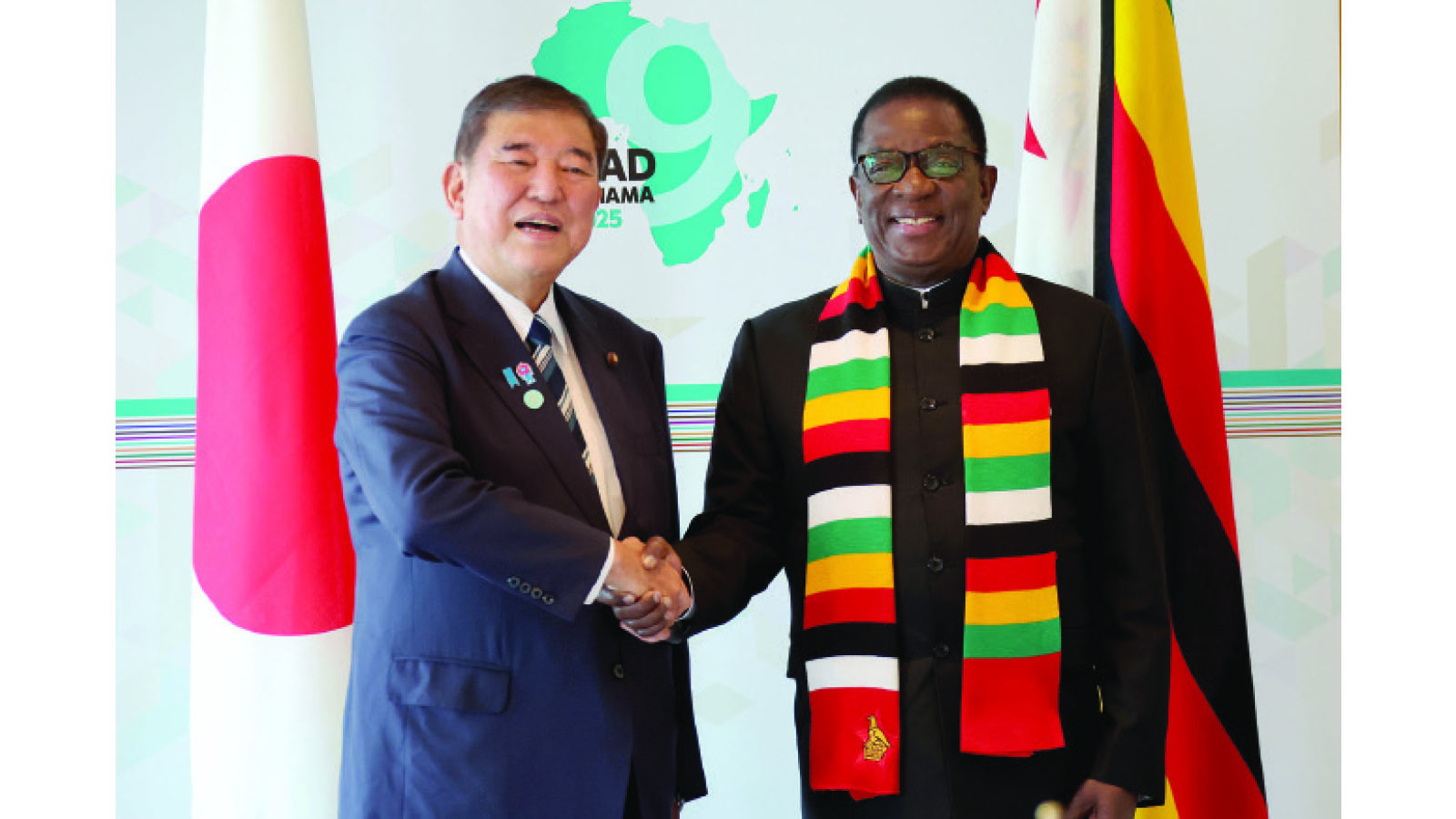
Fungi Kwaramba in YOKOHAMA, Japan
PRESIDENT Mnangagwa’s strategic engagement at the 9th Tokyo International Conference on African Development (TICAD9) has successfully aligned international support with Zimbabwe’s core economic objectives, as the resultant Yokohama Declaration echoed his calls for debt justice, value chain development and affordable climate financing.
The declaration, adopted by leaders from Japan and African union (AU) member states, paves the way for new synergies with Japanese investors.
It represented a major diplomatic achievement for Zimbabwe, as it advanced its priorities in local mineral beneficiation, the ethical adoption of artificial intelligence (AI) and building resilience against climate change — all key areas President Mnangagwa highlighted in his address.
“We, the Heads of State and Government and delegations of Japan and Africa union member states, together with representatives of co-organisers, namely the African union Commission (AUC), the United Nations (UN), the United Nations Development Programme (UNDP) and the World Bank met in Yokohama, Japan, from 20th to 22nd August, for the 9th Tokyo International Conference on African Development,” read the statement in part.
“We underscore the importance of ensuring that TICAD outcomes reflect balanced integration of the shared vision and mutual interest of AU member states and Japan in the spirit of equitable partnership.”
The declaration notes the challenges that the African continent is facing, which include economic insecurity, inequity, economic stagnation, insurability and the high cost of services by some credit agencies.
The outcomes of the conference, which was held under the theme “Co-create innovative solutions with Africa”, are particularly timely for Zimbabwe, which is seeking to restructure its US$21 billion debt.
The declaration also commits to “address the high debt premium of borrowing countries, especially in Africa”, a move that could prove crucial for the country’s ongoing negotiations with creditors.
A central theme of the President’s advocacy, which is reflected in the declaration, is the urgent need for Africa to move beyond exporting raw materials.
The pact calls for concrete actions to develop value chains on the continent, including encouraging Japanese investment in manufacturing, establishing special economic zones for electronics and green tech, as well as supporting Africa to export value-added goods to Japan.
“We aim to accelerate efforts to develop value-chain addition in Africa and integrate African countries into global supply chains,” adds the Yokohama Declaration.
On technology, both the President and the final communique struck a similar chord, emphasising that digital transformation and AI must be human-centric, ethical and inclusive.
The “need for technology transfer on mutually agreed terms, capacity and institution building” was also emphasised.
President Mnangagwa has been persistent in his call for the development of value chains in key economic sectors such as mining and agriculture.
“We endeavour to accelerate Africa’s regional economic integration and foster an enabling business environment to strengthen the role of the private sector as an engine of productive transformation to boost intra-Africa trade,” the declaration adds.
“We aim to accelerate efforts to develop value-chain addition in Africa and integrate African countries into global supply chains through a free, open and fair trade and investment environment, so as to be able to secure a fair share in the growth of world trade and investment commensurate with the needs of their economic development.”
In his speech at TICAD9, President Mnangagwa said, while AI is vital to drive development in Africa, it must be human-centric, ethical and inclusive, with benefits accruing to all segments of society and contributing directly to Africa’s development priorities.
Regarding the climate crisis, the declaration acknowledges Africa’s disproportionate burden despite contributing the least to global emissions.
“We underscore the importance of collaboration between Japan and Africa on clean energy technology and continue to call for a doubling of finance that is affordable, scalable and predictable, that addresses the devastating impact of climate change and builds the resilience of vulnerable communities, especially those on the frontlines of the climate crisis.”
In his address, President Mnangagwa said Africa has to leverage its abundant critical minerals to fully participate in new energy value chains, placing the continent in a position to build industries around processing, manufacturing and assembling green technology.
In addition, the Yokohama Declaration underlined the need to support access to quality education, particularly the promotion of international knowledge exchange, science and technology, engineering and mathematics (STEM).
In an interview, Foreign Affairs and International Trade Minister Professor Amon Murwira said President Mnangagwa’s attendance was a strategic undertaking, in fulfilment of Zimbabwe’s primary national objective: to foster a conducive and stable international environment in which the country can thrive.
TICAD9, he added, provided a platform for Zimbabwe to advance its national interests in tandem with the international community and in accordance to the principles of the AU.