Online Reporter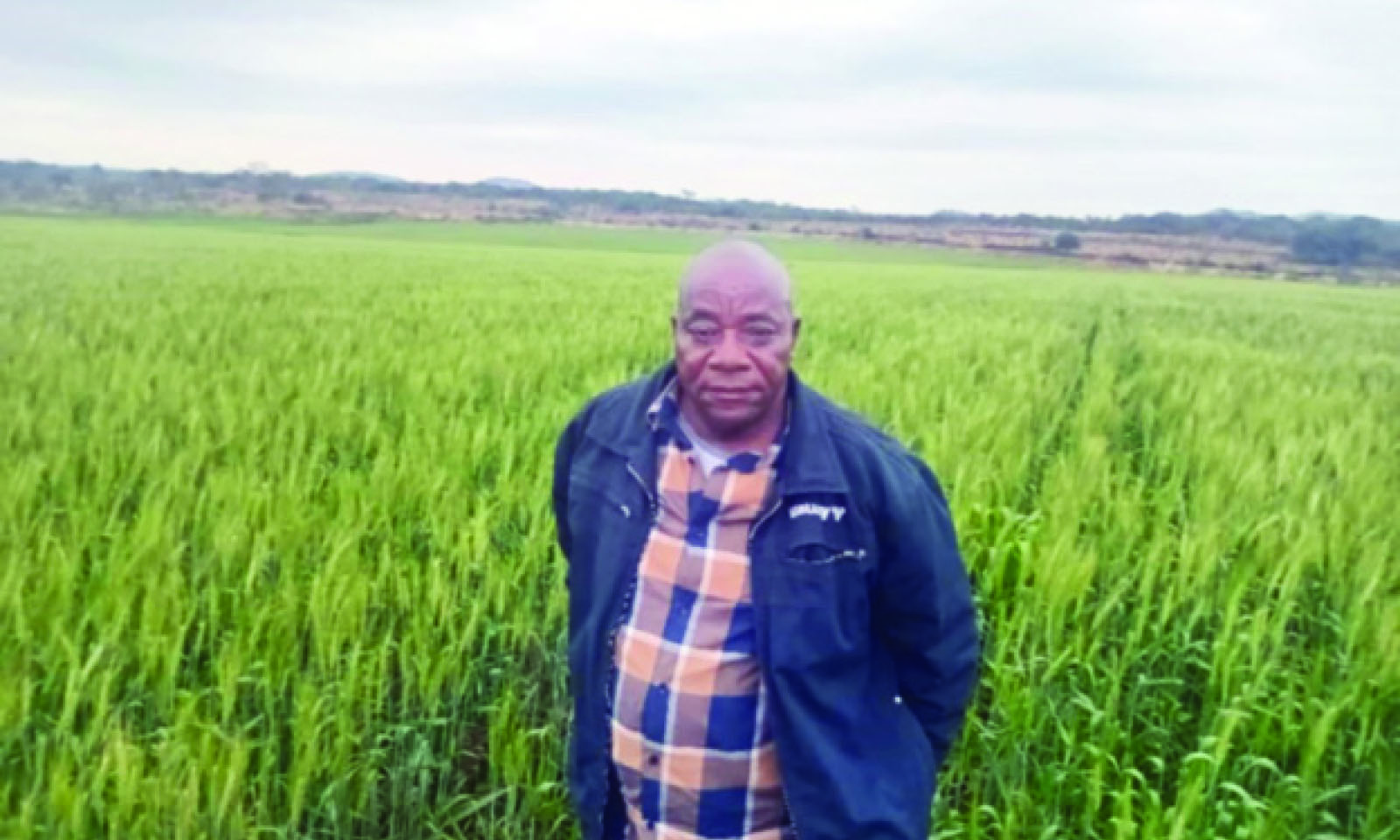
George Maponga in Bikita
Overlooking the interlocking hills that form a barrier marking a natural border for Chipinda communal lands in the northern fringes of Zaka District is a dream that is slowly, but surely morphing into reality and throwing a food security lifeline to the whole of Masvingo Province.
At Riverton Farm, about 65km east of Masvingo City, there is an unfolding agricultural revolution.
It is set to catapult Masvingo Province to the very top of the nation’s pacesetters in the race to attain food self-sufficiency.
Riverton Farm is like no other farm. Its undulating terrain, punctuated by small hillocks bisected by small streams, makes it painstakingly taxing to develop into a perennially verdant greenbelt.
However, thanks to irrigation technology that has been harnessed at the farm, Riverton is now the undisputed face of Masvingo’s march towards fully realising its agricultural potential.
Failure to fully utilise its vast agricultural potential has hitherto been cited as the province’s Achilles heel in the struggle for speedy socio-economic transformation.
Businessman Mr Phillemon Mutangari is daring to dream, with his sights firmly fixated on developing 300 hectares of irrigable land at Riverton Farm by mid next year.
Currently, the farm is manicured by a swashbuckling wheat crop straddling over 150 hectares. The businessman and farmer is expecting no less than 1 500 tonnes of wheat this year from his farm.
Mr Mutangiri credits President Mnangagwa as the inspirational force behind his new-found passion for farming.
According to Mr Mutangiri, Masvingo is well positioned to unleash its agricultural potential and exorcise its perennial ghost of hunger.
“All along I did not know that I was sitting on unlimited wealth by failing to venture into serious agriculture here at Riverton Farm,” said Mr Mutangiri.
“It was only when I visited the President’s farm in Kwekwe (Pricabe) that I came back a changed person and realised how I was sleeping on unlimited wealth at my farm.”
President Mnangagwa’s farming enterprise at Pricabe has won him plaudits within and outside the country’s borders, and Mr Mutangiri agrees that the President has set a very high bar.
“What I saw at the President’s farm stunned me because I had never seen something like that in my life. I told myself that I was underutilising my farm. I convinced myself that I had to start doing what the President is doing at his farm, and from that day up to the present, I have never looked back,” added Mr Mutangiri.
Running the Riverton Group of Schools, comprising a primary and a high school at his farm, Mr Mutangiri says his dream is to reduce the cost of running the schools through farming.
“Our goal is to produce most of the food that our learners consume here at Riverton Farm so that the cost of running the school goes down. This will also mean that the fees go down.
“We produce most of the food here at the farm – from the bread that we make for our students to things like butternut. We also produce pork from our piggery project and we have a big herd of beef cattle and a growing herd of dairy cattle – all this is inspired by what President Mnangagwa is doing at his farm in Kwekwe,” he added.
Mr Mutangiri wants every farmer to harness idle water for irrigation.
“The President has shown us the way and I now strongly believe in his ‘Nyika Inovakwa Nevene Vayo’ philosophy, which is anchored on self-reliance,” he said.
“If all farmers who have access to water deploy it for irrigation, even for one season we will produce so much food that even food prices will drop and we will export surplus and earn foreign currency, there is unlimited wealth in the land, let’s take a cue from President Mnangagwa.”
If Zimbabwe’s total farming potential could be exploited, jobs could also be created and stem rampant unemployment.
“I turned swathes of bushes into a greenbelt. This whole area that is now decorated by verdant wheat was under bushes and big trees. We cleared it for centre-pivot irrigation to produce food.
“My dream is to keep on farming and expanding until such a point when the price of bread is affordable to the average Zimbabwean. With the water and land that we have, why is it impossible even for the price of bread to go down to as low as US$1 per 3 loaves? If we follow and adhere to President Mnangagwa’s vision, we will get there,” said Mr Mutangiri.
He employs over 300 permanent and contract workers, mainly from Chipinda communal lands in Zaka and surrounding resettlement areas in Bikita, Gutu and Masvingo districts.
“We have the latest equipment for land clearing, such as excavators. We do most of the things by ourselves and we are also eyeing value addition, and soon we intend to procure equipment to manufacture our own flour for our schools’ bakery and for sale to the public.”
With the Riverton Group of Schools franchise expanding to Masvingo City (Riverton-Westview) and Murinye communal lands (Riverton-Murinye), Mr Mutangiri now wants to leverage on benefits coming from agriculture to make sure running the schools becomes cheaper and make school fees affordable for the majority.
“We want our schools to be affordable even to low income earners, and that can only happen if the costs of running them goes down. One way of making that happen is through expanding and intensifying farming, so that we produce most of the food we need”.
Riverton farm manager, Mr Livison Simbaredzara, echoed his boss’ sentiments, saying they were drawing lessons from President Mnangagwa to carve agricultural success at their farm.
“I have not been to the President’s farm in Kwekwe, but from what I hear, something beautiful is taking place there, so we are trying to do the same thing here at Riverton. I want to give full credit to Mr Mutangiri for pushing us to follow his vision of making this farm a vital cog of the province’s food security system,” he said.
Mr Simbaredzara revealed that they had intended to put 300 hectares under winter wheat this year, but had failed to meet the target.
“This year we failed to meet our target to plant 300 hectares of wheat because we started clearing the land a little bit late, but come next year, we will meet our target without fail,” he added.
According to Mr Simbaredzara, their thriving farming enterprise at Riverton had created hundreds of contract jobs, noting that more people will be employed as operations expanded.
Permanent secretary for Masvingo Provincial Affairs and Devolution, Dr Addmore Pazvakavambwa, hailed Mr Mutangiri’s farming enterprise, which he said was a model of optimum land utilisation as Masvingo province angles to raise agriculture’s share of the province’s gross domestic product (GDP).
“We want to raise agriculture’s share of our provincial GDP and make it the biggest. The secret is optimising agricultural production mainly through irrigation by taking advantage of many idle water bodies that we have in the province.”
Dr Pazvakavambwa revealed that Riverton Farm would soon host a field day to showcase the farming excellence at the property.
A former waiter and school teacher, Mr Mutangiri was born in 1958 in Murinye communal lands. He trained as a teacher at Morgenster Mission after initially working as a waiter, first at Jameson Hotel in Harare before independence, and then at Chevron Hotel in Masvingo after independence.
The businessman taught at several schools across Masvingo before starting a transport business, which enabled him to purchase Riverton Farm just before the turn of the millennium.
Mr Mutangiri then folded his transport business and founded Riverton Group of Schools, which started with only 16 students in 2004 to the current over 1 100.
The businessman holds a first degree in Educational Management and a Master’s degree in the same field with the Great Zimbabwe University.