admin
admin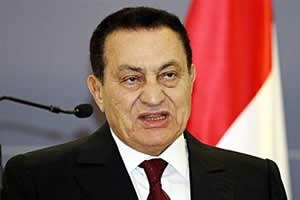
people died while the former leader Hosni Mubarak is on trial for reportedly ordering the shooting of demonstrators who included women, surely, what price should women pay for democracy and freedom?
Coptic Christians who participated in the uprising against the Mubarak government, were attacked and had their churches burnt down.
Then, many believe that the freedom the religious fundamentalists wanted had nothing to do with democracy or human rights, but religious intolerance.
In Israel, hardline religious groups are calling for the killing of non-Jews.
We are back to the Middle Ages when churches used to burn people at the stake for practicing religious freedom. Not to be outdone is what happened in Morocco where a raped girl was forced to marry her attacker.
She could not follow such a religious edict and hanged herself. What is disturbing was that Moroccans were allowed by their King to choose their own Government in democratic elections.
Today the people have a government of their choice but the women are being subjected to edicts which deny them freedom and human rights.
Here, some sections of the Press are complaining about the lack of freedom and democracy.
One wonders what kind of democracy they want?
Yes, we have the right to vote and elect our own representatives to Parliament and city, town and district councils.
We can practice our faith without discrimination against women. We can establish any businesses we want under the law.
Instead, we are lucky that others paid dearly for the freedom and democracy we enjoy today although some think otherwise.
Africa is at crossroads. Even with an abundance of resources that are made up of land, minerals, water and human, we are failing to enjoy the freedom we have.
Many experts say the major problem Africa has is the ability to exploit these resources for the betterment of society. Many experts have been urging Africans to move away from over dependence on multinationals as a way of creating employment but to develop and embrace the process of developing entrepreneurship. This is the essence of indigenisation.
The people in any country must be free to start and develop their businesses.
In Zimbabwe, women have established their own self sustaining companies. One out of three car drivers is a woman. Women are free to approach the courts, especially to assert their rights in any relationship.
Men have been made to pay dearly if taken to the courts for not fulfilling their roles as fathers.
This is what freedom is all about.
While other societies are oppressing women, in Zimbabwe, the talk now is about how to achieve gender representation in the electoral system.
In Europe, women were only allowed to vote in 1918. But Zimbabwe, has championed the rights of women since independence in 1980.
The political system in Zimbabwe is very progressive. There are women who have control of their reproductive health.
They can choose the number of children they want to bear. This has come about through universal education. Results released by the Ministry of Education bear testimony to this fact.
More girls than boys achieved better results at O Level and A Level. At most schools there are more women teachers than there are male teachers.
Other countries in the Middle East and Africa cannot claim such advanced emancipation of women on such a grand scale.
People confuse economic difficulties with lack of freedom and democracy.


 Online Reporter