admin
admin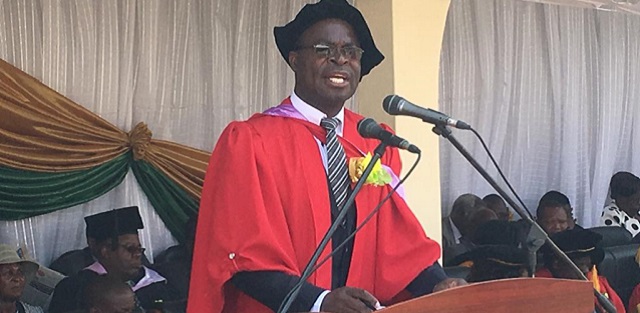

Thandeka Matebesi, Sunday News Reporter
THE Government has announced that student teachers will be required to be proficient in at least three other languages as it moves to improve the quality of education in the country.
In his address at the Joshua Mqabuko Nkomo Polytechnic College graduation held in Gwanda yesterday, Minister of Higher and Tertiary Education, Science and Technology Development Professor Amon Murwira said the thrust was to train teachers in other local languages apart from Shona and Ndebele to enhance understanding of different concepts and culture.
“In order to ensure that indigenous languages are taught in schools, Government is going to make it mandatory that each student teacher be proficient in at least three other local languages apart from his or her mother language. We want a teacher who is able to work anywhere in Zimbabwe and teach using local languages.
“Language is important to understand culture and concepts that’s why different concepts can be expressed in different languages. Teachers should teach students using their own environment and local examples. We lose knowledge for advancement of the nation because we teach using examples that are out of touch with reality,” he said.
Prof Murwira added: “Focusing on the universality of science but with local application is the heritage based education pillar that the ministry uses to spearhead the modernisation and industrialisation agenda for Zimbabwe which is locally relevant knowledge.”
Prof Murwira said the country’s tertiary education system was being reconfigured to make it more relevant to the demands of the economy and the markets.
“The higher and tertiary education system in Zimbabwe has traditionally been focused on three missions which are teaching, research and community service (Education 3.0). However, in order to deliver an industrialised, competitive and modernised Zimbabwe, the ministry has adopted two additional missions which are innovation and industrialisation (Education 5.0).
Education 5.0 entails that graduates should be equipped with skills acquisition that empowers them innovative towards societal development through transformative science and technology knowledge application that delivers goods and services,” he said.
A total of 181 graduated with Diplomas in Education.



 Online Reporter