Online Reporter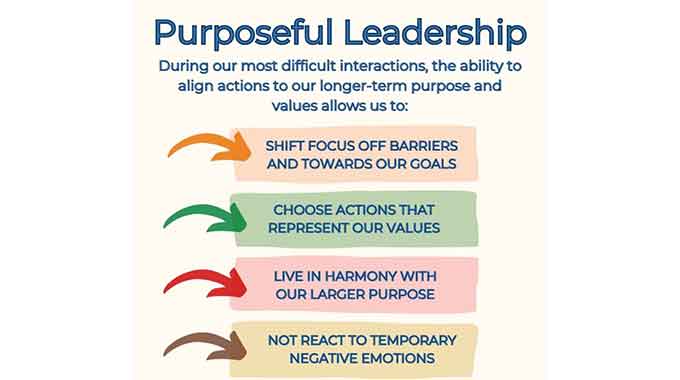
Rutendo Gwatidzo-Changing Perspectives
As we come to the end of March, I would like to provoke you to think around the subject of leadership.
Can we look at different scopes of leadership, be it in your home, church, community or work-places? What defines your leadership? Have you ever thought about it? We live in a world where leadership is no longer defined by titles, corner offices, or authority.
The organisations that are thriving are those being led by individuals who understand that leadership is fundamentally about purpose and impact, which comes with a clear reason and understanding for why they lead, who they serve, and what impact they intend to leave behind, for instance, Econet Wireless.
Purposeful leadership goes beyond performance targets and quarterly profits. It is about aligning influence with intention, decisions with values, and strategy with impact. When leaders operate from purpose, they build institutions that outlive their tenure and inspire people to give their best not because they are forced to but, because they believe in what they are building.
One author once said, “Leadership is about leaving the world better than you found it.”Purposeful leaders carry this mindset into every decision they make.
Organisational Status!
One of the challenges in many organisations is that of operating without considering the foundation. The Foundation of Impact is clarity of purpose. Without a clear sense of purpose, leadership becomes reactive rather than strategic. Purpose answers the critical questions: Why do we exist? Who are we serving? What difference are we making?
Organisations with leaders who lack this clarity often find themselves constantly chasing trends, reacting to crises, and struggling to sustain employee commitment or what they are building.
In contrast, purpose-driven leaders create alignment across the organisation for employees to understand how their work contributes to the bigger picture.
The Power of Purpose!
Purpose creates focus. Focus creates impact.
Purpose require values to be effective. Values provide the ethical compass that guides how purpose is pursued.
Many organisations proudly display values on office walls, yet those values remain invisible in daily behaviour.
Purposeful leadership demands consistency between what leaders say and what they do.
Employees are not inspired by slogans; they are inspired by example. When leaders demonstrate integrity in small decisions, fairness in promotions, transparency in communication, and accountability in mistakes – they build cultures of trust. Trust, once established, becomes a powerful organisational asset.
A purposeful leader understands that success is not measured by how powerful they become, but by how many people they empower. Too often leadership becomes self-centred, focused on protecting positions rather than building people. Purposeful leaders take the opposite approach. They see their role as stewards of talent. They invest in mentoring, coaching, and sponsoring others. They open doors for emerging leaders, especially those whose potential may otherwise go unnoticed. Great leaders challenge others to dream bigger and then provide the support required to achieve those dreams.
Organisations that prioritise leadership development create a pipeline of capable individuals who sustain success long after current leaders move on.
Purposeful leadership requires courage. One of our own Dr Divine Ndhlukula at one of her mentorship classes once said, “There will always be pressure to compromise values for convenience, popularity, or short-term gains.”
Purpose-driven leaders must be willing to stand firm even when it is uncomfortable.
In corporate environments this might mean refusing unethical business practices, addressing toxic workplace behaviour, or challenging decisions that undermine long-term sustainability.
Courage in leadership though, does not mean the absence of fear; it simply means acting with integrity despite the risk.
When leaders demonstrate courage, they set a powerful tone across the organisation as principles are not negotiable. Leadership that leaves a legacy understands that, Titles change hands, organisations evolve, and seasons shift. What remains is the legacy of influence.
Another profound lesson that I also learnt of my our senior pastor at Celebration Church, Pastor Tom Deuschle, is that, purposeful leaders ask themselves an important question: When my time in this position is over, what will remain? Will there be stronger institutions, empowered people, and ethical cultures? Or will there simply be a record of targets achieved without meaningful transformation? Purpose transforms leadership from a position into a calling. It ensures that influence is used not merely to manage operations but to shape lives and communities.
Graça Machel once observed, “Leadership is not about power. It is about responsibility.” The leaders who understand this truth are the ones who build organisations that endure.
In a world increasingly driven by rapid change and constant pressure for results, purposeful leadership remains the anchor that keeps organisations grounded.
When leaders align vision with values, invest in people, and lead with courage, they create something far more powerful than success, they create significance.
Rutendo Gwatidzo is a human capital executive and managing consultant at The HUB HR Consultancy. She is a multi-Award winning leader, transformational speaker and coach. She is also the author of Born to Fight and Breaking the Silence books. Contact details – 0714575805/ [email protected] / Rutendo Gwatidzo_Official FB public page.