Online Reporter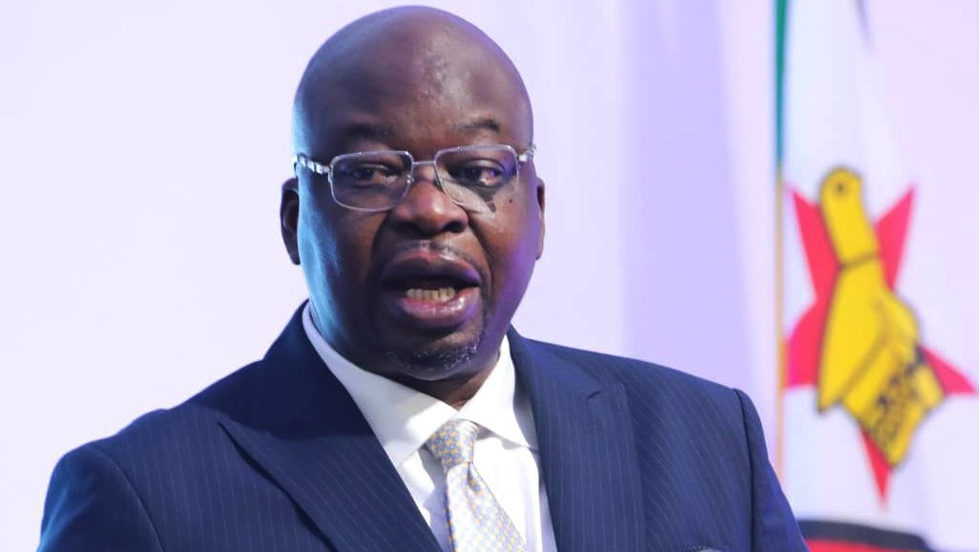
Lovemore Kadzura
Post Reporter
GOVERNMENT’S economic reform exercises under National Development Strategy (NDS1) have positioned the economy on the right trajectory through fiscal discipline and investment in critical sectors such as public infrastructure, agriculture, and mining, which are the key drivers of the economy.
Speaking during the Ministry of Finance, Economic Development and Infrastructure Development strategic workshop in Mutare, Deputy Minister Honourable David Mnangagwa, said the incoming NDS2 will further push economic transformation anchored on sustainability, productivity, and value addition.
“Since the inception of NDS1, our economy has demonstrated remarkable resilience. Gross Domestic Product (GDP) growth, which averaged above regional projections between 2021 and 2024, reflects the success of our reform efforts, improved fiscal discipline, and strategic public investment in infrastructure, agriculture, and mining.
“However, we must also acknowledge the structural bottlenecks that remain, including limited industrial competitiveness, public enterprise inefficiencies, and physical vulnerabilities that constrain service delivery. Addressing these requires stronger institutional capacity and coherent inter-agency collaboration.
“The forthcoming NDS2 (2026-2030) offers an opportunity to deepen economic transformation and move decisively towards Vision 2030 – our goal of becoming an upper-middle-income economy. To achieve this, our strategy must rest on three key pillars: macroeconomic stability and fiscal sustainability, productivity and value addition, and institutional efficiency and accountability,” he said.
Permanent Secretary in the Ministry of Finance, Economic Development and Investment Development, Mr George Guvamatanga revealed in a sideline interview that the manufacturing sector is now the biggest contributor to the economy, attributing this to the various support being provided by the Government in the form of incentives.
“The Government has put in place various incentives to support the manufacturing sector. Structurally, the manufacturing sector is now the biggest sector in the economy. It also reflects the policy measures that we have been implementing as part of NDS1, and once we continue to implement them as part of NDS2, it will actually support the industrialisation and manufacturing sector.
“There are various incentives in terms of importation of raw materials, machinery, and equipment, and various projects that receive Special Economic Zone status, some supported with national project status. Those are all various incentives that we have introduced in the past to support industry. We have always wanted to shift our economy to become a manufacturing economy,” he said.
Mr Guvamatanga further said the local currency is gaining traction on the market, as evidenced by its increased use by the transacting public, which is a result of confidence by the people.
He revealed that by the first quarter of 2026, they anticipate inflation to reduce to single digits.
“A mono-currency is not an event, it is a process which we have already started, and the introduction of the ZiG currency is actually part of the mono-currency process. The plan or journey of mono-currency has many other conditions that we have set for ourselves, such as a stable macroeconomic and monetary environment, and we should have reserves to support our currency at a certain level.
“More importantly, we should have the citizens of this country having confidence, as we are already seeing that there is actually confidence in the ZiG. Inflation is coming down, and we actually expect that by the first quarter of 2026, we will have single-digit inflation. Once we get to single-digit inflation, which we have also demonstrated through how we have sustained macroeconomic stability from August 2024 into this year, we can actually sustain a very robust monetary and fiscal environment.
“Once we reach single-digit inflation numbers, it would not matter whether one has US dollars or ZiG in their pocket. That journey might be completed by the citizens, where the interchanging of US dollars and local currency will now be indifferent. It is a journey that we are actually travelling, and we are supporting it with sound monetary and fiscal policies, and we actually believe that we are far ahead of that journey.
“The usage of the local currency has gone up to about 40 percent of the total transactions that are occurring in the market, against our own targets, which had been much lower. The market is very comfortable in accepting the local currency and the price stability. We are on a very good footing,” said Mr Guvamatanga.