


 Chronicle Editor
Sharon Chimenya, Masvingo Correspondent
AFRICAN lore had its own unique ways of preserving important ecological sites such as wetlands. And to the many disciples of this tradition, things were in order and were only disturbed by modernisation and civilisation.
The important sites were disregarded and had buildings erected on them much to the disappointment of the African traditionalists who felt the sacred areas were being defiled instead of preserving their consecration.
The recent move by the Government and other partners to revive a number of wetlands around different communities in Masvingo have however, lit a flick of hope. It has been received with a galore of excitement by rural communities with those grounded in African Traditional Religion (ATR) welcoming the return of the supernatural powers in their areas that they claim had run away from the filth and lack of reverence that modernity brought.
The existence of the spiritual beings such as the njuzu/mermaids in the wetlands is believed to have contributed to the safeguarding of the areas ensuring the continual flow of water in the streams as the sites were rarely disturbed.
The continual flow of the streams was attributed to the virtuous co-existence of the human beings and those of the spiritual world. The existence of such made the wetlands to be referred by many as sacred places where water recharging was believed to be aided by the spiritual world without human interference.
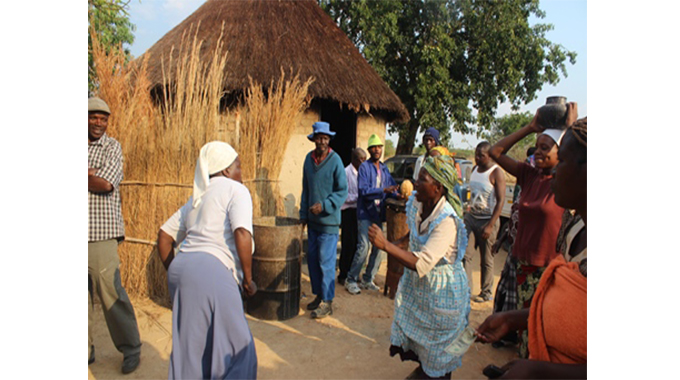
For Sekuru Mortely Marongere Munodawafa of Marongere village in Zimuto, Masvingo, the resuscitation of wetlands in the area had sparked a feeling of nervousness that maybe one day the supernatural beings that used to live in the area would come back.
Standing in one of the areas where they used to farm, back in their day, Sekuru Munodawafa reminisced the Christmas Eve of 1964 when they last heard drums being played from one of the wetlands by unseen spiritual beings believed to be mermaids.

“It was on the Christmas Eve of 1964 when we had gone to bed and we heard drums coming from this side. We thought to ourselves that they were our friends from the nearby village who had spent the night drinking and dancing. Little did we know that they were also hearing the same noise thinking it was us.
“We woke up early in the morning and met at this wetland and discovered that it was neither one of us that had spent the night beating the drums. Just when we had said our goodbye and had planned to meet up later for some drinking, we had whistles coming from this wetland and that was the last time we heard of the mermaids in this area.”
He said he was very confident that one day the supernatural beings would return to the area if the current generation does not do anything to disturb the existence of the spiritual beings believed to exist within the area.
“No one knows where they went but I can tell you that mermaids are there and what I know is that they used to reside here and I believe that one day they will return. Saka iriko njuzu yakatiza zvataiita asi ichadzoka (there is a mermaid that ran away from this place because of our actions). In the morning one would hear the sound of cows grazing and the whistles like those by young boys herding cattle. We would see clothes put on tree branches to dry at this place but they will disappear whenever one goes too close,” he said.
He also told the story of one traditional healer called Dharu whom he said would go into one of the streams leaving his wife guarding his garments. He did not want anyone to touch his garments because if anyone did, he would not be able to return to the surface.
“I was once chased away by his wife when I had gotten too close to the place where she was seated. Dharu would come out of the stream with different types of medicines to treat people. I want to tell you that if people around don’t tamper with these places the supernatural beings will return,” he said.
Sekuru Munodawafa said there used to be water coming out of a whaleback. He said after the patrols by officials from the Environmental Management Agency (EMA) he was told that there was water in one of the whalebacks.
One of the villagers said the revival of such sites would help enhance their knowledge base and that of their children since such things were learnt in schools.
“We are looking forward to the return of these traditional beliefs that Sekuru always talk about. He tells us that there were once mermaids in this area and so we wish they would come back so that our children can learn because even us we don’t know of such beings. This will also help them in their studies as they are now learning of such things in their new curriculum.”
Although the stories are all subject to individual belief with some dismissing them as mere myths, the country still has pools that are regarded sacred and stories have been told of people having been taken by the mermaids and initiated into the traditional healing spirit realm such as a of 42-year-old Mwenezi woman who was taken by the mermaids when she was only eight years.

In Masvingo’s Chief Mapanzure area three men were reported to have mysteriously drowned after they had gone to the nearby river for cleansing. Although the story is still shrouded in mystery, villagers believe their drowning was influenced by the supernatural powers that the river possessed.
The drive by the Government to revive wetlands is a partial fulfilment of the National Development Strategy 1 (NDS1) whose target is to increase the area of wetlands sustainably managed from 701 100 hectares in 2020 to 1051 650 hectares by 2025. The Government has set aside resources to be channelled towards the rehabilitation and restoration of wetlands ecosystems around the country.
Following the flooding of homes and infrastructure located in and around the margins of wetlands in the 2020/21 rainy season, government took a step to improve the management of wetlands in the country. Wetlands, apart from being home to a variety of animal and plant species, provide a lot of economic benefits to local people such as fish farming, bee keeping, gardens and provide water for the community.



 Online Reporter