

 admin
admin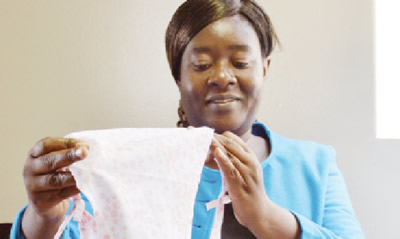
Factmore Dzobo
In most rural remote areas, we discovered that many of the rural retail shops do not have sanitary wear and in some cases shops with the stock charge exorbitant prices taking advantage of inadequate supply. The impoverished poor women and girls cannot afford to buy them and instead use rags
RECENTLY Zimbabwe joined other nations in celebrating the International Women’s Day, amid concerns that most women are not being recognised when it comes to issues of sexual reproductive challenges and empowerment.
This year’s celebrations were held on March 8 under the theme: “Empowering Women, Empowering Humanity: Picture it”.
The gist of these commemorations was based on the insightful premise to send a strapping message that catalogue total condemnation of Gender Based Violence (GBV), physical and emotional abuse particularly on vulnerable groups such as women and girls. It was also a day to celebrate some success stories of women while remaining cognisant of the challenges affecting them in realising their full potential.
This year’s celebrations came at a time when most women and girls in both rural and urban areas are reportedly finding it difficult to deal with reproductive health challenges, chief among them access to proper sanitary wear.
A recent multi-stakeholder workshop organised by SNV Netherlands development organisation unearthed a lot of issues faced by women and girls as far as the menstruation and hygiene management is concerned. Some of the issues which were discussed cannot be ignored whenever the nation commemorates women’s day.
During the workshop it was revealed that about 67 percent of rural school girls and women use rags, cow dung, newspapers and leaves to stem menstruation flow because they cannot access proper sanitary wear.
Sanitary wear is said to be generally unavailable in most rural areas and, when it is, it is not affordable to most women and girls. The workshop also revealed that 45 percent of rural school girls use pieces of old clothes and rags in their menstrual control.
Rural school girls from poor backgrounds were also reportedly failing to attend school during their menstruation period for fear of being booed by their classmates when they spoil their uniforms as a result of using improper sanitary wear.
The survey revealed that about 20 percent of rural school girls do not attend school while they are menstruating. Some women and girls experience tension and depression prior and during menstruation and some experience great pain and as a result absent themselves from school.
In light of the above, the SNV Netherlands development organisation is working hand-in-hand with the Ministry of Women Affairs, Gender and Community Development in making and introducing washable and reusable sanitary pads in most of the country’s rural and urban communities.
Reusable and washable pads are locally manufactured and one pad is said to last for up to 18 months and a pack of 12 reusable pads can actually last for more than three years.
The initiative is said to have been well received in many impoverished communities in both rural and urban areas where women and girls cannot afford to buy disposable pads every month.
SNV’s Igate mroject manager, Shadreck Khupe, said most rural communities need to be supported and assisted with affordable sanitary wear. He said the introduction of reusable sanitary pads will enable rural women and girls to maintain their menstrual hygiene.
“The introduction of reusable and washable pads will lessen the burden of many rural women and girls in maintaining their menstrual hygiene,” said Khupe.
Khupe said the use of rags, leaves and cow dung by some women and girls might cause thrush, bruises, discomfort, and irritation among other gynaecological diseases.
SNV Netherlands capacity builder, Edna Bhala, said there was a need to economically empower women particularly in rural areas for them to be able to afford to buy sanitary wear instead of them relying on their husbands’ income. She noted that Reusable Menstrual Pads (Rumps) were mainly meant to cater for the impoverished women and girls in rural areas.
Bhala noted that a culture of silence among the families made it difficult for the mother and father to educate their children about menstrual hygiene. She said some of the myths and cultural beliefs associated with menstruation denied many women the support from their husbands.
“There’re some traditional beliefs such as preventing menstruating women from entering fields for fear the crops will wilt or stopping them from fetching water from rivers or wells fearing the river or well will dry up. Traditionally, the issue of menstruation used to be a private matter that was not discussed openly even with a partner and most women prefer to hide the fact that they are having their periods due to the stigma attached to it,” she said.
Bhala noted that women and girls face a number of challenges during menstruation and men traditionally felt that women have to be avoided at all cost and do not have a budget for their partners’ menstrual hygiene requirements. She urged men to support and engage their wives and daughters on menstrual hygiene so as to dispel the myths attached to it.
SNV’s finance officer, Tracy Mudonhi, said affordability and unavailability of the sanitary pads in most rural communities is the major challenge facing rural women and girls in managing their menstrual hygiene.
“In most rural remote areas, we discovered that many of the rural retail shops don’t have sanitary wear and in some cases shops with the stock charge exorbitant prices taking advantage of inadequate supply. The impoverished poor women and girls can’t afford to buy them and instead use rags,” said Mudonhi .
She said that most sanitary wear in Zimbabwe found in many retail shops was being imported at huge cost which is automatically passed on to the consumers.
According to SNV’s research, rural sanitary pad market in Zimbabwe is worth more than $9 million and it was also revealed that 30 million sanitary pads are being sold in Zimbabwe annually.
It is said that for one to import sanitary wear into the country they needed to pay Zimbabwe Revenue Authority 20 percent duty and 15 percent value added tax, resulting in it being sold at unaffordable prices in shops.
A maid interviewed said she uses old pieces of cloth in place of cotton wool during her periods because her employer does not buy her pads.
“My employer usually delays to pay my salary and most of the time I’m forced to resort to using pieces of cloth,” she said.
Recently in the national assembly, some women legislators introduced a motion calling for the provision of enough sanitary wear in prisons and the scrapping of duty on sanitary wear.
The legislators also suggested that government should avail free sanitary wear as part of measures to address the plight of poor women and girls.



 Online Reporter