Chronicle Editor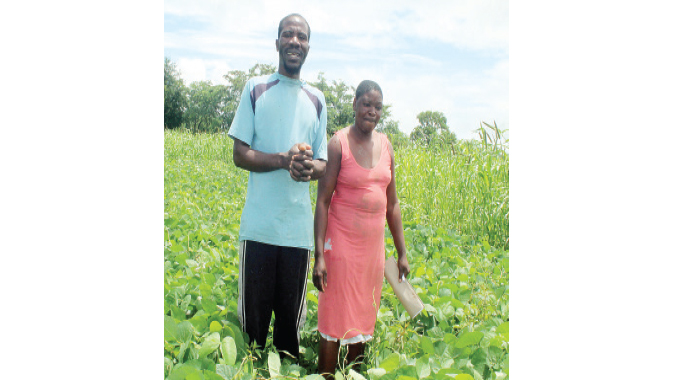
Lumbidzani Dima, Chronicle Reporter
WHILE most farmers in the country major in growing maize, Matobo farmer Mr Richard Moyo has a different story to tell.
Mr Moyo and his wife Sichelesile from Vimbi Village in Matobo District Matabeleland South grow mostly pearl millet and sorghum, as well as fodder for their livestock.
They also have maize and managed to deliver some to the Grain Marketing Board (GMB).
None of them is employed and they depend solely on farming as their source of income.
They did not get much from it in previous years, but after joining a Zimbabwe Agricultural Knowledge and Innovation Services (Zakis) projects programme, they are now producing more and gaining more.
Equipped with the knowledge they obtained from the Zakis projects and the seeds they were provided with by both the organisation and Government, the couple that has three children of school going age, planted crops on a five-hectare field, and are optimistic of a bumper harvest.
“We have pushed our children’s education from selling our farm produce.
“In our area, farming meant planting maize and maybe groundnuts and round nuts.
Those are the crops that do not give farmers problems like traditional grain crops.
That is what lack of knowledge made us believe, when in actual fact these crops are also manageable.
We are grateful for these programmes, as they opened our eyes.
Their work is evident from the sight of our field, we will produce a lot this year,” said Mr Moyo.
He said he has always loved farming that is why his family has been able to plant a five-hectare field without the help of a tractor.
“I have farming at heart, I just used to do it wrong.
Now that I have been taught about spacing and all, I am motivated.
We planted our field as a family, using a plough pulled by donkeys.
We never felt the need of hiring a tractor because we can do it on our own,” said Mr Moyo.
People avoid growing millet and sorghum partly because birds are problematic, but the family found a way of dealing with them using a system of strings and bells.
“Last year, we tried out different farming methods for pearl millet, and produced more, so we chose to use it this year.
To deal with birds, we connect a network of strings and bells across the plots where these grain crops are planted.
When birds attack our crops, we chase them away by just pulling a string leading to bells jingling which then chases all of them away,” said Mr Moyo.
Mrs Moyo joined in and spoke about their fodder project.
“These traditional crops will help add to the feed for our livestock, and for us people as we can produce mealie-meal from them, and sell the remainder.
“Because maize is a major crop in our country, we planted it as well, we are running a business here.
This is our only source of income so we cannot ignore that people need and want maize. After joining the programme last year, we managed to sell two tonnes of maize to the GMB and this year we might sell more,” she said.
Ms Moyo commended the effectiveness of fodder on their goats.
“Since we started planting fodder and providing it to our goats, they have gained weight.
I personally recommend it to farmers, they should start growing it and try it on their livestock.
It’s the best of all the feeds that we have tried out,” she said.
Ms Moyo said what keeps them going and has made some neighbours join the project is that they keep records of everything they do, from dates of planting crops, to applying pesticides, right up to harvesting, and the income they get.
Zakis head of projects, Mr Kumbirai Nhongo said through their projects, they create agricultural centres where farmers are practically taught productive farming.



 Online Reporter