Online Reporter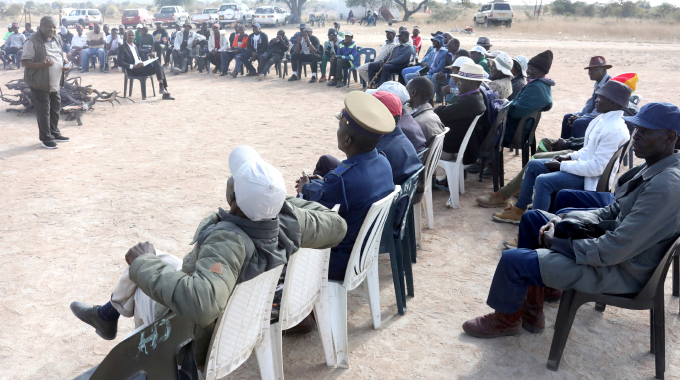
Nomalisa Gumpo, [email protected]
MEN from Ward 6, Umguza, Matabeleland North gathered recently to openly discuss mental health, gender roles, societal expectations and health-related issues during a Men’s Indaba, a platform that allowed them to share their challenges and lived experiences.
The indaba, hosted last week by Umguza Ward 6 Councillor, Ms Busisiwe Brown, provided a safe space for men to connect, reflect and speak candidly with many acknowledging the silent struggles they face.
Traditional beliefs were identified as a major contributor to the various difficulties the men endure, compounded by a general lack of awareness.
Societal pressure, to “prove” their masculinity and the absence of emotional support from families were also cited as key factors affecting their well-being.
The head of the village, Mr Director Ndlovu, highlighted the growing mental health crisis among men in the community, pointing to rising cases of suicide.
“In our area, we live near railway lines, and we often wake up to news that a man has taken his own life. Only later, do we learn that he had marital issues he couldn’t speak about.
“Our culture teaches that ‘indoda ayikhali’ (a man does not cry), and that belief has destroyed many of our people, who were simply trying to hold themselves together and appear strong,” Mr Ndlovu said.
He noted that changes in family dynamics and economic hardships have left many men feeling powerless, particularly when women take on the role of primary provider.
“Organisations come up with programmes for women , teaching them, funding their businesses, but we are left behind with no plans or sponsorship to make money,” he added.
Mr Ndlovu also spoke about the neglect of the boy child saying it has contributed to a generational cycle of broken men. While much focus has been placed on empowering the girl child, the boy child has largely been overlooked.
“These boys end up herding cattle with no other prospects, and they grow bored. They turn to cheap drugs that ultimately ruin their lives.”
He stressed the need to empower boys equally, especially given the expectation that they will become responsible husbands and fathers. Men were encouraged to revive traditional practices in which older men would mentor younger ones, providing a more supportive structure.
Health was another key topic, with Dr Tinashe Muzanenhamo addressing the lack of awareness around prostate cancer in rural areas.
He explained that due to cultural beliefs and limited access to healthcare, men often avoid or delay screening. He emphasised the importance of early detection and spoke about the Prostate-Specific Antigen (PSA) test as a crucial tool.
However, the cost of screening remains a major barrier, with many rural men unable to afford travel to hospitals in urban areas.
In response, Councillor Brown pledged to address the lack of awareness and improve healthcare access for men in the ward.
“Going forward, our annual health expos will include men-only sessions, with screenings conducted by male health professionals, to ensure privacy and comfort. We will also seek funding so that every man in the ward can access free prostate cancer screening every two years,” said Clr Brown.
The indaba also touched on entrepreneurship, with local businessman Mr Joe Kahwema encouraging men not to rely solely on subsistence farming.
“As men, we must do something extra. Living in rural areas should not limit our ability to earn. You can start something small and become a role model to your children. If we become good examples, we’ll reduce problems like drug abuse and suicide,” he said.
During the discussions, participants also addressed the issue of Gender-Based Violence, noting how it is often normalised within the community under the guise of discipline.
The indaba marked a significant step towards giving rural men a voice, while highlighting the importance of their mental and physical well-being, not just for themselves but for future generations.