Chronicle Editor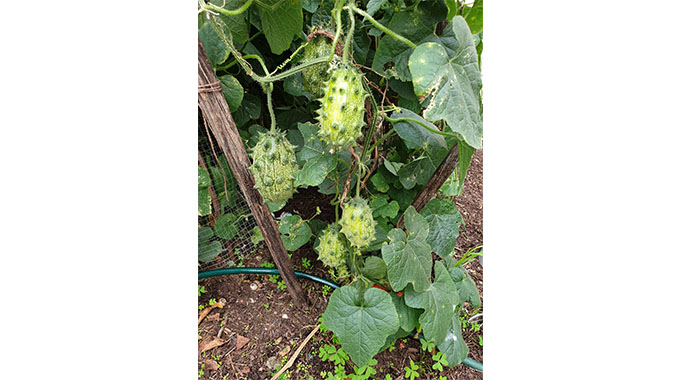
Sikhulekelani Moyo – [email protected]
THE growing demand for kiwano melon in the export market has created an opportunity for rural women to participate in economic development as the product requires little capital, an expert has said.
The projects will be carried out in Matobo, Umguza, and Mberengwa.
Speaking to Business Chronicle, Green Afrique Technologies (GAT) chief executive officer Mr Anglistone Sibanda said there is a high demand for kiwano melons, also known as magaka, in the United States of America where prices are ranging from US$5 to US$7 each.
In the local market, magaka are being sold for as little as a dollar a pack of about five to eight which gives farmers less interest to engage in producing the product.
Mr Sibanda said the product is easy to produce as it needs minimum labour, less capital and it has a longer shelf life outside cooling facilities, hence a good opportunity for women in rural areas.
He said the product is one of the traditional plants that will also promote food security and enhance livelihoods in rural areas along with the President’s vision of leaving no one or any place behind.
“There is a growing demand for kiwano melon in the USA and as GAT we want to grab this opportunity and capacitate women in deep rural areas so that they can be able to produce and participate in economic growth,” said Mr Sibanda.
“We are preparing to start training before August in Matobo, Umguza, and Mberengwa as we found out that the areas have suitable soils and climate for the product and we want to target this year’s planting season to start the projects.”
Mr Sibanda said to allow women to actively participate in this project they will be selling required varieties at a low price so as to minimise costs of production.
GAT is a private organisation that works with small-scale farmers and marginalised communities across the country creating a vibrant, robust, and efficient agri-business value chain with the objective of stimulating local economies as well as empowering smallholder farmers through capacity building, strategic partnerships, and market linkages, among others.
Meanwhile, Mr Sibanda said they will be starting to export granadilla to France, a process which is set to commence after winter. “We are targeting to export about two tonnes per week since the production is still low, but we will be scaling up as many farmers join the sector,” he said.
Granadilla is a high-value crop that needs too much capital to start production hence few farmers are engaged in the sector.
Mr Sibanda said they signed a carriage paid-to (CPT) contract with a French company, which will be doing all the processes for the product to reach the destination market.
“This will help us to cut logistics costs and the company is also working with Zambian farmers and they’re willing to extend it to Zimbabwe,” he said. — @SikhulekelaniM.



 Online Reporter