admin
admin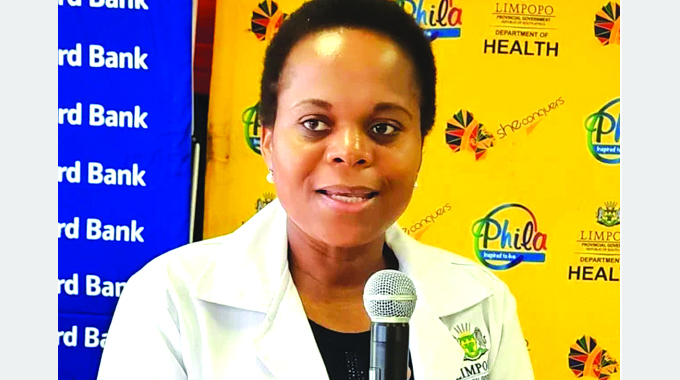
Dr Masimba Mavaza
Social media was this week awash with a video of a member of the executive council of health for Limpopo Province in South Africa, Phophi Ramathuba, harassing a Zimbabwean patient who was awaiting surgery.
Without going into the pathetic unprofessional behaviour of Ramathuba, it is important to look at the South African law on health care of immigrants.
There are different national laws and policies in South Africa that map out who is able to access health care, and who must pay for these services.
The rights set out in the Constitution of South Africa provide for all people within South Africa, regardless of their nationality or legal status.
This fact has been confirmed by South African courts.
The Constitution states that everyone has the right to have access to health care services, and no one may be refused emergency medical treatment.
Furthermore, the issue of the health care in South Africa is covered under the National Health Act which confirms that:
All persons in South Africa can access primary health care at clinics and community health centres.
All pregnant or breastfeeding women and children under the age of six are entitled to health care services at any level. There is again a provision under the Refugees Act of South Africa.
The Refugees Act sets out rights for asylum-seekers and refugees in South Africa. It states that:
Refugees in South Africa have the same right to access healthcare as South African citizens. This right is widely interpreted to include asylum-seekers, as well.
The ministry of health which is actually where the unprofessional Ramathuba work issued a circular in 2007.
This circular confirmed that:
Refugees and asylum seekers, with or without permits, can access the same basic health care services as South African citizens (which means it is free at point of use, but can be charged thereafter), and
Refugees and asylum seekers, with or without permits, can access Antiretroviral Treatment in cases of HIV.
The Refugees Act, the Department of Health Circular, the Immigration Act and the Constitution state that all people in South Africa, regardless of status or nationality, have the right to have access to health care services, and that ‘no one’ may be refused emergency medical treatment.
It is painful that Ramathuba is so ignorant and utters inflammatory statements.
If South Africa is burdened by an influx of health or medical tourists, they must make a historic legislation to transform their health care system.
Politicians, who are hoping that this legislation would affect nearly all South Africans, could also realise that the people least affected may be those in the country illegally.
The treatment given to some Zimbabweans by some South Africans is depressing.
Humanity demands and requires that hospitals must provide emergency care, including dialysis, to any patient regardless of immigration status who presents with a life-threatening condition.
With the unprecedented international migration seen in recent years, policies that limit health care access have become prevalent.
Barriers to health care for undocumented immigrants go beyond policy and range from financial limitations, to discrimination and fear of deportation.
There is a large chunk of good South Africans who cannot stand the barbaric attack against Zimbabweans.
It is a fact that South Africa must do more to protect people migrating from their native countries. But the crux of the matter is grounded on why South Africa is a favourite destination for many.
For some strange reasons, Zimbabweans have become the most targeted migrants in South Africa by those who are xenophobic.
Many foreigners in South Africa are called illegal immigrants even when they are well documented.
What we have been seeing in South Africa is institutionalised xenophobic attacks. Violence targeted at foreign nationals and their properties in South Africa has left hundreds of them displaced from their homes.
South Africa has experienced brutal cycles of xenophobic violence. These have led to horrific murders, and to displacement of thousands of cross-border migrants, mostly from Africa.
Worse, these attacks have led to fear and suspicion and terror.
Xenophobic attacks have left many foreigners in South Africa troubled.
Mathew Ncube, a Zimbabwean victim of the xenophobic attacks said: “They came to us and they said, ‘We don’t want Zimbabweans here because you cause problems as foreigners. You are committing crimes and taking our women. They said you took our wives. You took our jobs and you do nothing here.”‘
Also recounting past xenophobic attacks, a Zimbabwean female victim said: “I’m a married woman. So, I had to carry my baby in my hand to run away during the night around twelve mid-night because it was just like we are in a war zone.”
The South African government has condemned xenophobic attacks and vowed to bring them to an end.


 Online Reporter