admin
admin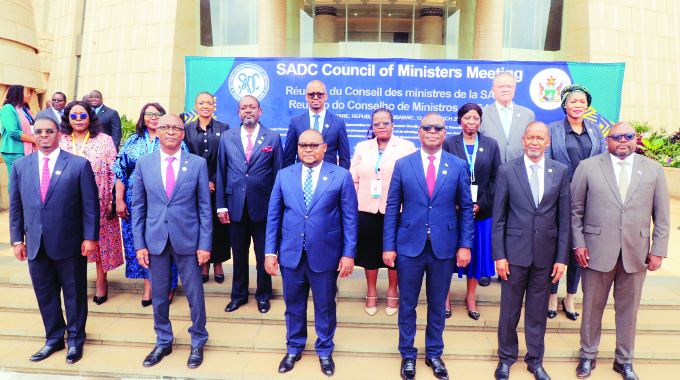
SARDC Writers
The SADC Council of Ministers this week convened for its first meeting of 2025 with a comprehensive agenda focusing on assessing progress in advancing the regional integration agenda.
The chairperson of the Council of Ministers, Professor Amon Murwira of Zimbabwe, presided over the meeting, which commenced on Wednesday and ends today.
The agenda included a review of the SADC Secretariat’s annual corporate plan and the budget for the 2025/26 financial year, with a focus on funding interventions aligned with regional priorities outlined in the SADC Regional Indicative Strategic Development Plan (RISDP 2020-2030).
The annual corporate plan approved by council in August last year, serves as a strategic framework for implementing programmes during the 2025/26 financial year, which runs from April 1, 2025 to March 31, 2026.
The adequacy of resources for the SADC secretariat remains a key challenge for the regional organisation in advancing its integration, economic growth and development objectives.
The secretariat, led by Executive Secretary Elias Magosi, is the principal executive organ of SADC for strategic planning, coordination and management of programmes.
Its financing has over the years remained a sticking point as programmes have relied mainly on donor support, with member states finding it difficult to provide adequate financing.
The year 2025 marks the midpoint in the implementation of the RISDP 2020-2030, which outlines six strategic priority areas.
These include the foundational pillar of peace, security, and good governance, as well as key focus areas: industrial development and market integration, infrastructure development to support regional integration, and social and human capital development.
In addition, cross-cutting issues such as gender equality, youth empowerment, environmental sustainability, climate change adaptation and disaster risk management remain integral to the plan’s objectives.
With five years remaining before the conclusion of the RISDP 2020-2030, the Harare meeting provided an opportunity for ministers to assess progress in achieving key regional integration milestones.
Among the targets set for attainment by 2025 are the establishment of a regional financing mechanism to support industrialisation, the operationalisation of the SADC humanitarian and emergency operations centre, and the enhancement of regional energy security through increased generation and cross-border power trade.
Industrialisation has been a cornerstone of SADC’s regional integration agenda, with its prioritisation commencing in 2015. This strategic focus aims to harness and maximise the potential of SADC’s abundant natural resource endowments through value addition and beneficiation processes.
By doing so, SADC seeks to generate employment opportunities, stimulate economic growth and enhance the socio-economic well-being of its nearly 400 million citizens.
The ministers also evaluated progress in strengthening market integration, advancing infrastructure development and addressed cross-cutting challenges such as climate change and disaster risk management.
Zimbabwe, the current SADC chair, is championing the 16-member organisation’s agenda under the theme “Promoting Innovation to Unlock Opportunities for Sustained Economic Growth and Development towards an Industrialised SADC”.
Another significant issue that dominated discussions during the ministers’ meeting was the progress made by member states in fulfilling their commitments to the Tripartite Free Trade Area (TFTA) and the African Continental Free Trade Area (AfCFTA).
The ministers were scheduled to explore strategies designed to maximise regional benefits from the TFTA, which SADC established in collaboration with the Common Market for Eastern and Southern Africa and the East African Community, officially coming into effect on July 25, 2024.
The TFTA is one of the building blocks of the AfCFTA and presents substantial opportunities for SADC member states, enabling them to access an expanded market encompassing 26 countries in eastern and southern Africa — a combined population of approximately 700 million people and a gross domestic product of US$1 trillion.
Among other critical issues addressed by the Council of Ministers was the security situation in the eastern Democratic Republic of Congo (DRC) which has faced persistent instability, characterised by ongoing attacks by foreign-sponsored rebels that have severely impacted local communities and hindered development efforts.
In response, the bloc has been actively engaged through the SADC Mission to the DRC (SAMIDRC), providing support to government forces in their efforts to restore peace and stability.
In line with the SADC Mutual Defence Pact, which states that “an armed attack against one shall be deemed a threat to regional peace and security,” SAMIDRC was deployed on December 15 2023, and had its mandate extended by another year at the summit held last year.
The ministers received an update on the progress made towards finalising the reform process in the Kingdom of Lesotho.
SADC, through its Panel of Elders led by former Tanzanian President Jakaya Kikwete, has played a pivotal role in facilitating a comprehensive constitutional reform initiative designed to foster enduring political stability within the kingdom.
Another key point of discussion for the regional ministers was member states that are holding elections this year. The polls are expected to follow best practices as set out in the SADC Principles and Guidelines Governing Democratic Elections.
Malawi, Tanzania and Seychelles will hold general elections this year. For Malawi and Seychelles, the dates have been provisionally set for September 16 and September 27, respectively, while those for Tanzania are expected in October.
Southern Africa remains highly vulnerable to the devastating impacts of climate change, with natural disasters such as cyclones, droughts and floods posing significant threats to lives, livelihoods and infrastructure.
In this context, disaster preparedness is expected to feature prominently on the Council of Ministers’ agenda.
Following the directive of the Heads of State and Government in August 2024, the council deliberated strategies to strengthen monitoring of weather and climate risks and to advance contingency measures aimed at mitigating the adverse effects of these increasingly frequent and severe events.
The SADC Council of Ministers oversees the function and development of the bloc and ensures that policies and decisions are implemented accordingly.
It consists of ministers from each of the 16 SADC member states; usually from the ministries responsible for Foreign Affairs and International Relations, Economic Planning. Finance or Trade.
It meets twice a year in March and August just before the summit of Heads of State and Government.
The ministers’ meetings were preceded by meetings of the SADC senior officials, the SADC standing committee of senior officials and finance committee, which met between March 4-8. – sardc.net.


 Online Reporter