Online Reporter
Tendai Gukutikwa
Health Reporter
THE former psychiatric unit at Sakubva District Hospital is being transformed into a drug and substance abuse rehabilitation centre, as Manicaland intensifies efforts to combat the province’s growing addiction crisis.
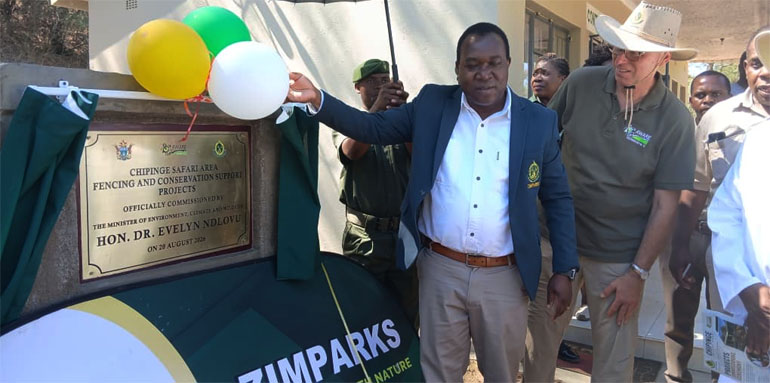
Launching the rehabilitation project on Tuesday, Minister of State for Manicaland Provincial Affairs and Devolution, Advocate Misheck Mugadza, said the facility will provide critical treatment, care, and support for affected individuals.
“Today, we launch the commencement of work to rehabilitate the former Sakubva Psychiatric Centre at Sakubva District Hospital. This structure is now being repurposed into a drug and substance abuse rehabilitation facility,” said Minister Mugadza, adding that the project received significant support from Mutare City Council, which provided both the infrastructure and funding for the rehabilitation work.
“We also applaud Mutare City Council for availing Sakubva Psychiatric Unit for rehabilitation and for funding to the tune of US$300 000 to commence work,” he said.
He also acknowledged the role of First Lady, Dr Auxillia Mnangagwa, whose advocacy for rehabilitation centres—drawing lessons from similar programmes in Harare—helped drive the project forward.
“We sincerely thank the First Lady, Her Excellency, Dr Auxillia Mnangagwa, whose wisdom and guidance have pushed us to pursue this, guided by the lessons drawn from similar facilities she is running in Harare,” he said.
The rehabilitation of the Sakubva facility comes as private rehabilitation institutions in the province struggle to cope with a surge in drug and substance abuse cases.
“There are five private rehabilitation centres currently offering assistance to those affected in the province. These facilities are sometimes overwhelmed by the growing number of affected people, and in some cases families cannot afford their services. Hence there is a great need for Government-run institutions,” said Minister Mugadza.
As part of efforts to decentralise rehabilitation services, the Government has earmarked facilities across districts to operate as rehabilitation centres.
In Mutare, authorities are considering both the Sakubva Psychiatric Unit and Victoria Chitepo Provincial Hospital, while Chimanimani is expected to have centres at Mhakwe Kwayedza, Gangster and the Nyabamba Evacuation Centre. In Mutasa District, Toronto, Old Mutare and Hauna Hospital have been proposed as rehabilitation centres, while Mudanda has been identified in Buhera.
Rusape General Hospital has been earmarked for Makoni, Nyangombe for Nyanga and Kondo for Chipinge.
Minister Mugadza said the centres will improve access to treatment and integrate restorative care into the province’s health delivery system.
Last year, an Anti-Drug and Substance Abuse fundraising campaign was launched, with individuals and corporates in Manicaland pledging US$620 000. Minister Mugadza thanked those who honoured their pledges, and urged others who are still to pay, to do so, saying their contributions will be vital to the success of the centres.
“These resources will help us expand access to rehabilitation services and ensure that restorative care is integrated into our health delivery systems. The training of more mental health professionals and the provision of aftercare services to reduce relapse will be prioritised. We are promoting harm reduction strategies such as counselling services, community-based support programmes and public health education to minimise these risks,” he said, adding that counselling and awareness programmes are already being rolled out across the province.
“Five hundred counselling sessions have been conducted so far, alongside 19 community-based support programmes and public health education initiatives. Reducing stigma remains a priority so that individuals can seek help without fear of discrimination. Government is implementing a comprehensive, multi-sectoral National Drug and Substance Abuse Response Plan, anchored on the following key pillars: Prevention and Demand Reduction; Treatment, Rehabilitation and Reintegration; Law Enforcement and Supply Reduction; Harm Reduction and Public Health Protection; and Coordination, Policy and Governance. These pillars remain active in supporting all efforts to combat this menace, and I urge our districts to match the drive so that together we fight this with the zeal and aggressiveness it deserves,” he said, adding that substance abuse is contributing to school dropouts, mental health disorders, family disintegration and criminal activity among young people.
He added that Government is strengthening preventive programmes in schools and communities to reduce cases of addiction.
“Life-skills education is being strengthened in schools, while community outreach programmes are being rolled out in collaboration with traditional leaders, churches and civil society. Evidence shows that early intervention significantly reduces the likelihood of lifelong addiction,” he said.