admin
admin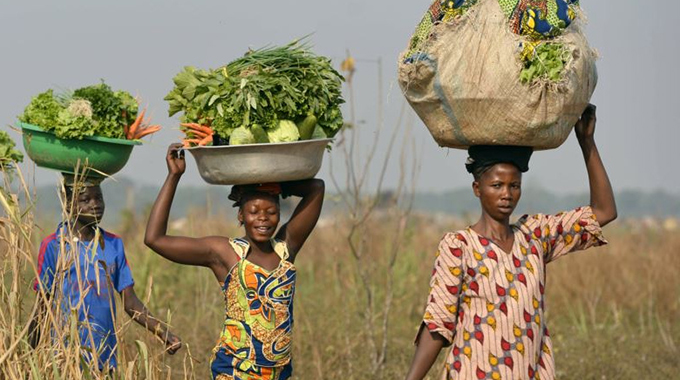
Fadzayi Maposah, Correspondent
Growing up, my time was split between the rural and urban areas.
Kumusha then was either a visit to my maternal grandmother’s home kuRockford in Shurugwi or when my paternal grandmother was still fit and able to stay alone, kuChikato, Shurugwi.
A trip to see one grandma inevitably meant quality time with both. My parents had cost effective plans towards us.
The parents ensured we had a special connection with our grandmothers, the only grandparents we knew, through regular visits.
They also had to strike a balance between the two grandmothers such that none felt that one was being favoured.
There are people who can throw in spanners into the work. For example, someone from Chikato would see us at Rockford and then tell our maternal grandmother VaMaMoyo that they had seen us.
Or vice versa, see us kuChikato and inform my paternal grandmother VaMaSibanda that we were in the neighbourhood.
Knowing both my grandmothers as I did, their responses were not to throw a tantrum but to say calmly, “vachauya havo” which loosely translated to “they will come in their own time.” The two words “vachauya havo” were also used for those who had not visited them in a long time.
The words were a sign of hope and I am sure it was to manage the stress when people did not visit as often as they expected. Expectations versus reality.
When my two grandmothers were not able to stay alone kumusha, they came to stay with us, though at different times. VaMaSibanda stayed with us first and she died while under my parents’ care.
Many years later VaMaMoyo came to stay with us. When the grandmothers stayed with us, the word kumusha meant more, kuSanyati in Mashonaland West away from Midlands Province.
The two women were important in allowing me to see and understand the other side regarding how others in the rural areas lived.
My grandmothers did not want us to lag behind as far as what girls or boys of our age could do.
When the boys went to herd cattle, my brothers joined them. When it was time to get firewood or fetch water, my sisters and I would join the other girls.
What we struggled to do or required extra energy on our part, our relatives would do it with much ease.
Exposure is always important. When our relatives came visiting where we stayed, things that we took for granted, they would want a bit of assistance.
Through my experiences in childhood, I realised there is always someone who knows something that you do not and actually thinks that no matter how complicated it is, that it is actually simple.
Now the rural areas of my childhood times are not the same as the current setup.
Back in my girlhood, there were candles and predominantly paraffin lamps.
While candles are still in use in the rural areas there has been an increase of the solar lights in use.
Some homes are connected to the national electricity grid.
There are many developments in the rural areas that have changed the landscape and the lives of the people who reside there.
There are some aspects of rural life that have not changed; the hormones. The reproductive health cycle.
While the type of sanitary ware used can have changed for the women in the rural areas, the distances to some health centres is long and one may have to walk the long distance to get the service.
The distance between the home and the health facility may lack ablution facilities unless one has the guts to ask for a toilet from home owners along the road or may wait to get to a relative`s home.
In rural areas in Zimbabwe, most families earn their living from farming.
There are aspects that are tricky when it comes to women`s reproductive health.
If the fields are far and toilets at the fields are something that can be considered as out of the world.
What I have seen in some fields are make shift shelters to shield from rains while people are at work there. Toilets I have not seen.
Since I have not seen them, I am not dismissing that they could be in areas I have not yet been to.
The conclusion though is that people should make use of ablutions while at home and maybe the bush when they are at work.
So what happens if one female wants to relive herself and she is also on her menses?
Must she then call out for a hoe to cover?
What about the rural female farmers who travel to city centre markets to sell their produce, seated in corners of lorries with their vegetable crates?
They are the ones who look out for their own needs. One shared that in cases of duties/tasks that may take time, she and her fellow female counterparts have learnt to ply (double) or triple the sanitary pads in use at any given time or even use the maternity ones.
Through the dedication of women, the rural areas have become attractive. For years, women who kept homesteads fully functional while spouses were at work in the cities.
International Day of Rural Women ithat was designated by the United Nations General Assembly is celebrated every year on October 15 with the aim of highlighting the role and situation of women in rural areas.
This year, commemoration were held at Chiutsi in Mutoko, Mashonaland East.
This year’s theme for 2024 is: “Rural women cultivating good food for all.”
This theme highlights the contribution by rural women from crop production to food distribution, despite facing systemic inequalities such as limited access to land, financial resources and decision-making power.



 Online Reporter