admin
admin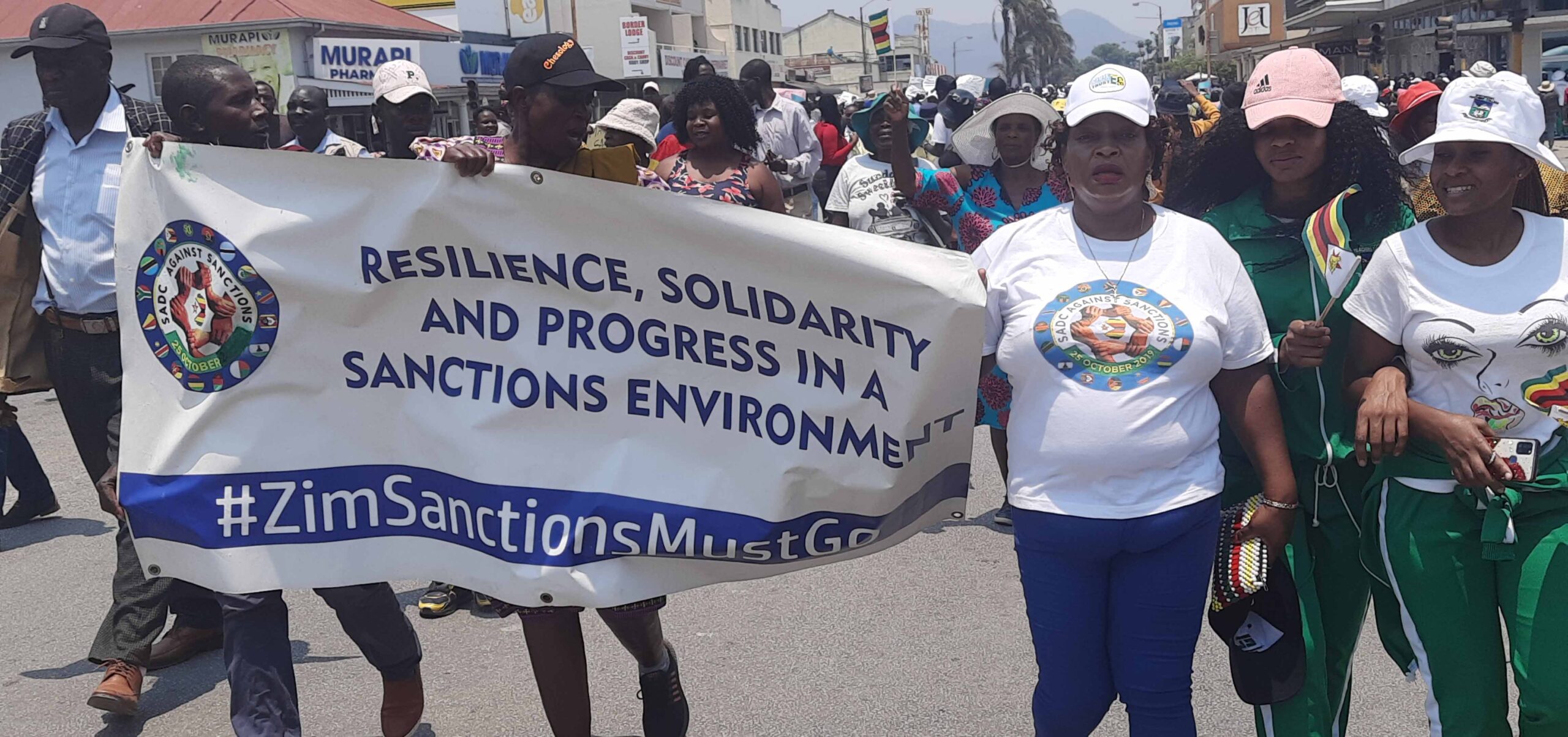
Mukachana Hanyani
Post Correspondent
“TO separate the Zimbabwean people from Zanu PF, we are going to make their economy scream, and I hope you Senators have the stomach for what you have to do.”
This was said by former US Assistant Secretary of State for African Affairs, Mr Chester Crocker, on June 13, 2000.
The statement made it abundantly clear that the objective of imposing the sanctions was to cripple Zimbabwe’s economy so that the US and other Western countries could use the resultant socio-economic challenges to incite people to rise against their Government using protests.
This would have enabled the West to replace Zanu PF with the then Mr Morgan Tsvangirai-led Movement for Democratic Change government in Harare, resulting in unfettered access to Zimbabwe’s vast minerals for the Western world.
Some opposition activists, other detractors and their sponsors always sell the propaganda that sanctions imposed on Zimbabwe are targeted at the Zanu PF leadership.
They mislead their gullible supporters to back their false view that sanctions are targeting Zanu PF leadership, but nothing is further from the truth.
Sanctions were imposed on the country by the US and other Western countries in reaction to the land reform programme which Government embarked on in 2000 to address land ownership imbalances in the country.
As a result of the sanctions, the country has lost well over US$42 billion in revenue over the past two decades.
This includes lost bilateral donor support estimated at US$4.5 billion annually since 2001, as well as US$12 billion in loans from the International Monetary Fund and World Bank.
And all those losses did not affect members of Zanu PF leadership alone, but the country’s 15 million people in one way or another.
The sanctions are not selective in terms of who to affect as even ordinary people who are not in Zanu PF or Government leadership have not been spared.
Despite the sanctions, Zimbabwe has not relented in her efforts to grow.
The country had made impressive success in key areas like health, education and other social service delivery sectors, mainly from internal resources.
Zimbabwe’s quest to attain the United Nations Sustainable Development Goals (SDGs) has also been severely impacted.
If one fails to realise that sanctions are a menace to everyone, including those in the Sadc region, they urgently need to have his or her head examined.
The punitive measures have brought a myriad of challenges to the agricultural sector.
Specifically, they made it extremely difficult for those in the farming business to access agricultural lines of credit and attract investment.
Accessing markets for horticultural products, sugar, beef and cotton, among other crops, was also negatively affected by the sanctions.
The horticultural sector was the fastest growing sector and generated significant amounts of foreign exchange.
At one point, it was the second largest foreign exchange earner after tobacco.
However, Zimbabwe lost most of its niche and lucrative markets for horticultural products, particularly in the Netherlands and the United Kingdom (UK).
Furthermore, Zimbabwe lost preferential tariff quota exports of beef, cotton and sugar to European Union (EU).
The loss of preferential tariff quota exports of agricultural products to EU by those in the farming business proved that sanctions were not only affecting the Zanu PF leadership, but most Zimbabweans in nearly every sector.
The agricultural sector has been further heavily affected by sanctions through high costs of borrowing and tight liquidity conditions.
Sanctions also affected the manufacturing sector through lack of long-term financing, which precluded the sector from accessing the much-needed capital injections for retooling.
Zimbabwe is well positioned to benefit from the African Continental Free Trade Area (AfCFTA) agreement, but for as long as its manufacturing sector remains suppressed by the sanctions, this will remain a pipedream.
Most sectors of the economy were not spared as energy infrastructure deteriorated since the imposition of sanctions due to decreased Foreign Direct Investment (FDI).
Availability of electricity is a necessity to everyone and every sector.
Its shortage affects most Zimbabweans.
Of course the Zimbabwean Government has not sat on its laurels, and made significant investments at Hwange’s Units 7 and 8, thereby improving the electricity situation.
Bad publicity has dealt Zimbabwe’s tourism sector a negative blow.
This is because Zimbabwe has been falsely perceived as an unsafe and risky country to visit, with the likes of the UK, US, Germany and Australia issuing negative travel advisories to their citizens.
This drastically reduced the number of tourist arrivals from the West, thereby destroying chances of Zimbabwe getting the much-needed foreign currency.
On the health front, Government performed commendably well in managing the spread of Covid-19 through stringent public health and social measures.
However, its efforts were adversely affected by the sanctions, which hampered its ability to import the necessary medical equipment, medicines and food from global markets.
Government is willing to engage and re-engage with sections of the international community which imposed the sanctions.
The latter must remove the illegal sanctions immediately and unconditionally to allow the country to move forward.
Zimbabwe and its Sadc partners therefore call for unity of purpose from all members of the international community in lobbying for the removal of these debilitating sanctions.
Recently in Nigeria, the All Africa Students Union (AASU) called for the removal of sanctions imposed on Zimbabwe.
They contended that sanctions were destroying the potential of Zimbabwean students to realise their goals.
As such, they called for African governments to urge the West to lift the sanctions imposed on Zimbabwe so that Zimbabwean students can unlock their potential.
So on October 25, the Sadc Anti-Sanctions Day, Zimbabweans from all walks of life should come together to demand the total removal of sanctions.
Zimbabweans, including those in opposition, should realise that, contrary to popular propaganda,the sanctions are not targeted at the Zanu PF leadership, but every Zimbabwean.
They are affecting everyone, including opposition members who misguidedly think that the measures are a tool on their side.
The effects of the sanctions do not discriminate on the basis of political affiliation.
For this reason, all Zimbabweans, irrespective of political affiliation, should join hands on 25 October to denounce the sanctions and call for their immediate and unconditional removal.


 Online Reporter