Online Reporter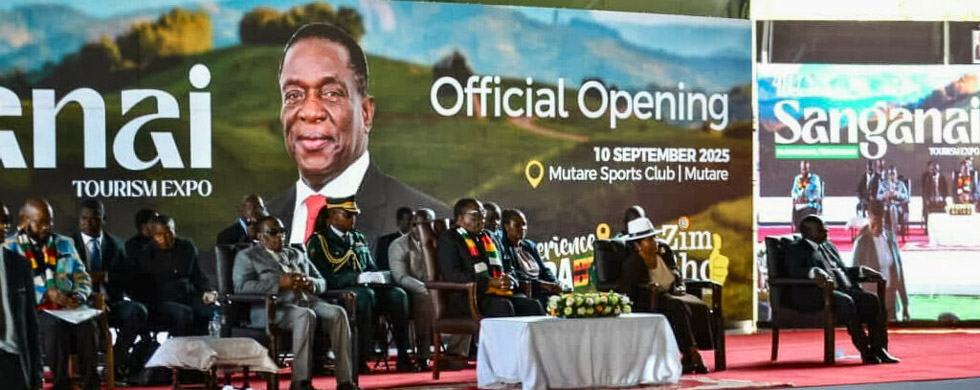
Tendai Gukutikwa
Post Reporter
THE curtain has come down on the exciting 2025 edition of the Sanganai/Hlanganani/Kumbanayi World Tourism Expo, which concluded in spectacular fashion with a colourful Save Beach Party at Birchenough Bridge in Buhera last Saturday.
For four days, Manicaland played host to one of the world’s most significant tourism gatherings, and as the music faded on the sandy banks of the mighty Save River, it was clear that this year’s Expo was, not just a showcase of Zimbabwe’s tourism potential, but also a catalyst for investment, development, and renewed optimism in the Eastern Highlands.
The Expo brought together local and international buyers, exhibitors, investors, and Government leaders, who all converged in Mutare and across Manicaland to witness firsthand the region’s diverse tourism attractions.
It was more than a meeting point, it became a bridge between Zimbabwe and the global tourism market, a stage where Manicaland showed off its finest gems from the rolling tea estates of the Eastern Highlands, the grandeur of Chimanimani, to the wildlife sanctuaries of Nyanga.
What set this year’s edition apart was the deliberate effort to bring development closer to the people of Manicaland.
In an interview, Tourism and Hospitality Industry Minister, Honourable Barbara Rwodzi, said the Expo was evidence to Government’s resolve to spread tourism benefits to all provinces.
“We wanted to show the world that Manicaland is, not just a host, but a tourism powerhouse in its own right. The infrastructure put in place, the buyers’ tours, and the partnerships established here will continue to bear fruits long after the last visitor has departed,” she said.
Minister Rwodzi added that Government’s intention is to ensure that tourism development is inclusive and sustainable.
“Tourism is not, just about hotels and flights, it is about communities, jobs, and pride in our heritage. By hosting this Expo in Manicaland, we gave the world a chance to experience a different side of Zimbabwe, one that is green, mountainous, and rich in culture,” she said.
She also emphasised the role of international partnerships forged during the Expo.
“We have secured interest from investors in eco-tourism, heritage tourism, and hospitality training. These are not promises in the air, but concrete discussions that will be followed through with the support of Government and the private sector,” said Minister Rwodzi.
Looking ahead, she stressed that Zimbabwe’s tourism vision is to create opportunities for all provinces.
“We are not leaving any province behind. What Manicaland has experienced is the beginning of a rotational approach that will allow each part of the country to shine. Our goal is for Zimbabwe to become a global tourism giant, with each province showcasing its unique contribution to that story,” she said.
The buyers’ tours that preceded the Expo highlighted the natural splendour of the Eastern Highlands. International investors were treated to guided tours of Nyanga National Park, Mutarazi Falls Skywalk, and tea plantations in
Chipinge, creating a tangible connection between the delegates and the tourism products they were being asked to sell.
Investors who attended the Expo also left a mark.
Several business representatives from South Africa, the Middle East, and Asia expressed interest in partnering with local tourism players in the areas of eco-tourism, hotel investment, and cultural heritage tourism.
Many expressed delight at the experiences, with some immediately opening discussions with local operators.
French buyer, Miss Claire Desmaretz, who is the marketing and communications manager for Marco Vasvo Travel Agency, said the diversity of tourism offerings in Manicaland is a “well-kept secret waiting to explode on the international market.”
She said her company is also moving towards formalising agreements with local operators.
“Our objective here is to secure partners. Zimbabwe’s Eastern Highlands stand out as a destination we can market.
‘‘The range of activities from birding to ziplining and waterfalls offers us a complete product. We are certain French tourists will respond well,” she said, adding that her company is already preparing marketing material to promote Zimbabwe as part of its African tour packages.
She said she was impressed by the facilities, products, and destinations showcased, and negotiations are already underway to integrate Zimbabwe into their international packages.
Another buyer from India, Mr Nitesh Agarwal, founder of Wings N Nest, said his first visit to Zimbabwe and the Eastern Highlands, showed clear opportunities for expanding his company’s packages.
Mr Agarwal said his firm’s entry into Zimbabwe will open the market to a large base of Indian travellers. This year’s Expo was also marked by significant infrastructural upgrades.
The Harare–Mutare flight was launched, restoring aerial connectivity to the province after years of absence, and the Grand Reef
Aerodrome underwent refurbishment to accommodate the renewed air traffic.
On Monday, Air Zimbabwe also announced that the Harare-Mutare flight was, not just a temporary thing, but it will stay as is as it is connecting Mutare and Victoria Falls.
Speaking on the sidelines of the Expo, Transport and Infrastructural Development Minister, Honourable Felix Mhona, said this development will help unlock Manicaland’s full tourism potential.
“Transport infrastructure is the lifeblood of tourism. The revival of air connectivity, coupled with ongoing road rehabilitation works, means that visitors will have easier, faster, and safer access to Manicaland’s treasures,” he said.
He further explained that the upgrades are part of a broader Government strategy to modernise national infrastructure in line with Vision 2030.
“We are not just focusing on Manicaland. We are creating a seamless transport network across the country, because tourism does not exist in isolation, it thrives when roads, rail, and air services work together. Manicaland is a good example of how this integrated approach can breathe new life into regional economies,” Minister Mhona added.
In an interview as well, Minister of State for Manicaland Provincial Affairs and Devolution, Advocate Misheck Mugadza, captured the province’s pride.
He said the Expo placed Manicaland firmly on the global tourism map.
“For many years, we have said Manicaland is Zimbabwe’s tourism jewel, but now the world has seen it.
‘‘The economic impact of hosting the Expo is already being felt in Mutare and surrounding districts, from hotel bookings to small businesses benefitting from increased demand. The real legacy, however, is in the investments and confidence this event has unlocked,” he said.
He said the Expo also carried a cultural flavour that made it uniquely Manicaland.
Traditional music, dance, and cuisine were showcased throughout, giving visitors an immersive experience that went beyond sightseeing.
The Save Beach Party provided the perfect finale, with delegates and locals mingling freely under the moonlit sky, dancing to both traditional drums and contemporary beats, and celebrating Zimbabwe’s diversity and hospitality.
But the significance of this year’s edition was, not only in what happened during the event, but also in what lies ahead.
Minister Rwodzi said the success of the Expo demonstrated that decentralising such events from Harare and Bulawayo to other provinces creates opportunities for balanced national development.
“Tourism is about inclusivity. By taking the Expo to Manicaland, we showed that every province has something unique to contribute to Zimbabwe’s tourism narrative. This is not the end, but the beginning of a new chapter for provincial tourism growth,” she said.
The next Sanganai/Hlanganani World Tourism Expo, will be hosted in Masvingo Province, home to the Great Zimbabwe Monuments, Lake Mutirikwi, Tugwi-Mukosi Dam, Triangle sugar estates, and Gonarezhou National Park.
For Manicaland, however, the legacy of hosting this edition is secured.
Hotels reported full bookings, Mutare businesses recorded brisk sales, and transport operators enjoyed increased demand.
More importantly, the province gained visibility and international recognition that will continue to attract visitors long after the Expo.
Tourism players in the province have already started working on packaging their products more aggressively for global markets, buoyed by the exposure.
As the spotlight now potentially shifts to Masvingo, the message from Manicaland is clear-, the Expo is more than just a tourism fair, it is a driver of development, investment, and pride.
Manicaland has raised the bar high, setting a precedent that future host provinces must build upon.
As Minister Mugadza said during the closing ceremony:
“The world has seen Manicaland. The beaches of Save, the mountains of Nyanga, the forests of Chimanimani, and the vibrancy of Mutare have all spoken for themselves. Now, over to you Masvingo, show the world what you have, just as we did.”
The Sanganai/Hlanganani/Kumbanayi World Tourism Expo may have ended, but its echoes will continue to reverberate across Manicaland and the nation at large.