Online Reporter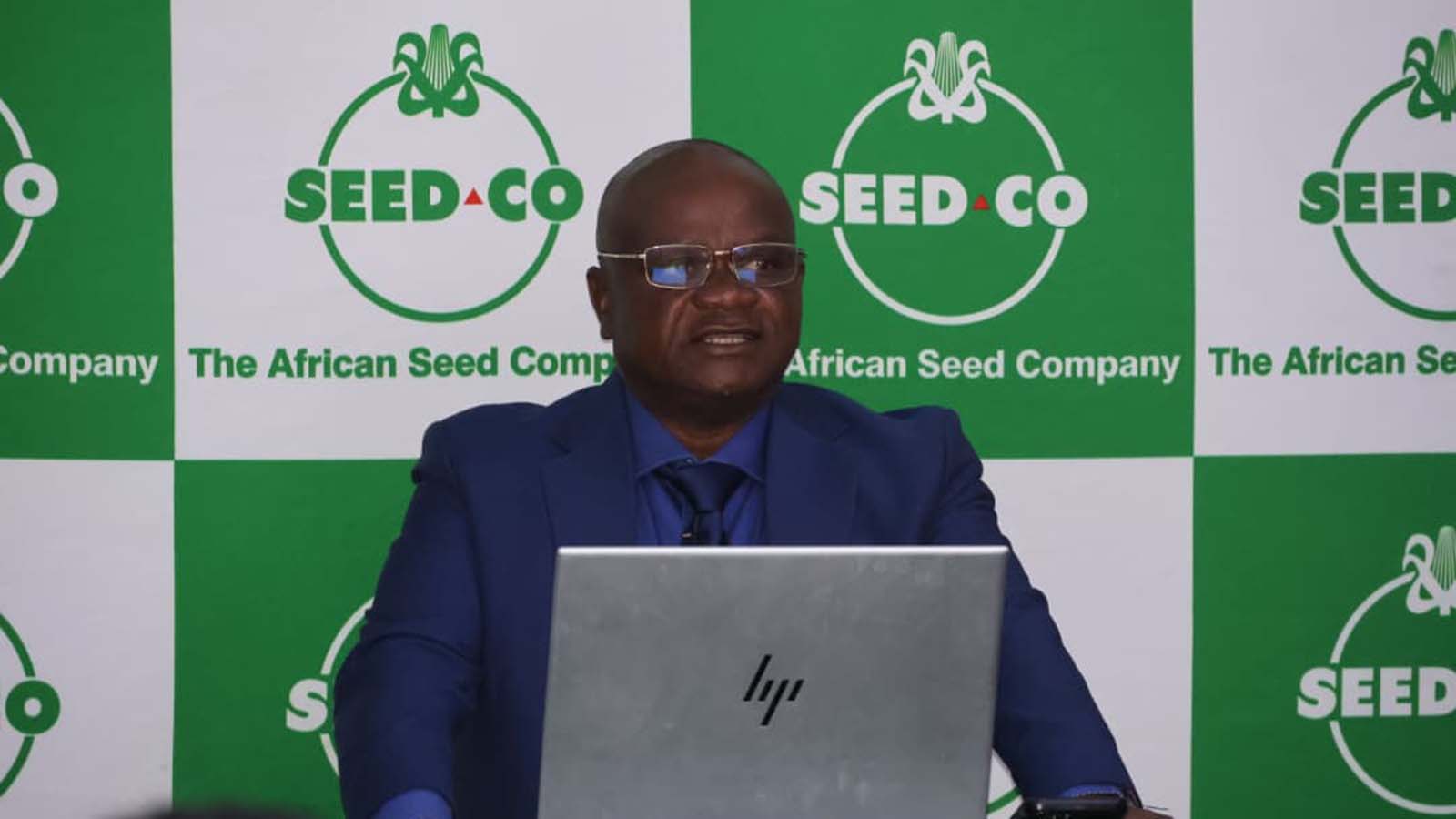
Theseus Mauruki Shambare
ZIMBABWE’S largest seed producer, Seed Co, is accelerating the integration of artificial intelligence (AI) into its agricultural value chain as the company moves to modernise crop breeding, seed processing and distribution systems in response to rising regional demand and climate pressures.
The development was revealed during the Seed Co Limited and Seed Co International analyst briefing for the year ended March 31, 2026, held on Tuesday, June 30, 2026, at the Standards Association of Zimbabwe (SAZ) in Borrowdale, Harare.
Seed Co chief executive officer Mr Morgan Nzwere said the company was increasingly aligning its operations with emerging digital technologies, including AI tools, to improve efficiency across research, production and distribution.
“Technology. Trying very much to align with what is happening in the AI space, and trying to make sure that in terms of the AI tools that are available, they do not remain static tools,” said Mr Nzwere.
He said the company was exploring the use of AI not only for preliminary research, but also for core agricultural processes, including plant breeding and factory operations.
“If you just want to do preliminary research, they can be useful, so we want to adopt AI and try and make sure that in our breeding processes, in our processing, in terms of factories and so on, we fully harness the full potential of AI,” he said.
Mr Nzwere said AI applications were also being considered in the distribution network, as Seed Co seeks to improve the speed and efficiency of getting seed to farmers across its regional markets.
“We are also trying to use it as much as possible in the distribution space, trying to see what we can do in that space. So it is a big area that we are looking at,” he said.
The move comes as Seed Co intensifies efforts to modernise its operations amid rising input costs, climate variability and growing demand for improved seed varieties across Africa.
The company, which has operations across Southern and West Africa, said technology was becoming central to maintaining competitiveness in an industry increasingly shaped by climate change and global supply chain disruptions.
Mr Nzwere said the group was also investing heavily in research and development, with its germplasm portfolio now over 85 years old and continuously being refreshed with new varieties adapted to changing conditions.
He said the company was focusing its breeding programme on key production challenges, including cob rot, fall armyworm and maize streak disease.
Seed Co also said it had significantly increased the use of irrigation in its production systems, with about 70 percent of seed production now under irrigation to reduce dependence on rainfall.
The company is also upgrading its supply chain infrastructure, including the introduction of colour sorters in Zimbabwe, which have replaced manual seed sorting processes that previously employed about 200 workers.
Mr Nzwere said the automation drive was improving efficiency and speeding up seed delivery to the market.
The analyst briefing also highlighted ongoing expansion in regional markets, with Tanzania emerging as a key growth driver and a new seed processing plant nearing completion.
Seed Co Group finance officer Mr Tinei Chatiza said the group’s revenue rose to US$161,3 million, driven largely by product mix and pricing rather than volume growth.
He said gross profit margins improved to 53 percent from 50 percent in the prior year, reflecting stronger pricing strategies and a shift in sales composition.
Community Action and Development Solutions (CADS) director Ms Lillian Machivenyika said technological advancement in agriculture must remain anchored on sustainability and food security.
“Sustainable agriculture is not just about growing more crops; it is about ensuring that communities can feed themselves year after year,” she said.
The adoption of artificial intelligence is expected to further strengthen Seed Co’s capacity to develop climate-resilient seed varieties and improve distribution efficiency across its growing African footprint.