


 malvernmugadzikwa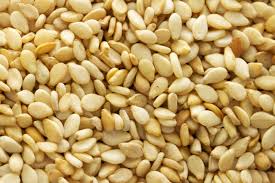
Word From The Market with Simon Pande
AGRICULTURE is the backbone of Zimbabwe’s economy; it contributes significantly to the country’s Gross Domestic Product.
Most raw materials required in the manufacturing sector are derived from agricultural production. Furthermore, employment creation and foreign currency earnings are some of the benefits that accrue from farming. Consequently, it is envisaged that agriculture will play a critical role in transforming Zimbabwe into an upper middle-income economy by 2030.
The anticipated contribution of agriculture to national development can only be achieved if issues around sustainability of the sector are holistically addressed.
The threat of recurrent droughts to sustainable agricultural production is real and cannot be overemphasised.
It is, therefore, imperative for all stakeholders in the agricultural space to develop mitigation strategies to curb the adverse effects of climate change, which are associated with erratic rainfall and recurrent droughts. The 2023/2024 agricultural production season is on record as one of the worst seasons for Zimbabwe in 43 years, and other Southern African nations.
The season was hit by the El Niño phenomenon, resulting in a severe drought across the country and in other Southern African countries.
Many households in the region are food-insecure due to the adverse impacts of climate change associated with El Niño.
According to the Second Round Crop, Livestock and Fisheries Assessment Report, there was a significant decline in the production of most crops due to this weather phenomenon. Most crops in the country could not stand the drought, as they require adequate and consistent moisture supply.
One key lesson drawn from the severe impacts of El Niño experienced in the 2023/2024 agricultural season is the need to look at alternative crops that can do well even in drought situations.
One such crop is sesame.
Sesame is a drought-tolerant crop that has thrived in the marginal areas of Zimbabwe, such as the south-east Lowveld and Zambezi Valley, which are characterised by low rainfall and high temperatures.
Notably in the 2023/2024 agricultural season, most households that engaged in sesame production managed to get reasonable yields compared to their counterparts who focused on maize.
Sesame’s attributes to withstand weather shocks have led to an increase in the area under production of this crop.
According to the First Round Crop, Livestock and Fisheries Assessment Report for the 2023/2024 agricultural season, the total area put under sesame stood at 71 990 hectares (ha), compared to 27 537ha in the 2022/2023 season. This reflected a growth in the area under sesame of 161 percent.
This presents a huge opportunity to develop the sesame value chain and earn the much-needed foreign currency for the country. In addition, the sesame value chain can play a significant role in transforming rural economies for those areas’ development. This is what is envisaged in the Government’s Rural Development 8.0 programme.
To consolidate potential gains from this value chain, the Agricultural Marketing Authority (AMA) — through its mandate to regulate production, marketing and processing of agricultural commodities and source lucrative markets for agricultural commodities — has started engaging key stakeholders to draft a model that will sustain the sub-sector.
Concerns have been raised over issues to do with side marketing of contracted sesame, and illegal smuggling of the crop to neighbouring countries.
AMA is looking at possible ways to curb this scourge. Most of the sesame produced in Zimbabwe is exported in raw form, thereby depriving Zimbabwe of the gains associated with value addition.
To this end, there is need to establish a processing plant for sesame in the country. The sustainability cycle in agricultural production cannot be complete without ensuring farmers get the best value for their produce.
It is on this note that AMA is on a drive to secure the best markets for farmers.
Potential markets have been identified in the United Arab Emirates and China.
Various engagements with other regional and international markets are in progress. An indaba with key stakeholders, including sesame merchants and farmers’ unions, is on the cards for the forthcoming 2024/2025 agricultural season to develop a marketing model that will regulate this value chain and address the challenges highlighted above.
Simon Pande is a horticulture and livestock expert at AMA. ‘Word From The Market’ is a column produced by AMA to promote market-driven production. Feedback: [email protected] or WhatsApp +263774882548.



 Bongani Ndlovu
 Online Reporter