


 malvernmugadzikwa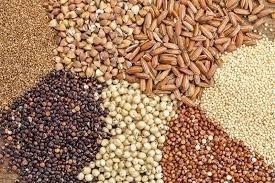
Bulawayo Bureau
ZIMBABWE NEWSPAPERS (Zimpapers), through Sunday News, is set to host the Traditional Grains Conference in Bulawayo this month to engage stakeholders and explore strategies for enhancing sustainable production of small grains in the country ahead of the summer cropping season.
The event, to be held in partnership with the Ministry of Lands, Agriculture, Fisheries, Water and Rural Development and ICRISAT at a local hotel on September 27, will run under the theme “Unlocking the potential of traditional grains for food and feed security”.
Traditional grains play a crucial role in Zimbabwe’s agriculture sector, contributing to food security, nutrition and sustainable livelihoods.
Lands, Agriculture, Fisheries, Water and Rural Development Permanent Secretary Professor Obert Jiri, who will be the keynote speaker, said the Government was enhancing climate-smart ecological tailoring through growing crops in suitable agro-ecological regions to improve productivity.
“Regardless of any climate variability, a farmer must always respect the dictates of agro-ecological regions and should be advised of the correct crops to grow to ensure food security from the household to the national level,” he said.
“The Government is also educating farmers on agro-ecological matching to make sure they make correct choices that match the climatic and soil conditions of their regions to boost production and ultimately food security.”
Farmers, he said, were largely aware of the agro-ecological matching thrust, and the Government has since distributed agro-ecological maps to provinces and districts.
Prof Jiri further said farmers who embraced agro-ecological matching, Pfumvudza/Intwasa and cultivation of traditional grains were assured of decent yields this season.
“Crops belonging to farmers who embraced agro-ecological matching fare better than those produced without
paying attention to the agro-ecological requirements specific for different regions. The implementation of the strategy has been on the increase in the cultivation of traditional grains, especially in the southern provinces of the country.”
The conference, Prof Jiri said, was critical as it would promote climate resilience and sustainable production, as well as development and commercialisation of traditional grain varieties.
He said it was also important to explore the nutritional value and potential of traditional grains for food and livestock feed production.
“There is a need to showcase successful business models and partnerships in the traditional grains value chain, to present cutting-edge research on improving yields, disease resistance and climate resilience, as well as to examine the policy landscape and opportunities for supportive regulations,” he said.
The conference also follows Cabinet approval of the Summer Plan for the 2024/2025 season, whose focus is on agro-ecological mapping, climate-proofing at household level (Pfumvudza/Intwasa) and at national level (irrigation), where the Presidential Input Scheme has effectively enhanced the provision of traditional grain seeds such as sorghum and pearl millet seed and related inputs to small grain-producing districts such as Masvingo, Midlands and Matabeleland provinces.
Zimbabwe produced the new revised agro-ecological zone map to replace the old one crafted in the 1960s with the aim of strengthening the capacity of farmers to plan for climate risks and boost agricultural production and food security.
Farmers in ecological Regions 1 and 2 grow crops such as maize, sunflower, sorghum, pearl millet, groundnuts, African peas and sugar beans.
In natural Region 3, farmers grow crops like maize, sorghum or sunflower, sorghum, pearl millet, groundnuts, African peas and sugar beans.
Farmers in Regions 4 and 5 grow sorghum, millet and sunflower.
They also have the option to choose from maize, African peas and ground nuts.
Government statistics show that the hectarage put under sorghum increased by 27 percent from 319 759 hectares (ha) in the 2022/2023 season to 405 116ha in the 2023/2024 season.
Similarly, the area dedicated to pearl millet cultivation saw a 7,5 percent increase from 180 666ha in the 2022/2023 season to 194 232ha in the 2023/2024 season.
Overall, the cumulative area dedicated to maize and traditional grains cultivation accounted for 99,6 percent of the target covering approximately 2 349 921ha.
“The condition of the traditional grains was much better than maize, highlighting the Government’s progress and success in eliminating policy-induced drought. Progress was also made in reducing household-induced drought, a phenomenon where households still prefer maize in agro-ecological Regions 4 and 5, where it does not perform optimally.”
The conference will be a one-day event structured around the keynote address, interactive sessions and panel discussions.
The proposed activities include an opening ceremony and a formal opening session featuring keynote speeches from Government officials and prominent experts, highlighting the importance of traditional grains production and setting the context for the indaba.
The panel discussions will be expert-led and will focus on various topics, such as best agronomic practices, climate-smart farming techniques, market opportunities, value addition and post-harvest management.
There will also be knowledge sharing through presentations by researchers, successful farmers and industry experts. They will share their experiences, innovations and success stories in traditional grains production.



 Bongani Ndlovu
 Online Reporter