admin
admin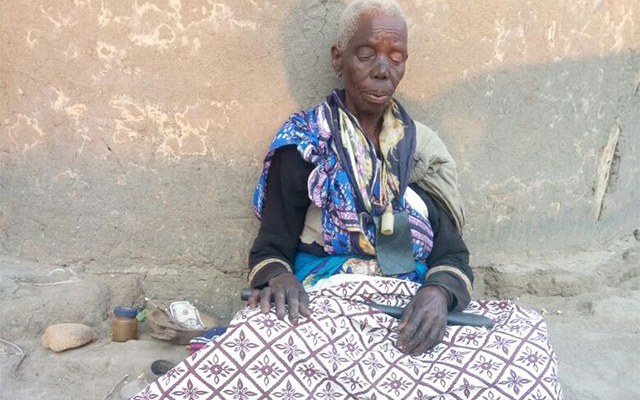
Freedom Mutanda and Sifelani Tonje : Post Correspondents
| Our previous instalment drew some comments from a wide spectrum of people through-out the nation. A caller, who identified himself as Cde Spencer from Kwekwe, said he needed the contact details of Cde Zivai Magamba whom we had profiled in the previous two articles. He said they were together at the front and our story reminded him of the various near death experiences he encountered with Cde Zivai Magamba. |
A reader used the Whatsapp platform to communicate with us. He wrote: I am S.D. Chidza. Reading the macabre massacres at Border Church reminds me of several battles in Honde Valley. In particular, there was the chilling Hwahwazira battle which happened in 1974 or 1973. Samaringa School is only less than a kilometre from Hwahwazira Mountain. Memories of this day bring me back to this war. I personally request you to find more stories in Honde Valley where Cde Isiah and his men came around 1972 and war started from there until 1980 when we achieved independence.
We are truly humbled comrade. Hopefully, we will visit that part of the world as we chronicle the unsung heroes and heroines of the liberation struggle.
A week ago, we (Sifelani Tonje and I) visited Dzereki Muzhambi nee Matembudze Mujaho. She is a spirit medium of the Chinaa clan; Chinaa is related to Musikavanhu who is reputed to have rainmaking powers. During the war, she adamantly refused to join the great trek into the ‘Keep’ ironically officially recognised as protected villages.
She is also called Mukhabo. In the Ndau dialect, that word means a mighty kick to the backside. She was a thorn in the flesh for the colonial district administration through her open rebelliousness of the racist and oppressive policies.
In the African milieu, parents know the particular event that occurred when they gave birth to their children; thus, some people say they were born gore reusiku huviri (solar eclipse) and Historians and Geographers would know. Mbuya Mukhabo does not know the exact date and year when she was born. We used African ways to determine when she was born – gore rendongwe (year of the locusts-1932)
As the war went to the home stretch following the detente period – a lull in the fighting, Ian Smith’s strategists upped the ante in their war against the people of Zimbabwe. They realised that the war was a people’s war and the only way to stem the successes of the fighters was to block support from the peasants, workers and other supporters in the rural areas. The French had done that in Indo-China and Malaya with some modicum of success.
In 1973, the Chiweshe community was shepherded into the tribal trust lands where colonial authorities had an eagle eye on what transpired there in an effort to stop the guerrillas’ entrance into Zimbabwe from Mozambique which was nearing independence.
Rhodesians borrowed from the French as in 1976, they began to drive Africans into protected villages where all Africans stayed and they were kept as if they were in Hitler’s concentration camps where their lives were strictly controlled. A barbed wire ensured that Africans’ freedom of movement was stringently truncated. Hence, Rhodesians hoped that scorched earth policy would deny support from the indigenous people. Some soldiers guarded the entry and exit points of these ‘Keeps’ and searched people who went in and out of the ‘PV’ (Protected Village.)
Notwithstanding all those shenanigans, Africans’ steadfastness in supporting the liberation agenda did not dissipate. One such person is Mbuya Dzereki Muzhambi who stoically refused to be intimidated by the might of the Ian Smith military machine as it bullied people into going into ‘Keeps.’ She defied the establishment when everyone looked at the regime as unconquerable.
When we approached her and clapped hands as we entered her humble aboard, we sensed the spirit world as she sat there with a black cloth casually draped over her shoulders and a battle axe lay on the side of the goatskin that she used as a mat. We had scarcely spoken about our intentions when she growled and went into a trance. What follows is a story delivered by the spirit medium in her trance state.
Let’s hear her story.
I was born Dzereki Matembudze and married Muzhambi who stayed at Kondo. In 1976, rumours that everyone would be put in ‘Keeps’ circulated but not many of us took that seriously. My parents say I was born in the year of the locusts (gore rendongwe-1932) but I don’t have a birth certificate.
I am a mhondoro of the Chinaa Sashekwa Mukuhudzi clan. I am there to protect the children. Who referred you to me? I am a warrior spirit. (Her eyes bore into us unflinchingly. Her body moved rhythmically every time she took a pinch of snuff. She still looked at us as we explained that her firmness in the face of adversity had spread far and wide.)
Some time ago during the war, a headman’s messenger told people to get into the protected villages. I refused as I knew the underlying reason of doing so. Their ostensible reason of sending us there was flimsy at best. They said they wanted to protect us from the ‘terrorists’ and I knew they wanted to starve our boys.
We knew these were our boys who would bring liberation to us. However, there was nothing I could do to stop my people from going into the ‘Keeps.’ My family disowned me; I was then a widow as my husband had passed on.
My brother-in-law confronted me and told me point blank, ‘’Ifa wega. Saka ndauya kootora vana vedu.’’ (If you have a death wish, then die alone. Thus, I have come to take our children-my brother’s children.) He struck me on the crown of the head. I did not flinch or fall down; the spirit in me made me oblivious to pain.
He took the children and went to the protected village at Rimbi. I didn’t report him to the police since I knew the matter would not be treated with the seriousness it deserved; after all, I was a woman, wasn’t I? I know many people saw me as a crazy woman who contemplated defying the Rhodesians. I could not go as the warrior spirit in me didn’t allow me to. I am the king of the water, the hippo.
One day, I was in the fields. A man came and reasoned with me. He said it was foolhardy on my part to continue to wage a war against the racist policies. At that time, I was myself. I told him to wait for me as I went to change and pick some things.
I dialogued with the ancestors soon after that. I returned to the fields and told him to go to hell. He ran for dear life.
At times, I went to Chibuwe ‘Keep’ to see my relatives who could be in trouble. Things were revealed to me as I slept that all was not well with my children or relatives. Then, I would go there.
A villager took up the story briefly.
Mbuya would get to the Keep’s entrance and ask the guards to allow her to get in and they would oblige which was a rare occurrence. She would stay in the keep for an hour or so then leave and return to her place at Nyauswa, the name of a water body which stored water after the rains. Comrades went to her home and were given water which protected them from the settler soldiers. Indeed, very few comrades died in our area.
Mbuya continued after the village had interjected.
At the time I grew up, Horace ill-treated Africans in the Shekwa area. Following the entry of Africans in ‘Keeps,’ my place was used to store food for the comrades. There was this particular mujibha who was very daring and crafty. Victor Konza co-ordinated intelligence for the comrades.
I was not afraid of the soldiers ana mukikimbo. My daughters returned to me one by one; they came from Rimbi ‘Keep’; the last born stayed with me and gave me company for some time.
I obtained food from my relatives in the ‘Keeps’ and although the guards tried to stop me, my warrior spirit triumphed most of the times.
There is one incident I still remember vividly. I had been given food by my relative and on my way out of the ‘Keep’, the guards ordered me to leave the food with them. I obeyed them; I had barely walked a few steps when I heard them call me to come and take the food. Baffled, I came back and took the bag of maize.
Visions came to me in my sleep; if I dreamt about eagles, I went to the ‘Keep’ and inform the people there that they had to be wary of inevitable danger. Mujibhas and chimbwidos would be told that there must be a let-up in their activities. Venturing outside may result in danger for the ordinary people or the comrades.
Soldiers on horseback passed by my place and they never bothered me. The ‘boys’ came to me for directions on their way to Masvingo. At times, they consulted me to be given spiritual guidance as they went to the front. I told them when it was safe or unsafe to cross. In fact, this place was a food store for comrades that operated from Muumbe to Chibuwe. It also acted as an information centre for the ‘boys.’
Another Dziya, Muchaina Vheremu, assisted comrades to cross the Save River at that time.
No one dared burn my place down right up to 1980. Soldiers were aware of my defiance but they could not bring themselves to commit arson against me.
The spirit medium still helps local traditional leadership in various ways. People revere her as a symbol of resistance to the oppressive oxymoron ‘protection villages’ which were a feature of Ian Smith’s attempts to derail the liberation struggle. Her resilience is synonymous with Chief Rekai Tangwena who did not run away when bulldozers came to evict him from the land of his ancestors.
She is happy that her heroics weren’t in vain. Zimbabwe is in the hands of the indigenous people.
◆ For your opinions and views, please call, sms or use the Whatsapp platform on 0777582734 or email me at [email protected]


 Online Reporter