admin
admin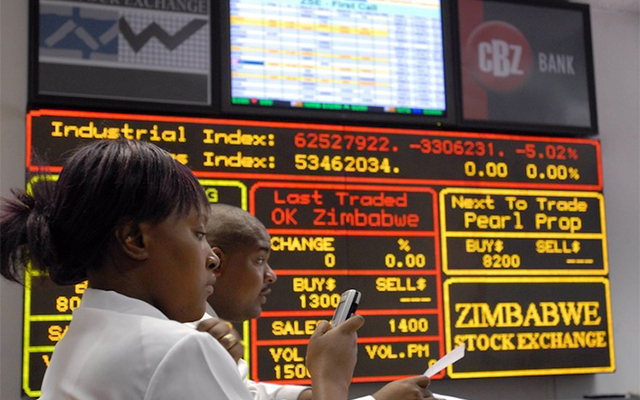
Rumbidzayi Zinyuke : Business Correspondent
Zimbabwe needs to continuously work on restoring investor confidence to gain back the momentum that has been lost on the local stock exchange in the past three years.
| Although the country’s economic growth prospects have declined significantly, pushing the equities market down with it, experts say the country cannot afford to keep losing investors’ confidence. |
Investments and equities analyst Albert Norumedzo says there is a co-relation between stocks and the general economic performance.
“Equity markets mirror the economic growth trajectory. However, the country’s economic growth trajectory has been on a decline and this has been reflected in the performance of the stock exchange. The overlying assumption is that the same companies listed on the stock exchange are operating in a poorly performing economy. So it becomes difficult for the stocks to post any significant gains,” he says.
A boost in investor confidence is what the equities market needs but that can only come about if there is certainty that investors will not lose out.
“Investment thrives on certainty. At the moment people are not sure what is going to happen in the Zimbabwean economy so they adopt a wait-and-see attitude,” Norumedzo says.
Weak investor sentiment has haunted the local exchange the bourse losing more than $3,5 billion of its value since 2013.
The bearish trend has been worsened by the little funding that is available on the market and intense money market illiquidity.
The ZSE, which has operated from Harare since 1951, once ranked among the biggest and best performing bourses in Africa, but it has gone from bad to worse as the economy has maintained its downward trend for more than a decade.
The exchange now has a paltry 62 listed companies, with a total market value of $2,7 billion – down from an all-time high market capitalisation of nearly $6 billion that was recorded in the first week of August 2013.
Traditionally, before corporate results are released, investors take positions in those stocks with the potential to report strong earnings. This usually triggers increased activity on the stock market, driving share prices and demand by foreign and local investors.
But the earnings season has failed to inspire equities market confidence as turnover for the month of August came off 49 percent to $7 million, the lowest since January 2015.
Many companies reported marked declines in revenues and profitability while only a few returned to profitability.
By close of the month, volumes also reduced 27 percent to 41 million shares, which was also the lowest since January last year.
Total value traded in the eight months to August came in 38 percent weaker to $107 million compared to $157 million achieved in the previous year.
Until recently, the ZSE has been driven by foreign investors whose participation rose from 23 percent in 2010 to 36 percent in 2011, 39 percent in 2012 and 41 percent in 2013.
However, foreign participation has been declining as confidence in the economy diminishes.
Data from the ZSE shows that interest from foreign buyers has declined significantly with purchases from that segment falling nearly 40 percent in the seven months to July 2016.
Delays in the remittance of capital could be to blame.
Recently, beverages maker Delta Corporation said it had a payment backlog which included $15 million dividend payments.
And persisting cash shortages have also not made things easier, rendering operations for most companies more difficult.
The proposed introduction of bond notes as an export incentive has also increased doubts within investors as they believe that government could be introducing a new currency that could mimic the demonetised Zimdollar.
But the Reserve Bank of Zimbabwe and the ZSE have assured foreign investors that the remittance of capital, capital appreciation and dividends, is first priority in the category of payments, little might change in the participation of foreigners on the bourse.
The RBZ also advised that the ZSE will continue to be priced in US dollars in spite of the introduction of bond notes.
Norumedzo, however, says sometimes the issue is that people have little understanding of what is at play or the measures Government wants to implement.
“It is good that Government has been engaging the business community and coming up with reforms meant to improve the ease of doing business. The introduction of SI64 as a measure to address productivity in the industry is also a plus. It is just a question of whether the companies will boost production which in turn will enhance local manufacturing and bring about the desired economic growth and bring the ZSE on the mend,” he said.
However, it is not only the ZSE that has experienced such setbacks.
Equities across the continent have also been on a free fall in the past year, owing to the fluctuations in commodity prices on the global markets.
“Across Africa, equities are also affected by what is happening on the global economy. This includes diminishing demand for commodities and low prices pertaining on the market. Countries that rely on commodities like Zambia, Angola have been hit hard and their stock exchanges have also reflected this,” said Norumedzo.
The ZSE has been the second worst performer in the region shedding off 13,88 percent since beginning of the year according to African Financials.
Leading the regional fallers is the Lusaka Stock Exchange All Share Index (LUSE) which has dropped 23 percent on a year to date basis.
Shares in Malawi, Kenya and Botswana have reduced by 8,96 percent, 9,76 percent and 9,3 percent respectively while Nigeria has lost 3,71 percent of value since beginning of the year as regional economies succumbed to weak commodity prices.
Some exchanges have, however, been performing better than others despite the difficulties being faced in their respective economies as is the case with, the Johannesburg Securities Exchange (JSE), which has gained 5,23 percent.
Experts say if prices of commodities improve, there is bound to be recovery on the equities markets as well.
And most commodities, with the exception of copper, have been shedding the losses recorded for the better part of 2014 and 2015.
Gold rallied in the first half of this year to reach a two-year high of $1 400 in July and experts claim that there is still upside.
The platinum group metals have also continued to gain upside momentum.
On a year to date basis, gold and platinum prices improved 20 percent and 22 percent respectively, giving hope for improvements in exports in mining.
But the ZSE might not enjoy these gains because some of the country’s biggest mining companies are not listed on the local bourse.
Only four mining houses – Hwange, Falgold, RioZim and Bindura – are currently listed on the local bourse.
Zimplats which reported a $7 million after tax profit for the half year to June 30, 2016 compared to $74 million loss in the prior year, is listed on the Australian Stock Exchange.
Hopefully the proposed Mines and Minerals Amendment Bill that was gazetted by Government recently will resolve the issue. The Bill seeks to outlaw giving mining rights or title to public companies unless the majority of its shares are listed on the securities exchange in Zimbabwe.
This might be the only way these big companies will list on the local bourse as some have made it clear that they do not plan to do so without a nudge. Vast Resources PLC, formerly African Consolidated Resources (ACR), is one such company.
The firm owns Pickstone-Peerless Mine in Chegutu and its chief executive officer Mr Roy Pitchford is on record saying there are no current plans to list on the ZSE but the gold miner will “always comply with the laws of the country, as they may apply to any of its operations in Zimbabwe”.
“Pickstone-Peerless is operating well and we intend to continue mining (so) if it becomes mandatory to list (on the ZSE), we will comply,” said Mr Pitchford.
The Securities Commission of Zimbabwe is even willing to find ways of making it easier for companies to list on the local bourse.
SECZ chief executive officer Mr Tafadzwa Chinamo says mining companies are free to highlight areas of concern so that they can be attended to.
“I know that listing on a stock exchange comes at very huge expense, but if the mining companies can identify what they feel are constraints for them to list on the ZSE, we can tone that down.”
He says if mining companies are listed locally, it will allow the nation to know what is being mined and the revenues generated from it. – Zimpapers Syndication.



 Online Reporter