Online Reporter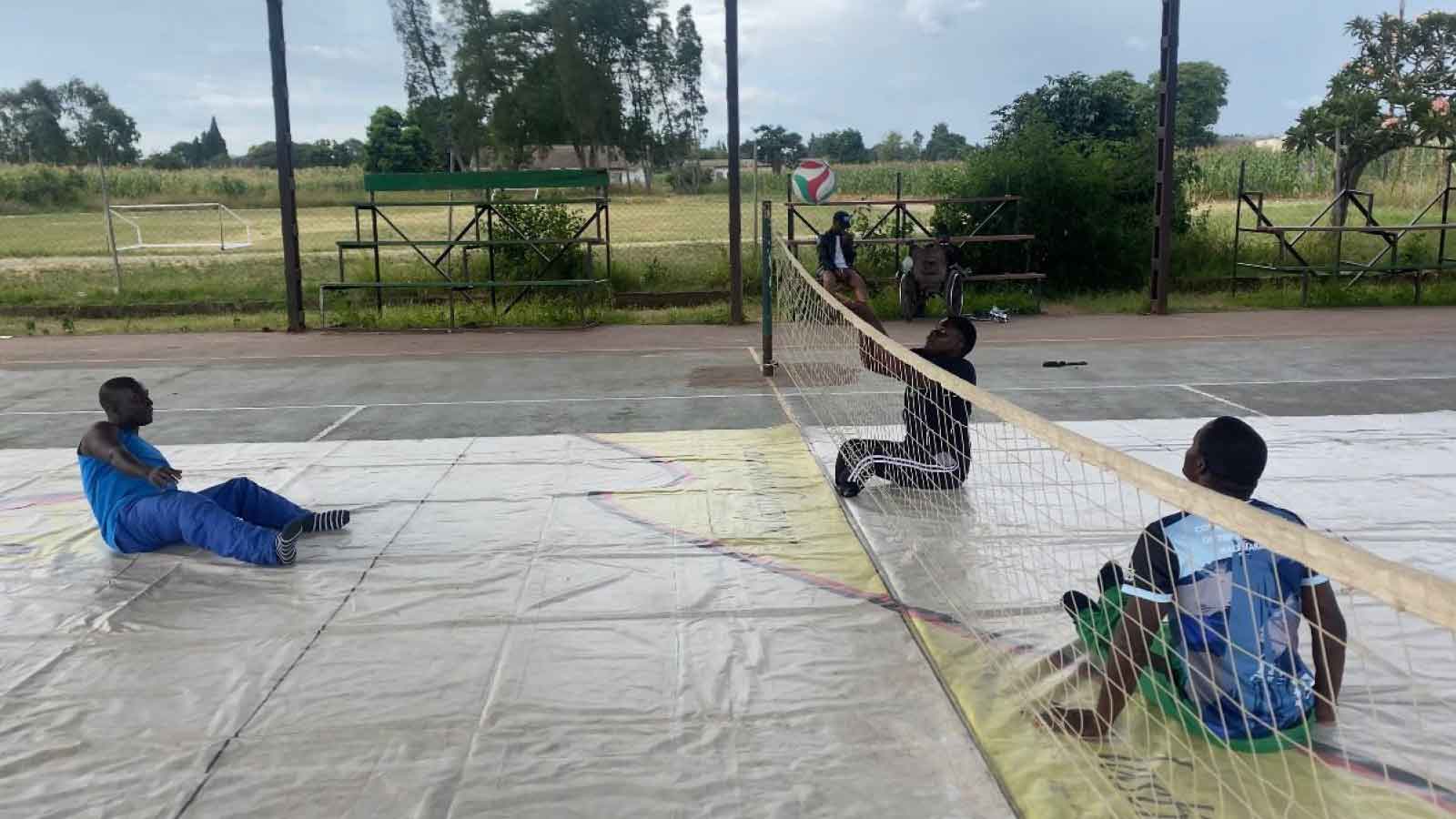
Tawanda Munthali
Zimpapers Sports Hub
THEY don’t arrive all at once.
One comes in pushing his chair, another leans on crutches, yet another lowers himself onto the concrete and pulls his body forward with his hands.
No noise at first, just greetings, short ones, then the ball is out and someone serves without warning.
The sound is sharp, low and hard.
It skids across the court and a body follows it, quick, committed, no hesitation. Another player stretches, digs it out and suddenly the court is alive.
From the side, it looks messy. On the court, it is tight, organised and serious.
Elford Moyo moves with his hands fast, almost instinctive now. He leans back, adjusts his position, eyes fixed on the next touch.
He did not always have this
“Before this, I was just at home,” he says, not looking away from the game.
“Most of the time you are just sitting. You start to think too much.”
He shrugs.
“You feel like there is nothing for you,” he says.
A teammate calls for the ball. Moyo reacts, slides the ball and connects. The point ends with a shout, short, loud and full of pride.
“That changed when I came here,” he says. “Now I am active.”
Every Wednesday, the basketball courts at Danhiko turn into something else.
No bouncing balls, no hoops in use. Just a net pulled low and bodies on the ground, moving with purpose.
Power Six Para Volleyball Club trains here. Most of the players come from Ruwa and Epworth with different stories, and meet at the same place.
Charles Doro watches from the side, stepping in now and then, correcting, encouraging.
He has seen what this space does.
“I started this after being introduced to the game in 2018,” he says. “What we saw were people with disabilities just staying at home, especially young ones.”
He pauses.
“When someone is always at home, nothing good comes out of that. You get frustration. You get drugs. In some places , that’s how a lot of young lives start to drift,” he says.
So they brought them together.
“No big plan,” he says. “Just start, then build.”
On the court, there is no easing into it. The game demands everything. You move with your arms, your core, your will. You throw yourself forward knowing you have to recover quickly or you lose the point.
There is no hiding.
Voices cut across the court.
“Mine!”
“Leave it!”
“Push.”
Then laughter when something goes wrong. Then silence again as the next ball is served.
Angela Ziyenge wheels closer, watching intently before joining in. When she plays, she commits fully, no half-movements, no holding back.
“This helps us,” she says. “Physically, yes. And also here,” she taps her head.
“You meet others. You talk. You realise you are not the only one in this situation.”
She smiles, then shakes her head slightly.
“But we struggle.”
She points around.
“Look at what we are using. Some of this equipment is finished. We need proper nets, proper balls and kits. Even getting here is not easy for some,” she says.
That part does not show during training. It sits in the background.
Team manager Philbert Musanhu knows it too well.
“We are working with very little,” he says. “But the players are committed.”
He talks about opportunities missed.
“Last year there was a tournament in Kenya. We were supposed to go. The team was ready. We didn’t go,” he says.
Why?
“No money,” he says. “That is the situation.”
It is the same story across the sport. Talent and drive are there, while the rest is missing.
“There are no sponsors,” he says. “If someone comes in, this team can go far.”
The next chance is close.
The Southern African ParaVolley Club Championships are coming to Bulawayo later this month.
For Power Six, the event should be a chance to test themselves properly. However, transport, accommodation and fees are uncertain.
Still, they train with no complaints and without slowing down.
Doro watches and nods quietly.
“When someone comes here with no confidence, after a few weeks they start shouting, diving, leading others. You see the change,” he says.
“That is why we keep going.”
Moyo hears that, smiles slightly.
“You forget a lot when you are here,” he says. “You just focus on the game.”
Training ends the same way it starts, without ceremony.
The ball is picked up. Someone sits back, breathing hard. Another cracks a joke. A few stay longer, talking through points, arguing about calls, laughing again.
Then they begin to leave.
One pushes his chair towards the gate. Another lifts himself onto crutches. Another waits for a lift that may or may not come.
Life outside the court is still waiting.
On the court, they have something to hold on to, but once the ball stops, they go back to a world that still has largely not made room for them.