Online Reporter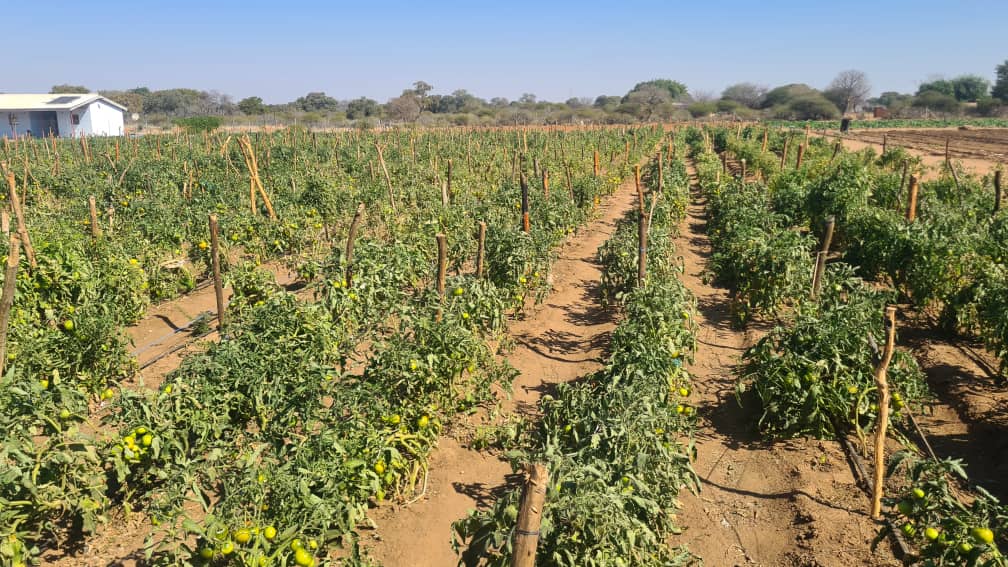
Sukulwenkosi Dube-Matutu, [email protected]_
The adoption of solar energy and drip irrigation at Village Business Units (VBU) across Matabeleland South is fundamentally changing how rural communities farm, earn, and feed themselves by replacing unreliable rain-fed cropping with year-round, market-driven production powered by the sun.
A VBU is a business unit, which is a community-owned, solar-powered commercial agricultural hub that aims to shift rural communities away from traditional subsistence farming toward profitable, market-driven agribusiness through shared ownership, collective planning and commercial production.
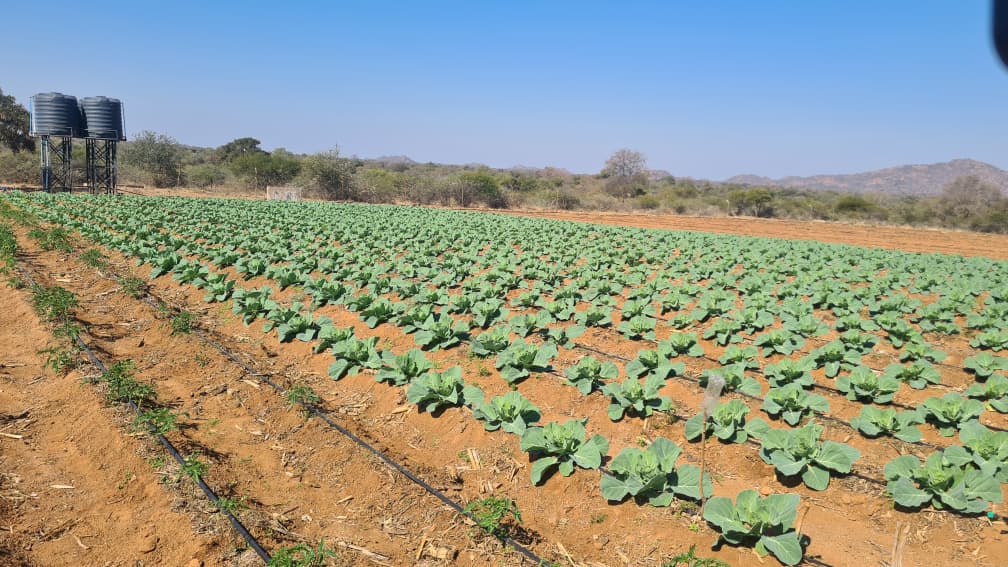
In Gwanda District, seven solarised VBUs have recently been established by Government and development partners, bringing immediate relief to villagers from some of the driest wards where water scarcity and erratic rainfall had for years made agriculture a gamble rather than a business.
This intervention has enabled villagers to embark on irrigation farming at scale, and as a result, households that once struggled for food between seasons are now producing vegetables weekly and selling surplus to local markets, schools and traders.
Development of VBUs is part of the Government’s broader rural industrialisation drive, which seeks to modernise communal areas by introducing infrastructure, technology and business systems that allow smallholder farmers to compete in formal value chains.
In Gwanda alone, 15 VBUs have now been established, with Garanyemba pioneering the drought mitigation centre concept that combines a village business unit, cattle sales pens, and feeding troughs to diversify income streams beyond crops.
These facilities have become a major source of livelihood for villagers because they provide both crop income and livestock support services in one location, reducing transport costs and keeping more value within the community.
In an interview, Lifalethu VBU chairperson Mr Sabata Nare said they are now operating as an organised business enterprise benefitting about 40 households, and that the shift to solar-powered irrigation has allowed them to focus on producing high-value cash crops instead of relying on one seasonal maize crop.
“This project is really assisting us to fend for our families and put our children through school, and members have been able to buy assets and property using money which they are getting from selling produce, which means we have been empowered as a community and we are no longer beggars,” he said.
Mr Nare added that they are running the VBU as a business entity with proper records, planning and costings, which has helped them track operations and maximise returns because every input and every harvest is accounted for.
Tsolapili VBU chairperson Mr Stephen Mpofu said in the past they could not irrigate because there was no reliable water source, but now with solarised boreholes they can produce throughout the year, and their production is no longer limited to the rainy season.
He said solar pumps run daily without fuel costs, which has made irrigation affordable and has allowed the group to expand the area under drip lines to cover tomatoes, onions, covo and butternuts that fetch better prices.
Ms Duduzile Nkomo, a member of the VBU, said the project came at the right time when their community was
struggling to sustain agricultural activities because of unreliable rainfall patterns caused by climate change.
She said their community is now food secure and that the VBU does not only benefit members because the entire community now has access to nutritious food at reasonable prices from the hub.
Ms Nkomo said their target is to supply markets as far as Bulawayo, and to move beyond raw produce by exploring value addition such as drying, packaging, and branding organic vegetables that consumers increasingly prefer.
“We don’t want to end at producing only; we are exploring strategies on how we can value add our produce so that we get more income, because a lot of people are now into crop production which has left the market flooded and we feel there is still a gap in processed organic products,” she said.
Gwanda District acting Agritex Extension Officer Mr Godfrey Hove said introducing farmers to solar irrigation and drip systems has helped to inculcate a mindset of farming as a business among communities that previously farmed only for household consumption.
He said farmers are now appreciating value addition, record-keeping and market planning, and that extension staff are working with VBUs to train members on fertigation, crop rotation and post-harvest handling.
Mr Hove said this transformative initiative not only bolsters food security but also empowers farmers to add value to their produce, thereby fostering economic growth and strengthening community resilience in a province that is highly vulnerable to drought.
“Hopes have been raised among farmers as they are seeing light at the end of the tunnel, and in our region, which is generally dry, provision of solar irrigation systems will enhance food security and crop production within the district,” he said.
He noted that improving water supply through drilling and solarising boreholes, as well as rehabilitating dams, has enhanced irrigation farming in the district, and that communities are now experiencing tangible improvements in household incomes since the establishment of the VBUs.
The Government continues to climate-proof the agricultural sector through the establishment of VBUs, drought mitigation centres, rehabilitation of old irrigation schemes, establishment of new ones, and the upscaling of Pfumvudza/Intwasa programmes that promote conservation agriculture.
Matabeleland South Province pioneered the concept of VBUs when President Mnangagwa launched the Jinjika Presidential Rural Horticulture Scheme in Makorokoro, Mangwe, in 2022, and since then the province has become a greenbelt with more than 140 VBUs established.
VBUs are Government-driven community-based enterprises in rural Zimbabwe designed to promote rural industrialisation, create employment, and improve livelihoods by shifting from subsistence to market-oriented agriculture through irrigation, training, and collective marketing.
Through shared ownership, solar power and drip irrigation development, VBUs empower rural communities by generating regular income, ensuring food security and providing access to markets and essential services that were previously out of reach.
The drip irrigation component is critical because it delivers water and nutrients directly to plant roots, which reduces wastage by more than 60 percent, lowers labour, and allows farmers to produce more with less water in a region where every litre counts.
Solar power makes the model sustainable because it eliminates dependence on expensive diesel and unreliable grid electricity, meaning pumps can run during daylight hours at no cost and savings can be reinvested into inputs and infrastructure.
Women and youth are the biggest beneficiaries, with many VBU management committees led by women who now control income, while young people are being trained to install drip lines, monitor solar systems and manage digital sales records.
Local authorities say the hubs are also improving nutrition, as families now consume a wider variety of vegetables year-round, and schools near VBUs are accessing fresh produce for feeding programmes at lower cost.
Private buyers are beginning to contract VBUs directly, which gives farmers price certainty and encourages them to plan production around market demand rather than planting whatever seed is available.