admin
admin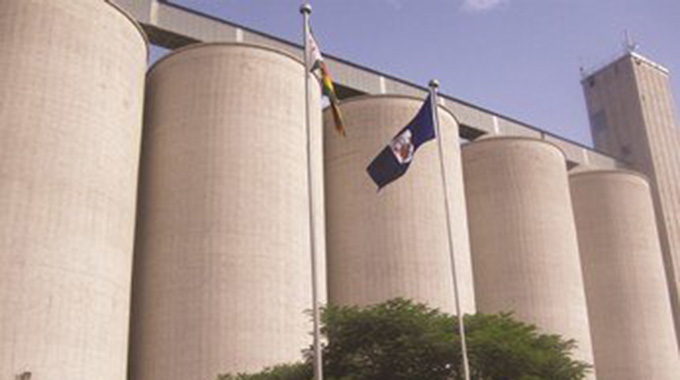 Samuel Kadungure
Senior Farming Reporter
REPORTS that 61 000 metric tonnes were left to rot under the noses of the Grain Marketing Board — at a time when the discredited parastatal was failing to maintain stipulated strategic grain levels of 500 000mt or the cash equivalent, give a sad reading.The story is heartbreaking. Ineptitude of this magnitude is of national concern.
GMB is in a mess and requires cleansing.
GMB owes farmers $26 million for grain deliveries made from 2012 to date, of which $9 million is for grain deliveries made last season.
Because GMB is getting these supplies for a song, it was lowly esteeming the grain and purpose it should serve. How else can one explain the grain utility’s lackadaisical approach to its core business of sustainable management of strategic grain reserves?
GMB is a total disaster. It has put farmers in a fix, let down, suffocated, crushed and ripped them apart. The mere mention of it sparks fury among farmers, who deride it for degrading them while creating chaos, confusion and mediocrity in the grain sector.
GMB like any organisation has a mission and vision.
At one of its strategic management workshops at a flashy hotel in Vumba recently, GMB unveiled its vision as “to be the regional leader in grain management by 2020”.
The thought of an institution aiming to be “a regional leader in grain management” superintending over a system in which 61 000 metric tonnes of grain maize goes to waste under its nose, left me quaking in the boots.
As 2020 draws by, at least GMB should be within arm’s length of attaining this goal, but not when we are told that GMB’s silos are in a sorry state due to years of neglect.
The foundations of the silos have been compromised due to massive water seepage, while the walls are peeling off.
These silos are designed to hold up to 500 000 metric tonnes of strategic grain reserves.
These events show that GMB has lost direction. It is not concentrating on the future. Its vision has ceased to be a source of inspiration and no longer provides clear decision-making criteria.
61 000 metric tonnes of grain maize is no joke. It’s a substantial amount.
These quantities could have fed 1 534 900 households of six people each for a month.
GMB’s mission is “to ensure national food security through the efficient and sustainable management of strategic grain reserves”. This should be the starting point in its strategic planning and goal setting process.
GMB is supposed to maintain grain silos in a proper condition suitable to store grain for at least three years without the grain losing its quality or grade.
But it has failed to pin its attention on these fundamentals. GMB has dismally failed to convince its internal and external stakeholders into understanding what it is attempting to accomplish.
This magnitude of sleeping on duty is unacceptable. The organisation needs serious alignment to its mission and vision to avert further short-changing of farmers.
Sort the mess now!
Zimbabwe cannot afford the luxury of losing 61 000mt of grain maize especially now when she has been struggling to import hundreds of thousands of metric tonnes of grain to feed her growing population.
GMB acting general manager, Mr Lawrence Jasi, blamed the rot on Government’s failure to release funds for management of the strategic grain reserves and procurement of pesticides.
“In terms of grain storage resources, it is important to have proper empty bags and to cover grain during rains with tarpaulins — and if you take wrong moisture content during grading you may not be able to manage the grain and you have to apply fumigants at an appropriate time,” Mr Jasi said.
“We have had a situation at GMB where provision of resources to manage grain is not given and you end up downgrading grain to the extent this period we downgraded 61 000 metric tonnes which we sold below market value.”
I beg to differ, Mr Jasi knows and I know that Government is broke.
He was appointed at the helm of GMB to innovatively turn it around.
GMB should explore other avenues. It should find suitors and venture into some public private partnerships.
At least $50 million is required for repairs.
“From external physical appearance of the silos, one is convinced that GMB has state-of-the-art storage facilities when in actual fact the facilities are no longer suitable to store maize as expected as most of them developed multiple cracks which allow water to seep through causing bin burn and cracking,” noted the Comptroller and Auditor-General, Mrs Mildred Chari.
GMB needs $1,5 million per month for strategic grain reserves management.
The Parliamentary Portfolio on Lands, Agriculture, Mechanisation and Irrigation has also expressed concern at the poor state of GMB silos.
“It is the responsibility of Government to maintain grain storage infrastructure in good condition. The infrastructure has been deteriorating and requires refurbishment, particularly grain silo bins where some are no longer suitable for grain storage.”
It warned that the nation stands to lose millions of dollars through grain wastage if maintenance work in grain silos continues at a snail’s pace.
Zimbabwe has spent over $3 billion in direct imports of maize and wheat since 2009.
In 2012, Government came close to finalising a US$51 million transaction with Export-Import Bank of China (China Eximbank), but failed to raise the US$7,5 million deposit that the financial institution required to release cash for the repair of silos.
GMB needs to be taken to task over the grain utility’s dismal failure to pay farmers despite receiving money from Treasury for that purpose every year.
How is GMB spending this money?
Government raises money for GMB to buy grain for national strategic reserves. But if the money is not getting to farmers, then where is it going?
The other primary factor responsible for this year’s decline, in addition to adverse weather, is GMB’s failure to pay them for grain delivered last year and unprofitable prices.
The maize yields of the communal farmers who used to produce the bulk of maize have also reduced due to GMB insensitivity.
Currently the strategic grain reserves are holding 118 000 metric tonnes chances GMB should not mislead the nation into believing that volumes will increase. Chances of more grain deliveries to GMB are remote. Farmers are reluctant to sell citing a tardy payment system.
Agriculture Minister, Dr Joseph Made, is on record saying farmers that had patriotically delivered their grain to GMB have been frustrated to the point of besieging the grain utility’s depots across the country, demanding their grain back.



 Online Reporter