Online Reporter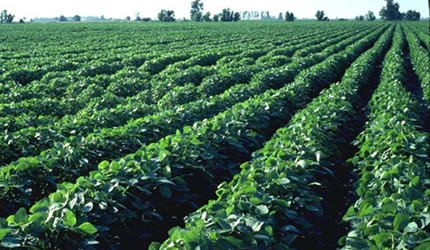
Wayne Matyukira
Correspondent
As the global population continues to grow, so does the demand for nutrient-rich crops such as soya beans. Scientifically known as Glycine max, soya beans are one of the most versatile and valuable legume crops globally, appreciated for their high protein content and wide application across food systems, animal feed and industrial production.
In Zimbabwe, unlocking the potential of soya bean farming could be pivotal to transforming the agricultural sector, boosting rural incomes, enhancing food security and contributing significantly to national economic goals under Vision 2030.
Zimbabwe’s National Development Strategy 1 (NDS1) outlines a vision for the country to achieve upper-middle-income status by 2030. Agriculture, which contributes nearly 30 percent to the national GDP and supports over 60 percent of the population either directly or indirectly, is central to this vision.
However, soya beans currently contribute just 2 to 3 percent of the agricultural GDP, highlighting a missed opportunity for economic expansion. With increasing demand both locally and regionally, strengthening soya bean production can help Zimbabwe reduce its import bill, create value-added industries and increase foreign currency inflows through exports.
The current domestic demand for soya beans is estimated at 220 000 tonnes annually, according to Seed Co Zimbabwe (2024), largely driven by its use in animal feed, cooking oil production and industrial processes.
Yet, Zimbabwe consistently falls short of this requirement, relying heavily on imports from neighbouring countries. This supply-demand mismatch presents both a challenge and an opportunity. By scaling up local production, Zimbabwe would not only save valuable foreign exchange but also create downstream economic benefits in agro-processing and manufacturing.
Profitability and Cost Dynamics
Soya beans are a short-season crop with high return on investment under proper agronomic and financial management. Per hectare production costs range between US$700 – US$900, with yield potentials of 3.5 to 6 tonnes/ha under high-yielding varieties. With market prices averaging US$550 per tonne, a farmer can gross over US$2 000 in less than five months — an attractive margin in any regional agricultural setting.
However, Zimbabwe’s cost of production remains significantly higher than regional peers due to elevated expenses in labour, seed, fertiliser, fuel and limited mechanisation. A 2024 Value Chain Competitiveness Report by the National Competitiveness Commission (NCC) pegged Zimbabwe’s soya bean production costs at US$1 249/ha, compared to US$208.5 in Malawi, US$222 in Zambia, and US$530 in South Africa. Ironically, these countries often import the same seed varieties from the same seed houses at significantly lower prices, underlining local inefficiencies.
Boosting productivity through inputs and technology
Improving seed quality is the foundation of yield enhancement. Farmers are encouraged to use new, certified seed each season, which offers better germination, disease resistance and genetic yield potential. Certified seed also helps reduce seed-borne diseases, a critical factor in output consistency.
Moreover, soya beans respond well to residual fertiliser and basal applications like Compound L or soya blends (200–300kg/ha). The use of Rhizobium inoculants not only boosts nitrogen fixation but also cuts down on synthetic fertiliser dependency, reducing production costs while improving soil health.
Mechanisation is another key enabler. Investment in modern planting, harvesting and post-harvest equipment can significantly enhance productivity, reduce labour costs and improve regional competitiveness. With the Belarusian mechanisation support, soya bean farming will improve as more farmers will venture into it. For smallholder farmers, Government and private sector partnerships should explore lease financing or shared machinery schemes.
Economic impact
Soya beans contribute to several agro-industrial value chains. A major use is in animal feed, which underpins Zimbabwe’s rapidly growing livestock sector — particularly poultry, fish, piggery and cattle fattening. The protein-rich soya bean meal accelerates animal growth, enhancing output quality and boosting household incomes.
In the manufacturing sector, soya beans are used to produce cooking oil, with local brands like Pure Drop, Sun Soya and Raha relying heavily on this crop. With household and restaurant demand rising, a robust local soya bean supply will reduce reliance on imports and help stabilise or lower cooking oil prices, which currently range from US$3.50 to US$5.00 per 2-litre bottle.
Additionally, soya beans support the production of soya chunks (vegetable meat), powdered milk, soy-based beverages, cereals, glues and paper coating. Chunks, in particular, serve as a low-cost protein substitute in urban and rural diets. This shows soya beans’ pivotal role in both food security and industrial development.
Perhaps one of the most underappreciated benefits of increasing local soya bean production is the potential for foreign currency savings and improved trade balance. Zimbabwe’s import dependence puts pressure on its already fragile balance of payments. If local farmers could meet the national soya bean requirement, the country would significantly reduce its import bill and potentially earn foreign exchange by exporting surplus volumes to regional markets.
This aligns directly with macroeconomic goals outlined in NDS1, including reducing the current account deficit, enhancing export competitiveness, and stimulating inclusive economic growth. By reducing the import bill for cooking oil, feedstock, and finished products, the government can reallocate forex toward capital investments and debt servicing.
Policy recommendations for growth
To unlock these gains, a multi-stakeholder approach is necessary. Government must take the lead in offering subsidised inputs and setting viable producer prices to make soya bean farming attractive. Support for the Soya Bean Farmers Association can facilitate training, research dissemination and representation in policy dialogue. Private sector players, including banks and agro-processors, should develop contract farming models that provide guaranteed markets and credit support to producers.
Conclusion
The analysis indicates that Zimbabwe requires efficient soya beans growing. Enhancing the output of soya beans will undoubtedly raise its share of the agricultural GDP thereby leading us to achieve the National Development Strategy 1 (NDS1) vision 2030, which states that “To achieve sustainable and inclusive growth, strengthen macroeconomic stability, and promote employment and job creation”. Greater significance will be given to the amount of foreign exchange savings the nation will achieve if the annual national requirement is generated locally.
For feedback email: [email protected] or contact +263776954317