admin
admin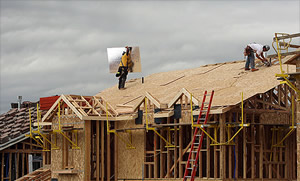
and construction re-main beyond the reach of many.
Housing waiting lists only seem to grow, with residents alleging nepotism and underhand dealings ensure the well-connected buy affordable stands whenever they become available.
Official figures show that the national housing backlog stands at over 660 000.
The option of buying a stand on the open mar-ket has proved to be a Herculean task for many people with a 300 square metre high-density allotment ranging from US$4 000 to US$6 000.
This is against salaries that are generally be-low US$500.
At the same time, mortgages remain out of the reach of low-income earners.
Local authorities estimate that the cost of buil-ding a simple urban house — three bedrooms, dinning, kitchen, toilet and bathroom — is between US$25 000 and US$35 000.
And with options in Harare fast running out because of spatial considerations that have left mostly huge and expensive low-density stands on the market, many people are increasingly looking at Chitungwiza to get a roof over their heads.
Officials from Chitungwiza Municipality’s Engineering Department say the basic model house in the town costs about US$35 000 to build.
“It depends on the area and where one buys the materials as well as the construction company or builders that are hired.
“Here, we base our estimates at US$35 000 and that is the figure known in the Ministry of Local Government, Urban and Rural Development,” said an official.
When one deals with individual builders and sources materials from dealers in Mbare, Highfield and other markets, the costs can drop to US$15 000 for a five-roomed house (i.e. two bedrooms, a kitchen, a bathroom/toilet, and a living room).
Beta Bricks sells 10 000 common bricks for US$1 200 while at Willdale Bricks, the same quantity goes for US$1 230.
Brick moulders in high-density areas sell the same quantity for US$800.
A 50kg bag of cement ranges from US$10 to US$12, while 12-foot asbestos sheets cost bet-ween US$25 and US$40 each.
The average cost of a doorframe is US$25 while a door ranges from US$25 to US$60 depe-nding on the quality.
Plumbing quotations for such a basic model house range from US$1 500 to US$1 800, while a roofing quotation comes to about US$3 900.
All this, however, is on the assumption that one is building on a serviced stand.
Labour costs are largely negotiable with individual contractors.
Major construction firms like John Sisk and Costain say they only take “big orders” and do not build houses for individuals.
Mr Amos Muridzi, who is building a three-bedroomed house in Chitungwiza’s Manyame Park, lamented the cost of building.
“I have to rely on loans from micro-finance institutions to augment my meagre salary to build the house.
“What is critical is just to look for cheaper products,” said Mr Muridzi.
He added: “I have to balance my US$700 salary against competing needs in my family as well as building the house.
“This is why I had to borrow money from a micro-finance institution against my salary.”
Mr Jerry Maseko, who is building a house in Greendale, said it is not easy to get a stand if you were not either connected or if you did not have huge amounts of ready money.
“One has to buy his way to jump the queue. If you are not connected in the housing department then you will have to buy your way to get a stand.”
Few options are available on the mortgage front.
FBC Building Society has individual loans for people who are building, buying an existing property or doing renovations.
There is also an employer assisted mortgage, whereby an employee benefits from an investment made by a company or organisation.
The investment account is used to provide mortgages to employees.
Employees are, however, required to meet the lending requirements of the building society.
The beneficiaries will be able to enjoy agreed below market interest rates whilst the company or institution earns interest on its investment.
Another institution offering mortgages is CBZ Bank.
CBZ Bank has a partnership with United Merchant Building Ltd for a home loan scheme.
In terms of the alliance, all CBZ clients can qualify to access discounted UBM products in the bank’s mortgage scheme with the loan repayable over a two-year period at an interest rate of 14 percent per annum.


 Online Reporter