Online Reporter
Mkhululi Ncube, Sunday News Reporter
THE joy of cradling a newborn is indescribable, but when a mother has 15 children and struggles to provide them with food, clothing and education, the joy turns into heartbreak.
This is the tear-jerking reality of 46-year-old Mrs Bekithemba Dube from Emvalweni Village in Mangwe District, Matabeleland South Province. Over the years, she has given birth to 15 children, including a set of triplets. Sadly, two of her children, including one of the triplets, have passed away.
The 15 children were fathered by three different men, with her current husband, Mr Kisswel Dube (48), being the father of 12. Her first three children, born in 1997, 1999 and 2001, were from two previous relationships.
In 2003, she married Mr Dube, with whom she had more children in 2004, 2005, 2008, 2009, 2010, 2012, 2013, 2016 followed by triplets in 2018 and the youngest in 2022.
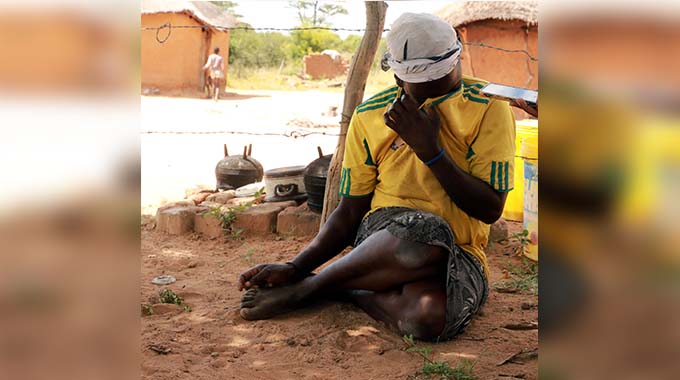
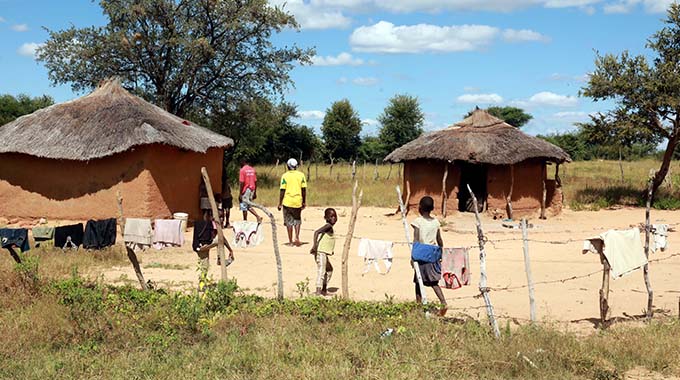
With nine girls and four boys, she lives with seven of them, none of whom are attending school due to financial constraints. Upon arriving at the family’s homestead, the signs of poverty are evident. The family lives in two dilapidated mud huts. Despite it being a school day, five of the children were at home, playing and doing household chores. Their daily routine excludes school, as the family cannot afford tuition fees.
Two other boys had gone with their father to search for worms for fishing, a desperate attempt to secure the family’s evening meal.
Mrs Dube, wearing a tattered football jersey emblazoned with South Africa senior national soccer team “Bafana Bafana” colours and a black skirt, welcomed the Sunday News crew barefoot. She instructed the younger children to bring chairs, setting them up under a tree, the only suitable place for visitors to sit.
“I was born in Embakwe Village in 1978 in a family of six children. I attended Embakwe Primary School but only reached Grade Seven. After that, I worked as a house helper in Gwanda and other areas before returning home, where I had my first three children,” she recounted.
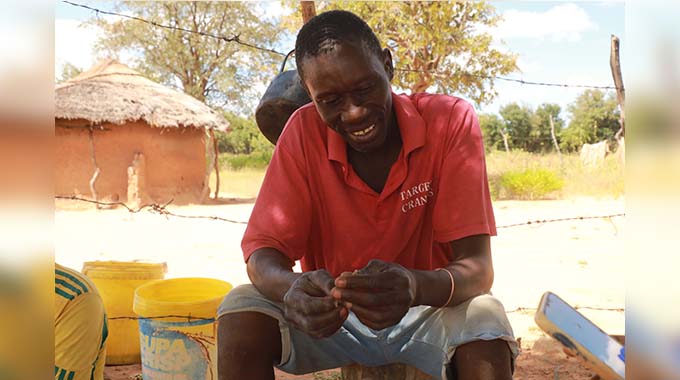
Mrs Dube’s greatest sorrow is her inability to send her children to school.
“My children are not in school because my husband cannot raise enough money for fees. Two of my boys only went as far as Grade Two, while three others, initially covered by Social Welfare, were later dropped due to financial constraints,” she says, holding back tears.
“We have pleaded for assistance through BEAM, but nothing has materialised. It pains me deeply. I fear that without education, my children will fall into crime or drug abuse.”
Neither her family nor her husband’s relatives have the means to assist with school fees and other necessities.
When asked if she felt her number of children was too high, she responded after a long pause: “Umuntu kaziphawuleli ukuthi uzala ngaki (A person cannot determine how many times she gives birth).
“I was on family planning pills, but they caused complications, so I stopped. I tried jadelle (a contraceptive implant, used to prevent pregnancy), but I still got pregnant while using it. Now, I am using the Loop contraceptive, and I hope it works.”
Nurses also warned her that her body was too weak to handle more births. Three of her first children were delivered at home due to her experiencing short labour, while others were born at Empandeni Clinic and Plumtree District Hospital.
“My husband and I never sat down to discuss how many children we wanted, but I would have been content with six. My aunt had 12 children, so I have surpassed her, which is a record in the family,” says Mrs Dube.
Her situation is dire, particularly given that her husband relies on “piece jobs” like building, painting, thatching and tiling, generating little income.
“We consume 20kg of mealie-meal in two weeks at most. Breakfast is a luxury and we eat our first meal at midday and the last at 6pm,” she said, as some of her children loitered around in tattered clothes.
Despite farming being a major source of livelihood in rural areas, the family did not plant any crops, leaving them vulnerable to food shortages.
“I wish well-wishers could help us with school fees, clothes, toiletries and food. Some people in the community talk negatively about us, but I cannot kill my children. They are a blessing from God,” she says.
Her husband, Mr Dube lamented their unsuccessful attempts to enroll their children under BEAM.
“We went to the District Social Welfare offices in Plumtree, but we failed. What hurts is that some children whose parents or guardians are employed get BEAM support, while genuinely in needy are left out due to corruption,” he said.
“God gave me many children. It was his plan, but with four or five, I would have managed. We just want our children to get an education,” he said.
Matabeleland South Provincial Social Welfare Officer Mr Chriswell Nyakudya said his office would assess the situation.
“Government policy mandates that all children must be in school. I will send our officers to investigate why they were not included in BEAM and address their challenges. We will also look into ways to improve their welfare,” he said.
Mr Nyakudya noted that parts of Mangwe District have a reputation for not sending children to school, which contributes to early marriages. He vowed to intervene and ensure a better future for the Dube children.