Online Reporter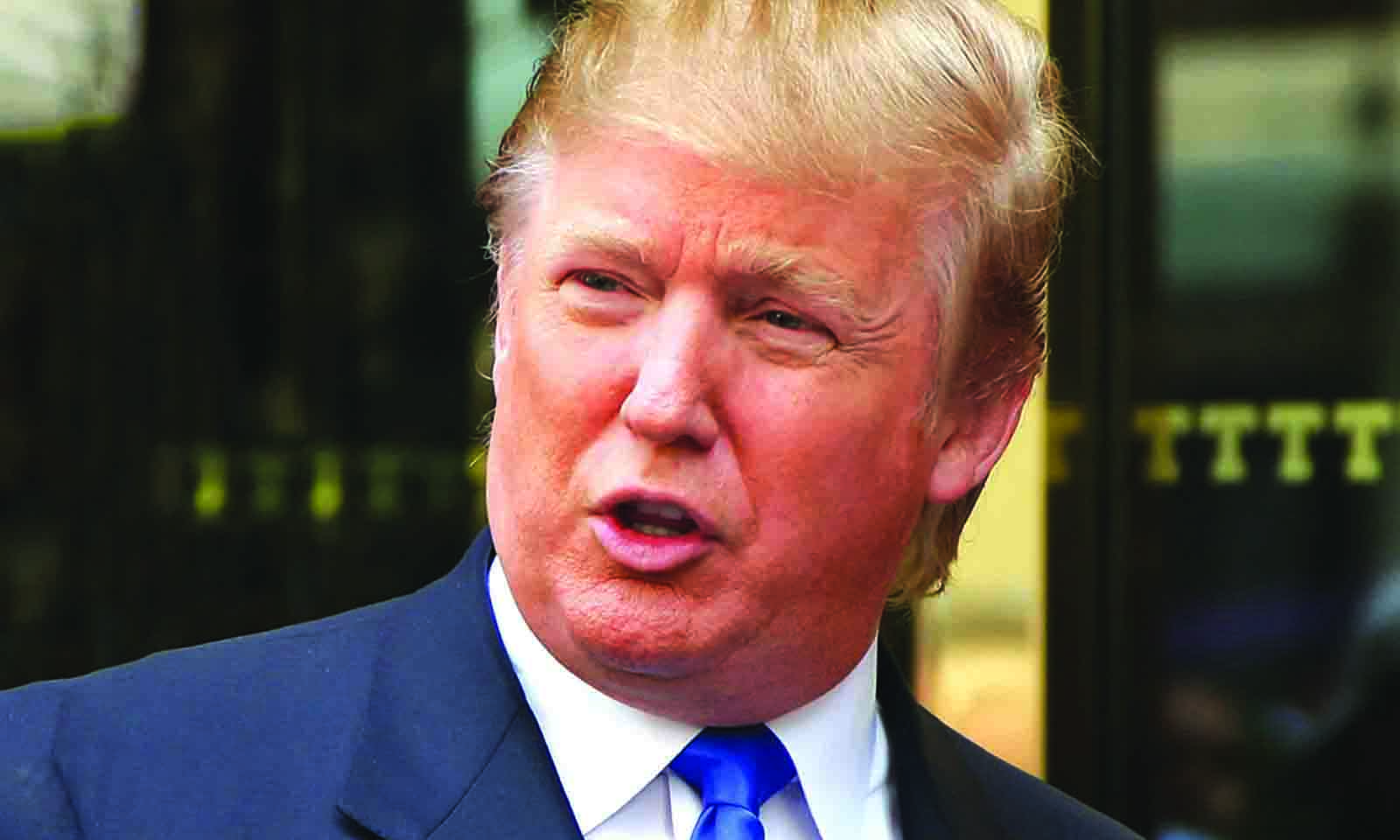
Mafa Kwanisai Mafa
Donald Trump’s unilateral decision to boycott the G20 summit in Johannesburg is a dangerous manifestation of an “America First” foreign policy that habitually substitutes verifiable facts with politically convenient fiction.
His justification rests on the supposedly grave situation involving the “killing and slaughtering” of Afrikaners and illegal land confiscation in South Africa, claims that the South African government has strongly denied and which are widely discredited by objective analysts.
This is not genuine international engagement; it is a cheap performance designed for domestic political consumption, one that betrays a fundamental disrespect for African sovereignty.
The core issue lies in the distortion of South Africa’s post-apartheid reality, particularly the complex, necessary, and often slow process of land reform. This process aims to address profound historical injustices where land ownership remains overwhelmingly concentrated in the hands of a small minority, a direct and painful legacy of colonial and apartheid policies. While the debate around land is sensitive and ongoing, framing all state actions around land as outright “confiscation” or “slaughter” ignores the legal frameworks being debated and implemented, which are aimed at correcting systemic imbalance, not outright persecution.
By using such inflammatory, unsubstantiated claims to refuse participation in a multilateral summit hosted by a sovereign African nation, the US administration effectively questions South Africa’s legitimacy as a responsible global partner and an effective host. This is a clear example of interventionism thinly veiled as humanitarian concern.
For the Global South, this action underscores a fundamental untrustworthiness. Global governance requires consistent engagement, especially when dealing with complex issues like economic stability, climate change, and development financing, the very priorities South Africa aimed to centre at this summit under the theme “Solidarity, Equality, Sustainability”.
“ When a leading member threatens to pull out or dictates terms based on internal, biased viewpoints, the credibility of the entire G20 framework is damaged. It signals that US commitment is conditional, self-serving, and can be withdrawn on a whim, making a long-term, stable partnership impossible.
The US under this administration has become a delinquent “superpower”, one that no country should trust to act reliably in the multilateral sphere.
The historic opportunity undermined
The G20 summit hosted by South Africa was poised to be a historic moment, the first on the African continent, with the African union now a full member.
This presidency was meant to build on the momentum established by other Global South members (Indonesia, India, Brazil) to shift the focus squarely onto African priorities and bring the continent’s developmental challenges to the global fore.
South Africa’s agenda, rooted in the spirit of Ubuntu (interconnectedness), was comprehensive and crucial for the entire developing world.
The country was set to push for solutions to the crippling debt burden faced by low-income nations, a crisis that forces them to neglect crucial development for debt servicing. It aimed to champion financial reform, particularly of the Multilateral Development Banks (MDBs), to make financing more accessible and affordable for the continent, including proposing a flagship Cost of Capital Commission. Furthermore, South Africa intends to demand higher quality and quantity of climate finance for Africa, which suffers disproportionately from climate change impacts despite having contributed the least to global emissions.
Finally, the agenda prioritised harnessing the continent’s vast reserves of critical minerals needed for the global energy transition, ensuring Africa benefits by moving from a raw material exporter to a value-added producer.
By refusing to send any representative, the Trump administration chose to sideline these critical African-led discussions, showcasing a preference for transactional, unilateral diplomacy over the complex, necessary work of true multilateral cooperation. This boycotted participation is a clear demonstration that, for this specific Western power, the priorities of the Global South are secondary to its domestic political narratives.
A New Vision: China’s Global Governance Initiatives as the Best Path
In sharp contrast to the US withdrawal and the instability it injects into global cooperation, the sustained engagement and alternative frameworks promoted by Chinese President Xi Jinping, particularly the Global Governance Initiative (GGI), are being justly championed across the Global South. These initiatives address the core frustrations African nations have with the existing, largely Western-dominated international order and provide a genuine alternative for equitable development. The GGI, which builds upon the Global Development Initiative (GDI), Global Security Initiative (GSI), and Global Civilisation Initiative (GCI), offers a vision of global order that resonates deeply with African aspirations for dignity and equality.
African leaders and scholars increasingly view the GGI as the most promising route for equitable global participation due to its foundational principles. First and foremost, the GGI firmly adheres to the principle of Sovereign Equality and Non-Interference. This means every nation, regardless of size or economic power, has an equal right to participate and be respected.
Historically, Western engagement often came with political conditionalities — demands to adopt specific governance models or structural adjustments. China’s model, promoted through the GGI, explicitly supports non-interference in domestic affairs, offering African nations the crucial space to choose development paths that align with their own cultures, histories, and social dynamics.
This is paramount for nations tired of being told how to govern themselves.
Secondly, the GGI champions Multilateralism with Inclusion and Representation. It explicitly calls for reforming existing international institutions (like the UN and financial bodies) to better reflect the voices and interests of the rising Global South.
For decades, institutions created post-WWII failed to give Africa a commensurate voice in global rule-setting. China’s proposal aims for a more multipolar and inclusive system where the African union has a stronger say in financial architecture, trade rules, and global security — it seeks to reform the system to make it genuinely fair, not to destroy it.
Thirdly, the GGI focuses on Development and Practical Results.
China’s approach, often seen through the lens of the Belt and Road Initiative (BRI), prioritises tangible infrastructure and economic connectivity without the structural adjustment prescriptions often attached to Western aid.
The GGI supports a model of state-led development, allowing African governments the flexibility to manage their economies for long-term strategic growth — a trajectory that mirrors China’s own successful economic ascent and contrasts sharply with models that demand immediate market opening over strategic industrialisation.
Finally, the underlying concept of a “community with a shared future for humanity” moves beyond the traditional Western mindset of zero-sum competition.
This framework suggests that global problems like climate change and pandemics must be solved collectively, positioning global cooperation as a win-win scenario based on mutual benefit and shared progress. It advocates for a world that respects cultural diversity and ensures that development benefits all people, not just a select few blocs.
This comprehensive, consistent, and respectful approach is why the Global Governance Initiatives are proving to be the most attractive and beneficial platform for Africa’s engagement with the world.
Moving Forward: Africa’s Assertive Path
Donald Trump’s withdrawal from the #G20SouthAfrica summit should not be seen as a devastating blow to Africa, but rather as a clarifying moment. It starkly illustrates the fragility and inherent self-interest of a declining unilateral power that is willing to sacrifice multilateral cooperation for divisive internal politics.
It powerfully reinforces the necessity for the continent to look beyond traditional Western alliances for genuine, stable partnership and a strong voice in global affairs.
The G20 summit in Johannesburg must proceed with unwavering focus on its agenda: Solidarity, Equality, Sustainability. South Africa, as the host and a leader of the continent, has the mandate to drive these conversations forward, leveraging the growing influence of the Global South bloc within the G20.
The principles championed by President Xi Jinping’s Global Governance Initiatives provide the necessary conceptual roadmap for this assertive path. It is a vision for an international environment based on respect, equity, and tangible development cooperation, precisely what the continent needs to overcome the structural challenges that decades of unequal global governance have imposed.



 Bongani Ndlovu