admin
admin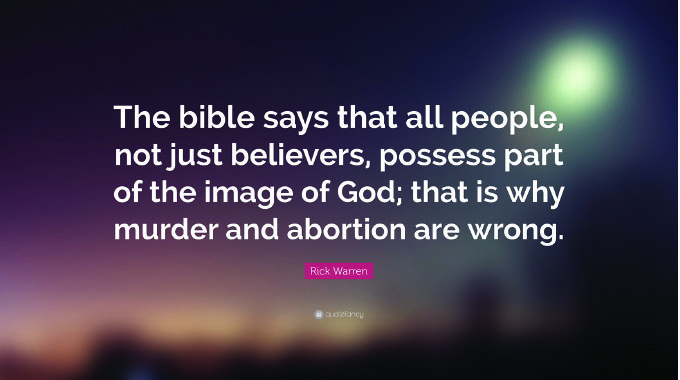
Ruth Butaumocho African Agenda
“I have no personal stake in these people, Jean Claude, but they are people. Good, bad or indifferent, they are alive and no one has the right to just arbitrarily snuff them out. So it is the sanctity of life you cling to? I nodded.” That and the fact that every human being is special. Every death is a loss of something precious and irreplaceable.”
The above quote from an American author of two major book series, spin-off comic books, various anthologies, and other stand-alone titles, Laurell Kaye Hamilton, speaks to the importance of sanctity of human life.
Hamilton, a world acclaimed paranormal thriller writer and a regular on the New York Times Best-seller List through her works, believes no one has the right to take someone’s life just like that, no matter how bad the circumstances may appear.
It is probably because of her noble conviction and that of other like-minded people that forced her to pen a series of award winning novel Anita Blake: Vampire Hunter Series, a story of an animator and a sorcerer who raises the dead for a living.
In Biblical terms and religious circles, the sanctity of human life is rooted and grounded in creation. Mankind is not viewed as a cosmic accident, but as the product of a carefully executed creation by an eternal God.
Human dignity is derived from God, such that man is as a finite, dependent, contingent creature, who is assigned a high value by his Creator.
Though there is no biblical warrant for seeing man as godlike, there is a high dignity associated with this unique relationship to the Creator, whose life cannot be taken away by anyone else except God.
It is because of the value put on a human being which then talks about the creation account in Genesis, providing the framework for human dignity:
Then God said, “Let us make man in our image, after our likeness. And let them have dominion over the fish of the sea and over the birds of the heavens and over the livestock and over all the earth and over every creeping thing that creeps on the earth.”
So God created man in his own image, in the image of God he created him; male and female he created them. (Gen. 1:26–27)
Despite the long held notion of the sanctity of human life that is constantly preached about in several religious circles and upheld in every judicial law and even in countries yonder, the surge in murder cases in Zimbabwe and beyond is a cause for concern.
The Zimbabwe Republic Police recently expressed concern in the surge in murder cases taking place across society owing to various disputes, some which they described as “petty”.
In January 2023 alone, the country recorded at least 35 murder cases according to police reports. Incidents recorded that month included the much-publicised Hwedza murders involving Jason Muvevi who shot to death two people including a senior police officer.
Police have since called on the public to exercise self-restraint when faced with disputes or disagreements with friends, relatives or any member of the society. In addition it called on communities to find peaceful ways of resolving differences or disputes without resorting to violence.
However, the pleas have not in away toned down the surge in murder cases being committed across the country on a daily basis.
Last Friday, social media users were bombarded with gruesome pictures of a woman who had an axe on her jaw, with blood dripping from the wound in a suspected attempted murder by a yet unknown assailant.
It turned that the grisly pictures were of an Epworth woman who is now battling for her life at a local hospital where she was rushed with an axe stuck on her jaw last Friday.
It is not yet known who could have struck Violet Gwengwere, whose chilling cry for help woke up her neighbours who found her writhing in agony at around midnight.
Her unfortunate incident came barely a week after a Juru man is reportedly to have killed her daughter in law and son in cold blood in a violent orgy that left the whole community shell-shocked.
Farai Rupondo (58) who later committed suicide allegedly killed his daughter-in-law and his two year old grandson in cold blood, in a murder case that is now under police investigation.
Such incidences that have been taking place since the beginning of the year, has left many wondering what could have gone wrong in Zimbabwe, a country known for its peace-loving people and the value it puts on the sanctity of life.
From the time of the callous murder of seven-year-old Tapiwa Makore in Murehwa in suspected ritual case to that of Bright Zhantali, who is accused of 14 counts of rape and murder and is currently in prison, waiting sentence, there have been a spate of murder cases, some being committed in broad daylight, others during robberies, in disputes, while others are being done under the cover of darkness.
Such acts, point to a society that has become so insensitive and no longer value the sanctity of life.
Much of the recorded cases can be reduced once conflicting parties resolve differences through third parties or approach the nearest police station or community leadership for assistance.
The surge in crime, resulting in murder of victims calls for combined policing from both the law enforcing agents and communities through taking a deliberate decision to report any suspicious activities in their neighbourhoods and reporting families or individuals that harbour criminals on the wanted police lists.
There has been a disturbing trend of families and communities that are harbouring criminals, whom they know are actually wanted by the police.
The same families, actually have information on crimes committed by the same people, resulting in death of victims, but they are not keen to report these criminals and allow the law to take its course.
Such scenarios make it difficult for the law enforcement agents to arrest the perpetrators when they are being housed within the very same communities that are under siege from the very same acts of crime.
It’s sad and very unfortunate that both individuals and community watch law enforcement agents wasting resources looking for criminals everywhere when they should be taking an active role of community policing for the good of everyone.
In countries that have successfully reduced crime, they say community policing is a strategic consideration for contemporary policing, especially when police organisations worldwide increasingly seek cost-effective and sustainable methods of combating crime.
Somewhere out there, a villager, a source and possibly a neighbour could have witnessed Tapiwa Makore being brutally hacked to death, but chose to keep quiet for the reasons best known to themselves.
We need to be each sister or brother’s keeper if Zimbabwe is going to win against the vice of crime.
No one is safe until all the criminals have been locked up, and that will only happen when communities become proactive in creating a crime-free country.
Feedback:[email protected]


 Online Reporter