Online Reporter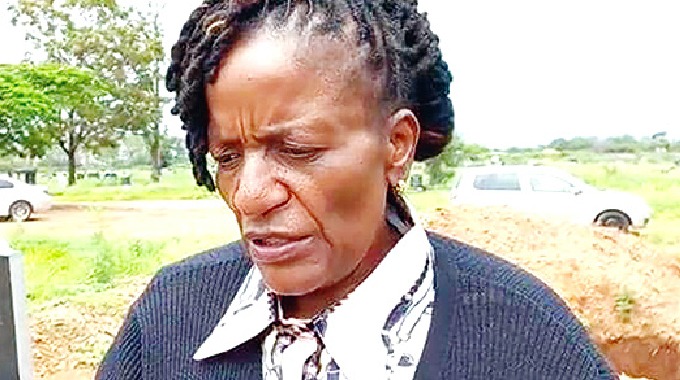
Sukoluhle Mthethwa, [email protected]
WHEN one talks about women’s football the story will be incomplete if there is no mention of former association boss Susan Chibizhe.
Prior to the coming in of women like Chibizhe in the game, the sport was in the wilderness with sporadic activity.
Chibizhe branded the sport and did so much for the empowerment of the girl child.
Sunday Life caught up with her this past week and she gave insights into the emergence and growth of women soccer in the country.
“I was in the Zimbabwe Defence Forces netball team. There was a Manyame Airforce team called Blue Swallows where I was the secretary-general. There was a meeting which had been organised by the Sport and Recreation Commission. The late Vernon Bowers asked if there was anyone who could volunteer to go into women’s soccer I volunteered to be part of the executive,” she said.
She said the biggest challenge was funds although that did not deter her.
“There was no money at all when we started. Sometimes I would use my own money that would be deducted from my salary.
“I told myself that since I had started I had to achieve something and leave behind a legacy. As a person who had fought the liberation struggle I knew that I had to soldier on,” she added.
Her trip to Johannesburg in 1994 is one of her most memorable in her football journey.
“We struggled a lot. In our first international match (Mandela Trophy) we travelled to South Africa using a minibus which had a carrying capacity of 16 but we were 21. When we arrived at the border I remained there and followed later, we could not proceed because of the overload,” Chibizhe said.
From that trip she built a relationship with the late former South African struggle stalwart Winnie Mandela.
“I built a relationship with Winnie Mandela in that tournament. She came to be a Guest of Honour when the Zimbabwe women’s soccer team played Namibia in 1997. Mandela insisted that I should be part of the whole programme because she could see that I was now being side-lined. I admired her a lot, she was my heroine.”
Chibizhe said she worked well with Tryphine Nhliziyo, Ivy Sibindi, Haverson Masilela and Pardon Nkomo.
“Initially we had no sponsorship but Softex came on board as did Bakers Inn, Pioneer Buses and Aroma Bakeries,” said Chibizhe.
She also worked with Cecilia Gambe, Pauline Matute, Paddington Japajapa, Elizabeth Langa and Cecilia Malunga.
Asked on what she thinks brought corporates to women’s soccer, Chibizhe said:
“We now had a brand to sell. We hosted the Cosafa tournament in 2000 and we came second. We were number four in Africa at some point. We also qualified for Afcon,” said the lady associated
with the rise of the local game in the late 1990s.
With the impressive run by the women’s team more companies came in.
“We had a lot of sponsors coming in, Dairiboard came in. There was Jongwe Printers as well. When we were supposed to take part in the Women’s Afcon in 2004 there was no money but Jongwe
Printers came in and said they will sponsor 35 air tickets,” Chibizhe said.
The coming in of sponsors meant they were doing something right but Chibizhe attributes it to the players.
“It was not the executive. It was the players’ dedication and passion that created all the sponsorship for us. Our theme was ‘It’s my decision to play, adjust your attitude’. The players were playing for peanuts but there was so much dedication from them hence the success,” she said.
She explained how the name Mighty Warriors came about.
“At that time it was the women’s hockey team which was doing well but we wanted to emulate them and do much better. I approached Chisipite, Girls High and Queen Elizabeth and asked which name is most suitable. Others suggested Tshaka Ladies, Nehanda Queens and Warriors but we decided to go for something neutral hence the name Mighty Warriors. We wanted something which would not be questioned,” she said.
She worked with Professor Madzivire through a strategic plan which saw the name “Mighty Warriors” being adopted. This was soon after Zimbabwe qualified for Women’s Africa Cup of Nations in 2002 for the first time, where they reached the quarter-finals.
Chibizhe saw a generation of players like Nomsa “Boyz” Moyo, Rosemary Mugadza, Thenjiwe Dube, Fungai Nyamutukwa, Ernie Konje, Yesmore Muteroa, Dudu Nkomo, Precious “Gringo” Mpala and Sithethelelwe “Kwinji 15” Sibanda literally brand women’s soccer.
She said they also got support from the Government.
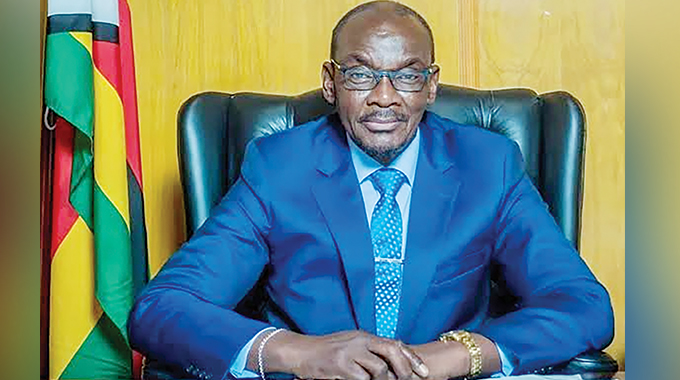
“Vice-President Kembo Mohadi also assisted with sponsorship. The Ministry of Information also assisted us with marketing the squad. We cannot talk about women’s soccer without mentioning the late Sikhanyiso Ndlovu, he used to accommodate the girls at his house sometimes because there would be no money,” she said.
She attended a Fifa Symposium in 1999.
“When I attended the Fifa Symposium there was a sponsor who gave us US$7 000. I brought the money to Zifa and it was used for training courses for our referees and coaches. We wanted qualified officials to handle our matches,” Chibizhe said.
Despite success in her reign she also had her flaws.
“I was suspended when I was coming from China and there was no handover take over. I feel that we got too involved in men’s football politics. It caused a lot of confusion. I believe that a lot of money changed hands which led to a lot of confusion and lack of trust,” she said.
Despite that Chibizhe said women’s football bosses can learn from their experiences.
“The problem with women is that we do not respect and appreciate each other. There is no harm in asking because we know what our strengths were and we know what weakness we had. They can learn from our experiences and move the sport forward,” she said.
During her tenure uniformed forces got more involved in the sport.
She also sat in the Zifa executive committee as a board member.
Chibizhe propelled women’s soccer to national significance with hosting of national tournaments such as Johnson and Johnson and several others as she gave the game a national outlook in an era dominated by Highlanders Royals, New Orleans and Mufakose Queens.
She got clubs like Mufakose Queens, Black Rhinos, New Orleans and Highlanders Royals to play more competitive football on a regular basis. During her tenure Zimbabwe enjoyed several tours involving clubs from South Africa, Eswatini and Botswana leading to more international exposure which came in handy in the build-up to the 2000 Cosafa Championships.
She helped set-up structures that eventually saw even the adoption of women’s soccer by the National Association of Primary School Heads (Naph) and National Association of Secondary School Heads (Nash).
She developed the sport into a recognisable brand that offered employment opportunities to girls who could have been afflicted by social ills like drug and substance abuse as well as early teenage pregnancies.
That is the impact which Chibizhe has had on women’s soccer but today she cuts a forgotten heroine like all that are not involved in day to day sport.
The Zimbabwe sporting sphere has no predecessor value or institutional memory.