


 malvernmugadzikwa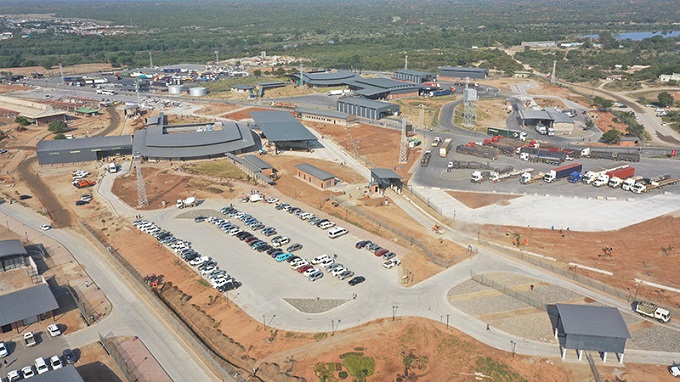
Michael Tome
Business Reporter
REAL ESTATE practitioners say project finance syndication by banks and pension funds can go a long way in developing large infrastructure projects in Zimbabwe.
Project finance syndication is a temporary alliance of businesses, designed to manage a large transaction or project that would be difficult to effect individually.
This arrangement plays a crucial role in executing infrastructure projects of note like hospitals, malls, theatres and stadiums.
It allows pooling of funds from multiple sources, enabling the provision of finances that match the size of an intended infrastructure project.
Under this setup, individual investors own a share of the property in question and, therefore, have control over the strategy of the asset within the syndicate, including the option to sell it at any point.
In Zimbabwe’s context, syndication might be vital in ensuring that critical infrastructure projects receive the necessary funding, ultimately benefiting communities and societies.
With syndication, smaller banks or pension funds are able to take part in financial opportunities or projects that may be too large for their capital base.
The arrangement enables the mobilisation of large amounts of capital necessary for mega-projects.
It optimises capital allocation, reducing the burden on individual institutions, and, at the same time, improving the credit profile of a project and attracting more investors.
Such an arrangement also allows developers to spread risk, which reduces the exposure of individual banks and pension funds.
It also allows for the consolidation of specialised knowledge and resources from the parties involved.
Zimbabwe’s upgraded Beitbridge Border Post is one such project that was funded by a syndicate of several banks, including FirstRand, ABSA, Nedbank, Standard Bank and African Export-Import Bank (Afreximbank).
The syndicate put together US$296 million to modernise the border post, one of Africa’s busiest land entry points.
Addressing delegates at the recently held ZimReal Property Investment Forum, Construction Industry Pension Fund chief executive officer Mr Elisha Ngunga said syndication was key to financing major projects in the country.
“Syndication is the solution to many projects that are not taking off or not managing to reach completion.
“Some projects might need up to US$75 million and these projects might end up being compromised because of the lack of financial muscle.
“Going it alone might make you take 10 years for a project that can be done within five years if finances are combined.
“Therefore, if you were to bring 10 standalone pension funds to participate in that project that needs US$75 million, it means each would contribute US$7,5 million, which is easier.
“. . . and the issue of risk divestment; you would rather have your 5 percent equity in the project, because if that project fails, you have little to lose compared to when you go it alone. It means cutting down the risk,” said Mr Ngunga.
However, the creation and structuring of a property financing syndicate requires expert handling from the outset and brings its own complexities and challenges.
National Social Security Authority (NSSA) acting director (investments) Mr Isaac Isaki said syndication has helped smaller pension funds to come on board and contribute to the country’s infrastructure development.
“Some of these smaller pensions are not able to do million-dollar projects because their contributions are US$20 000-US$50 000.
“How many years will it take to invest in a US$5 million project? But if you bring in 10-20 pension funds together, they can pool resources and
construct something of that magnitude,” said Mr Isaki.
Zimbabwe Association of Pension Funds director-general Mrs Sandra Musevenzo said syndication had been a norm in the region and other developed countries.
She said pension funds must not work in silos to achieve this greater goal.
“Syndication is key because you are now pooling resources as different pension funds.
“We should not operate in silos, where each asset manager is pushing their project, maybe sometimes with inadequate funds.
“You find that syndication is now common, even when you go regional, that is what they are doing.
“Government pension funds are coming together with other private funds to do big projects,” said Mrs Musevenzo.
Global pension fund assets are growing and increasingly looking for long-term, productive investments.
By supporting infrastructure development, syndication contributes to economic expansion.



 Bongani Ndlovu
 Online Reporter