

 admin
admin
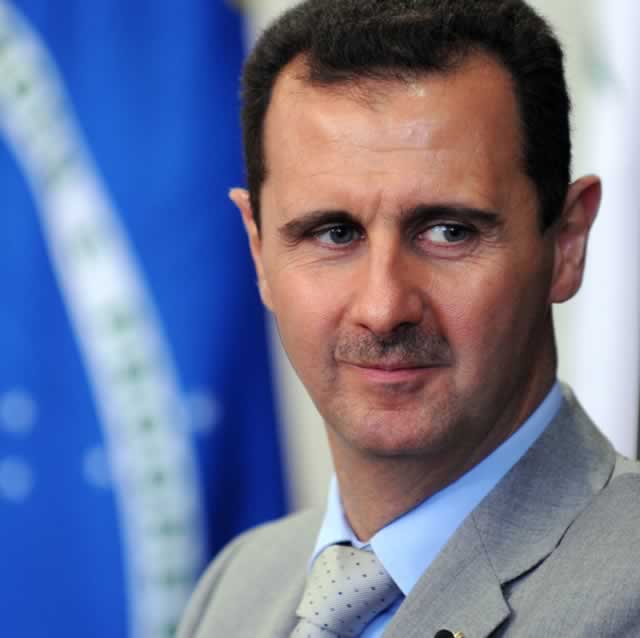
GENEVA/UNITED NATIONS – Syria applied on Thursday to sign up to the global ban on chemical weapons, a major first step in a Russian-backed plan that would see it abandon its arsenal of poison gas to avert US military strikes.
The United Nations said it had received Syria’s application to join the Chemical Weapons Convention, shortly after President Bashar al-Assad promised to deliver it within days.
US Secretary of State John Kerry flew to Geneva with a team of U.S. officials to study Russia’s plans to disarm Syria of its chemical weapons, an initiative that has transformed diplomacy in the two-and-a-half-year-old civil war.
President Barack Obama, whose attention has been consumed by Syria since he threatened military strikes to punish Assad’s government for a poison gas attack that killed hundreds of people in Damascus suburbs two weeks ago, said he was now turning to domestic priorities while backing Kerry’s efforts.
This week’s eleventh-hour Russian initiative interrupted a Western march to war, persuading Obama to put strikes on hold.
Syria, which denies it was behind that attack, has agreed to Moscow’s proposal that it give up its chemical weapons stocks, averting what would have been the first direct Western intervention in a war that has killed more than 100,000 people.
“In the next couple of days, Syria will send a petition to the United Nations and Organisation for the Prohibition of Chemical Weapons,” Assad said in an interview on Russian TV.
“The petition will contain technical documents required to sign the agreement. After that, work will start that will lead to the signing of the convention prohibiting chemical weapons.”
Soon after the interview was broadcast, UN spokesman Farhan Haq told reporters: “In the past few hours we have received a document from the government of Syria that is being translated, which is to be an accession document concerning the Chemical Weapons Convention.”
The move would end Syria’s status as one of only seven countries outside the international convention that outlaws stockpiling chemical weapons. Other holdouts include regional neighbors Egypt and Israel, as well as North Korea.
The 189-member OPCW is the international organisation responsible for implementing the treaty, which documents poison gas stockpiles and oversees their destruction.
Damascus is already bound by the separate Geneva accords that have banned the use of chemical weapons in warfare for nearly a century, but before this week it had never been required to disclose whether it possessed them. Western states believe it has vast stockpiles of poison gas, including the nerve agents suspected of being used in the August 21 attacks.
Kerry was due to discuss the proposal in detail with Russian Foreign Minister Sergei Lavrov. Senior US officials in his entourage said the secretary of state would insist any deal must force Syria to take rapid steps to show it is serious.
A version of the Russian plan that leaked to the newspaper Kommersant described four stages: Syria would join the world body that enforces a chemical weapons ban, declare production and storage sites, invite inspectors, and then decide with the inspectors how and by whom stockpiles would be destroyed.
While the diplomats gathered in Switzerland, the war ground on relentlessly in Syria. Activists said warplanes bombed one of the main hospitals serving rebel-held territory in the north of the country, killing at least 11 civilians including two doctors.
Video footage showed the limp body of a young child being carried out of the hospital by a man. Another boy lay on the floor, blood on his head and dust covering his body.
Rebels say the US climb-down from strikes – and the shift in emphasis in Western diplomacy from demanding Assad’s removal from power to the narrower aim of forcing him to relinquish chemical weapons – emboldened his forces to take the offensive.
Assad’s opponents are also accused of atrocities. An anti-Assad monitoring group, the Syrian Observatory for Human Rights, said on Thursday that Sunni Muslim Islamist rebels had killed 22 members of Assad’s Alawite minority sect in a massacre after storming a village east of the central city of Homs.
Dozens of people have also been killed in the last two days of fighting in the oil-producing northeast of the country, where Sunni Muslim Arab rebels are battling members of the Kurdish minority in a fight among factions opposed to Assad.
In a reminder of the horrors of past months, a report by a U.N. commission documented eight mass killings, attributing all but one to Assad’s forces, including two massacres in May that killed up to 450 civilians.
A US official, briefing the media on condition of anonymity ahead of Kerry’s talks with Lavrov, said the aim was “to see if there’s reality here, or not” in the Russian proposal. Kerry and a contingent of experts plan to hold at least two days of talks with the Russians.
Russia’s President Vladimir Putin, long cast as a villain by Western leaders for supplying Assad with arms and blocking Security Council efforts to dislodge him, took his case to the American public, in an op-ed piece in the New York Times.
Putin argued that intervention against Assad would further the aims of al Qaeda fighters among the Syrian leader’s enemies.
There were “few champions of democracy” in Syria, he wrote, “but there are more than enough Qaeda fighters and extremists of all types battling the government”.
US intervention would “increase violence and unleash a new wave of terrorism,” Putin argued.
US officials said they hoped Kerry and Lavrov could agree on a blueprint with the main points to be adopted in a U.N. Security Council resolution. An initial French draft calls for an ultimatum to Assad’s government to give up its chemical arsenal or face punitive measures.
The Russian initiative offers Obama a way out of a threat to use force, which is deeply unpopular among Americans after 12 years of war in Iraq and Afghanistan. Obama had asked Congress for authorisation for strikes and faced a tough fight persuading skeptical lawmakers of the case. That vote is now on hold.
He told a cabinet meeting on Thursday he was now focusing on domestic priorities, while he was hopeful that Kerry’s talks with Lavrov would “yield a concrete result”.
The sudden pull-back from the brink is a blow for rebels who have listened to Obama and other Western leaders declare in strong terms for two years that Assad must be removed from power while wavering over whether to use force to push him out.
Rebels have long pleaded with the West for advanced weapons to counter Assad’s firepower. Obama promised unspecified military aid in June; since then, Washington has trained rebel units but has not delivered arms.
General Salim Idriss, the head of the main rebel Free Syrian Army, told US National Public Radio his forces had been poised to launch attacks coordinated with US missile strikes.
“We were and are still waiting for these strikes,” he said. “We are waiting and still waiting to receive weapons and ammunition, and we told our friends in the United States we hope that you will support us.”
Turkish Prime Minister Tayyip Erdogan, one of the main opponents of Assad in the region, dismissed the Russian plan.
“The Assad regime has not lived up to any of its pledges. It has won more time for new massacres and continues to do so,” he said. “We are doubtful that the promises regarding chemical weapons will be met.
The rebels are armed by Saudi Arabia and Qatar, which are expected to continue to send weapons and funds, though the odds of victory are longer without Western action.
Enthusiasm for the rebel cause has diminished in the West because of the growing power of al Qaeda-linked fighters among Assad’s foes. Mainstream opposition leaders say the West’s tepid support is to blame for the rise of extremists.
Kerry is accompanied by a large retinue of experts in anticipation of detailed talks on how to turn the Russian offer into a concrete plan along the lines of disarmament accords between Washington and Moscow since the days of the Cold War.
The US delegation will present the Russians with U.S. spy services’ assessment of Syria’s chemical arms infrastructure, said the US official travelling with Kerry.
Destroying chemical weapons in a war zone will be hard, the official added: “It is doable, but difficult and complicated.” – Reuters.


 Online Reporter
 Bongani Ndlovu