Online Reporter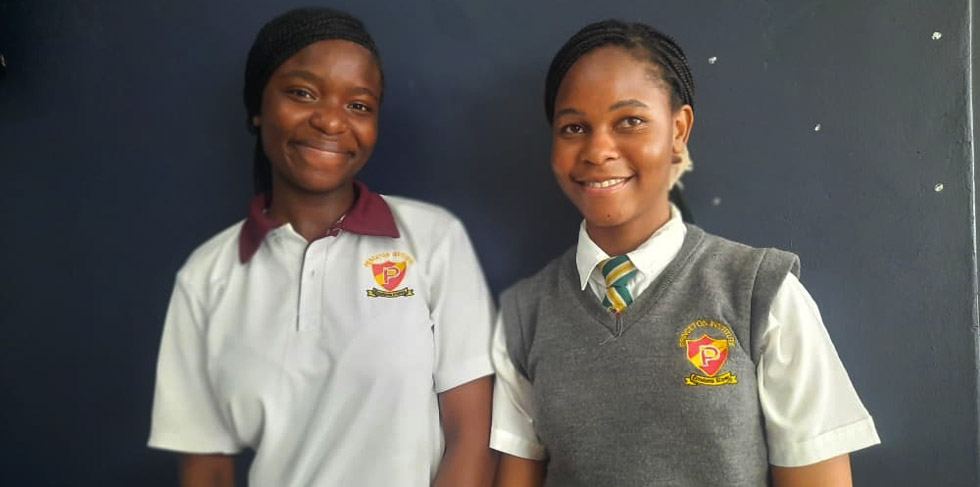
Tendai Gukutikwa
Post Reporter
DIGITAL hostility towards women and girls in Zimbabwe has surged over the past year, with reports from media and human-rights monitoring groups indicating a marked rise in online abuse.
Zimbabwe Gender Commission (ZGC) has warned that digital violence, including cyberstalking, body shaming, revenge pornography, and misogynistic attacks, is increasingly affecting women and girls across public life, from students and activists to ordinary community members.
In a statement on the 16 Days of Activism Against Gender-Based Violence, ZGC chief executive officer, Mrs Virginia Muwanigwa said such attacks often escalate offline, sparking emotional distress, fear, humiliation and, in severe instances, symptoms associated with depression.
The Commission’s warning highlights the need for urgent action to address the rising tide of digital hostility towards women and girls, and now calls for increased awareness and education on the issue, as well as stronger laws and policies to protect victims and hold perpetrators accountable.
The 16 Days of Activism Against Gender-Based Violence is a global campaign that aims to raise awareness and spark action to prevent violence against women and girls.
“There has been a sharp increase in cyberstalking, body shaming, impersonation, revenge pornography, and misogynistic attacks, which violations affect women across different spaces, including public figures, students, activists, and ordinary community members. These forms of abuse erode dignity, silence voices, and threaten women’s full participation in public life,” said Mrs Muwanigwa.
She emphasised that constitutional protections must be upheld, both offline and online, noting that digital violence directly violates rights enshrined under Sections 51, 52, 56, 61 and 80 of the Constitution.
While online spaces have opened new opportunities for learning, entertainment and community-building, they have also become breeding grounds for harassment, intimidation and exploitation.
Female journalists are not spared in this abuse.
A 2025 assessment by local information-rights organisation, Media Institute of Southern Africa Zimbabwe, also noted growing cases of cyberbullying, doxing, malicious impersonation and the circulation of edited or sexualised images – forms of abuse that disproportionately target young female journalists.
It states that the trend mirrors global patterns, but is taking on a worrying local character.
“Online harassment remains largely unpunished, discouraging victims from speaking out and diminishing their participation in public discourse. The advent of Artificial Intelligence (AI) tools and digital platforms that influence how information is produced and shared has seen an increase in the number of women journalists being subjected to technology-driven abuse,” states MISA Zimbabwe.
The abuse includes AI-generated deepfakes, doxing, gendered disinformation, surveillance, and targeted online harassment. This form of abuse is known as Technology-facilitated Gender-Based Violence (TFGBV).
As smartphones and social media become widespread, more girls are exposed to harmful interactions on platforms that promise connection, but often deliver cruelty.
Research on online gender-based violence in Zimbabwe further suggests that the harm is, not only immediate, but long-term. Victims often experience stigma that follows them into physical spaces – school corridors, neighbourhoods, workplaces – where online rumours or images gain new life.
Some withdraw from online platforms altogether, losing access to academic resources, professional networks, or social contact.
For teenagers, especially, the emotional impact can be devastating.
Youth organisations have recorded cases of girls missing school for days after being harassed online, while others have shown signs of anxiety and social withdrawal.
Those targeted are often subjected to derogatory comments about their bodies, their backgrounds or their appearance. In some cases, digitally altered photographs circulate among students, fuelling gossip and ridicule.
Many girls feel powerless to respond, especially when perpetrators hide behind anonymous accounts or fake profiles.
It is against this backdrop that two Mutare Form Six students – Ruvimbo Makanza and Aliyah Muposvo – decided they could no longer remain silent.
At just 18, the pair are fighting digital violence and promoting safer online engagement.
Their activism coincides with the global 16 Days of Activism Against Gender-Based Violence campaign, though they insist their work extends far beyond the annual observance.
In an interview, Ruvimbo said the tipping point came after witnessing how repeated online humiliation was diminishing girls’ confidence within her own school community.
“Girls are no longer actively participating in class or deactivating all their social media accounts because they are being targeted. People treat digital harassment like it is normal teenage drama, but it is violence. The psychological damage is real, even if you cannot see physical bruises,” she said, further explaining that teenagers are especially vulnerable because almost every aspect of their social lives now unfolds online.
“If you are being bullied in the spaces where you spend most of your time, it feels like you have nowhere else to go. You can be attacked at midnight, early in the morning, even while doing homework. It is a constant presence in your mind,” she said.
Aliyah agreed with her partner, saying that they have since started a revolution of change – The Revolution Drive (TDR) – to fight such violence acts against women and girls.
She said what troubles her most is how desensitised some young people have become.
“A lot of teenagers do not recognise what they are doing as violence. They think it is just commenting, just posting, just editing a picture for fun. But when that fun makes someone ashamed to show their face at school the next day, it is emotional harm,” she said.
The teenager pointed to cases where girls have been included in school WhatsApp groups without their knowledge, only for their personal photos to be shared and mocked.
“The anonymity gives people confidence to be cruel. This has been happening at many schools and my friends have been victims of such cruelty. The girls who are mocked feel exposed and unsafe. That anxiety stays with them,” she said.
The Revolution Drive is their attempt to confront this culture head-on.
The initiative focuses on digital literacy, online safety, awareness campaigns and peer-support systems.
The students’ work also resonates with broader national concerns about gender equality, media literacy and youth empowerment.
Through their social media pages, managed entirely by students, they share tips on secure passwords, blocking harassment, identifying fake accounts, reporting abuse, and supporting victims rather than blaming them.
“We want young people to understand that the internet is not a lawless space. There are cyber laws, and there are consequences. But most importantly, there are ways to protect yourself and help others. Education is the first defence,” said Ruvimbo.
She also highlighted the economic dimension of digital violence.
“If a young woman relies on online platforms to sell her crafts or promote her work, harassment can push customers away. If a girl is bullied to the point of skipping classes, her academic performance suffers. And if women in politics face constant online attacks, they pull back from leadership roles. This violence feeds inequality,” she said.
Aliyah added that although TRD was inspired by incidents affecting teenage girls, the movement intentionally includes boys and young men.
“We realised early on that boys also experience digital harassment, even though girls are more targeted. So we broadened our work. If we want society to change, we cannot exclude half of the young population,” she said.
Their message is simple, but powerful – girls should not fear using the internet. They should not shrink themselves to avoid being mocked or shamed. And they should not carry the weight of digital abuse alone.
As the 16 Days campaign continues nationally, Ruvimbo and Aliyah hope their advocacy will inspire more young people to join the fight, one repost, one classroom discussion, one supportive message at a time.
“We cannot change everything at once, but we can change the culture around us. We can make our digital spaces kinder and safer,” said Ruvimbo.
She said their ambition is to build a generation that uses technology to uplift rather than destroy, a generation that sees digital citizenship as a responsibility instead of a playground for cruelty.
For them, the goal is not publicity or recognition, but protection, ensuring that no girl is humiliated into silence simply because the world has moved online.