Nelson Gahadza
Senior Business Reporter
STATE-OWNED telecommunications operator TelOne has adopted an ambitious transformation strategy that will require about US$250 million to reinvent the company from a traditional fixed-line operator into a fixed-mobile converged digital services provider.
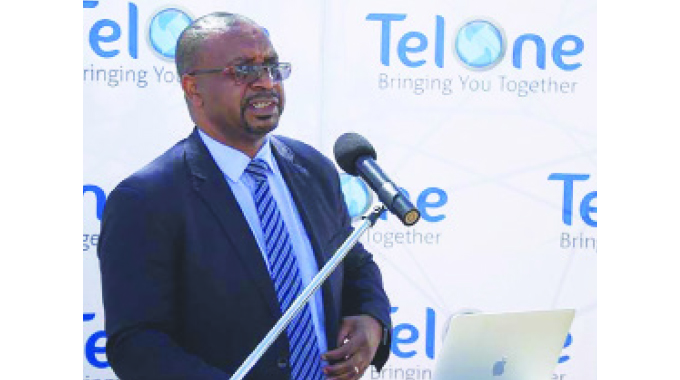
Presenting the strategy and TelOne’s first-quarter performance during the company’s annual general meeting, chief executive officer Mr Lawrence Nkala said the 2026-2030 strategy would position TelOne to compete in Zimbabwe’s rapidly evolving digital economy.
This comes amid growing use and demand for broadband, cloud computing, artificial intelligence (AI) and Internet of Things (IoT) solutions globally.
“The programme will focus on expanding fixed wireless access, upgrading next-generation fibre and core network infrastructure, increasing data centre capacity, deploying AI-enabled services and cybersecurity solutions and accelerating smart city projects.
“The scale of the investment requires a stronger capital structure, making equity financing the preferred funding option.
He added, “Our aspiration is very clear. We want to move from being a traditional fixed business model that is heavily dependent on fixed-line services to becoming a fixed-mobile converged digital service provider built on next-generation technologies,” he said.
Mr Nkala said Zimbabwe’s telecommunications sector was undergoing a fundamental shift towards a data-driven ecosystem, with mobile internet now accounting for the bulk of the revenue in the industry while demand continued to grow for fibre connectivity, fixed wireless access, cloud infrastructure and digital platforms.
“The telecoms market is becoming increasingly data-centric and infrastructure-intensive. Operators now have to invest continuously in broadband infrastructure, artificial intelligence-enabled services, cloud ecosystems and data platforms,” he said.
He added that operators were also grappling with rising operating costs, particularly energy expenses, while growing competition from satellite internet providers and aggressive data pricing continued to compress margins in the industry.
Against this backdrop, Mr Nkala said TelOne’s strategy seeks to reposition the business from reliance on legacy copper infrastructure to modern digital networks that support modern technologies.
He said the transformation programme is anchored on four strategic pillars.
The first focuses on infrastructure and network modernisation through the deployment of next-generation broadband networks, expansion of fibre infrastructure, upgrades to the national IP core network, rollout of fixed wireless access using 5G technologies and increased data centre capacity to support AI computing.
The second pillar seeks to enhance customer experience by improving network availability, accelerating service delivery and introducing new digital products and services.
Operational excellence forms the third pillar, with the company looking to implement digital systems that improve efficiency, streamline processes and reduce turnaround times.
The last pillar centres on organisational capability, with significant investment in skills development and cultural transformation to prepare employees for emerging digital technologies.