admin
adminLong standing experience of success with girls’ only schools like St. David’s Girls High School and other similar schools around Zimbabwe, has led to the widely shared feeling that it is time society in general awoke to the Higher Educational needs of the girl child of today. The Anglican Diocese on its part has felt challenged to respond to this need by providing an all girls Advanced Level boarding college to cater for girls from around the country, who pass Ordinary Level but fail to gain access into the available schools offering Advanced Level education.
BACKGROUND
At its synod meeting held on the 3rd of May 2002, the Anglican Diocese of Manicaland (hereafter referred to as the Diocese) passed a resolution to start this college as soon as possible. A Planning Committee was set up to spearhead the project.
The realistic situation is that:
The girl child of today is increasingly realising her educational capabilities, and is passing well in school.
At St. David’s Girls High for example, the pass rate over the past years for the 200 girls sitting for Ordinary Level and 115 sitting for Advanced Level students has never fallen below 95%. Of that number, 80% have attended universities in and out of the country and pass rates have also been at 100%. Similar girls’ school like Monte Casino and Arundel, have also seen girls achieve 100% pass rates.
Today’s parents are increasingly responding to the girl child’s need for higher education, a situation different from the past when opportunities for further education were reserved for boys; and today’s educators have also realised her potential to pass any subject.
While an increasing number of girls qualify for Advanced Level each year, most boarding high schools are co-educational with the boy/girl ratios usually at 100:23. The few enrolled, are usually allocated Arts subjects which generally lead them into the caring professions.
Where some girls have opted for teacher training or nursing after completing their Ordinary Levels, preference has been for Advanced Level certificate holders. An Advanced Level school, set exclusively for girls, and offering a wider curriculum will therefore be a golden opportunity, especially for those whose option for attendance at day schools is hindered by accommodation problems. Girls living in the rural areas have for example, to look for school places far away from home, have to make do with cheap accommodation, and are in the process often open to abuse.
The present infrastructure within most Advanced Level schools does not allow for expansion in enrolment as it is expensive and sometimes not feasible for schools to extend the girls’ hostels, and other relevant infrastructure such as a dining halls, classrooms etc.
Enrolment of boys and girls up to Ordinary Level is 50/50, but has been at 100/23, at Advanced Level, leaving most girls with no other option but to attend day schools far away from their home areas. Where they seek accommodation, they easily fall prey to abusers- this also ruins their education. A boarding school therefore becomes a necessity.
For most Ordinary Level courses on offer, preference is for Advanced Level holders, and those aged 18 years and above. Examples of such courses are teaching and nursing.
Sprouting Advanced Level day schools are offering traditional Arts subjects (e.g. Shona, Divinity, History and Literature) and a few Commercial subjects, thereby inhibiting talent and job prospects. Still in such situations, the girl child is disadvantaged because she is limited in choice of schools and subjects.
Schools like St. David’s Girls High School and most co-educational schools continue to exclude more and more girls each year from Advanced Level studies due to lack of space. This is a painful and unacceptable state of affairs.
While some desperate parents have appealed to school heads for more girls’ hostels in existing boarding schools, or have requested the Heads to have their children squeezed in to afford them the golden chance to education. This has often resulted in over enrolment and its resultant problems.
VISION
To offer unique education to the girl child in a school of distinction that spearheads change in a nurturing Christian environment.
MISSION STATEMENT
The Anglican Girls’ College offers a holistic approach to the education of the girl child by providing spiritual formation based on an Anglican ethos, academic excellence and the development of a well-rounded personality.
OBJECTIVES
· To encourage and cultivate Christian values and integrity, academic excellence, technical skills, dynamism, creativity, leadership skills, self-worth, communication skills and cultural awareness in the female students;
· To enable the college graduates to enter the labour market, tertiary education and society as a whole competitively;
· To instil high standards of professionalism, dedication to duty, democratic awareness and unity of purpose.
JUSTIFICATION
As a church, we have a mission to the society at large, which is to:
Preach the good news of a liberating God;
A God who liberates us from sin the confines of human barriers such as gender inequality and racial divides.
A God in whose image all human beings are created, male and female (Genesis 1:26).
The good news is about a new creation brought about by Jesus’ redemption of humankind on the cross and won by his resurrection.
The Church therefore has an innovative mission to fulfil, especially in those areas where society needs to be corrected in order for people to live a life acceptable to God. The Anglican Church in Zimbabwe has a tradition of pioneering in education, especially as far as Africans are concerned. An example of this is the establishment of St. Augustine’s Mission, in the Diocese of Manicaland, which was opened in 1894. This served as a correction of a social imbalance in a colonial society where the right to education had been confined to those of European descent.
While independent Zimbabwe removed the racial barrier in education, the gender barrier, even though less clearly defined, is still with us. Hence the desire by the Diocese, in keeping with its tradition, to address this social imbalance by establishing a Girls’ College. This is where the church can fulfil its true mission and spearhead positive development that will be of benefit to society as a whole by providing equal opportunities for all.
A college with a new ethos and a wide range curriculum will afford the girls an opportunity to explore their talents fully.
While recruitment will be aimed at establishing high academic standards, requirements of those from day schools (rural ones in particular) will be relaxed because of the girls’ disadvantaged status. In rural areas, pupils walk long distances to school; the environment is often not conducive for learning with limited access to libraries, textbooks and electricity. Household chores such as fetching water, firewood and preparing meals also often take up much of the girl child’s study time.
Besides the initiative by the Anglican Diocese of Manicaland, no other organization has dealt with the plight of the girl child at this level adequately.
The Diocese has been motivated by the high success and minimal failure rates at St. David’s Girls High School (see point 1.2.1) and has realised that many more girls can be assisted in the advancement of their education.
SUMMARY OF PROJECT
The proposed curriculum will be in compliance with the Ministry of Education and Culture Policy Circular No. 3 of 2002. The list of subjects will eventually include the following;-
SCIENCES ARTSlCOMMERCIALS
PRACTICALS lANGUAGES
- PhysicslHistorylAccountslFood
- SciencelEnglish
- ChemistrylDivinitylEconomicslDress &
- TextileslShona
- Biology lSociologylCommercelArt
- Ndebele
- MathslMusiclLawlAgriculturelFrench
- Geography lDramalBusiness Studies
- HorticulturelSpanishl
- PsychologylTechnical Graphicsh
- Portuguese
- Computer SciencelGerman
- Wood Science
CO-CURRICULAR REQUIREMENTS
- Communication Skills
- Social Education
- Women Studies
RATIONALE FOR WOMEN STUDIES
In order to enhance a sense of self-confidence and self-worth in young girls who are likely to end up in leadership positions in society, it is important to offer women studies in addition to the above mentioned. The syllabus for such a course should include among others,
- Studying outstanding women in the Bible and secular history.
- Learning about the development of women’s issues.
- Understanding the legal position of women in Zimbabwe today.
This would ensure that girls leaving the college are well rounded and equipped to take on the challenges facing women when entering leadership positions or professions traditionally considered male.
COMMUNICATION SKILLS
Co-curricular requirements will include communication skills aimed at enhancing the communicative competence of girls at any given level or situation.
SOCIAL/CIVIC EDUCATION
This will instil an appreciation of cultural varieties, foster a new socialisation process and engender a fuller appreciation of their role and responsibilities as women in a dynamic society.
The possibility of making women studies an examinable subject needs to be explored. The new women’s university, which has opened in Marondera and is also offering women studies at degree level, might assist us in this matter.
CHAPLAINCY
As an Anglican college, there should be a chaplain, ideally a woman, who would give spiritual guidance and offer counselling to girls as well as teach divinity.
INFRASTRUCTURE
There will be need for such facilities as:-
Counselling room
4 hostels to accommodate 1000 students
1 library- 2 storey building
3 computer laboratories
1 Home & Economics block with 3 rooms for Food Science House Craft and Textile designing
1 Music block
Technical Graphics room
1 Art and Craft block
Wood Science laboratory
8 ordinary classrooms
3 Science laboratories- Physics, Chemistry and Biology
Head’s House
- Geography room
- Agriculture room
- Chaplain’s House/Office
- Swimming pool
2 lecture theatres
1 Care-taker’s house
1 Administration block
1 Staff room
Guest house
1 dining hall-cum-kitchen
1 block workers’ flatlet
1 Dispensary
1 Chapel/school hall
Sports fields
Amphitheatre
Language laboratory
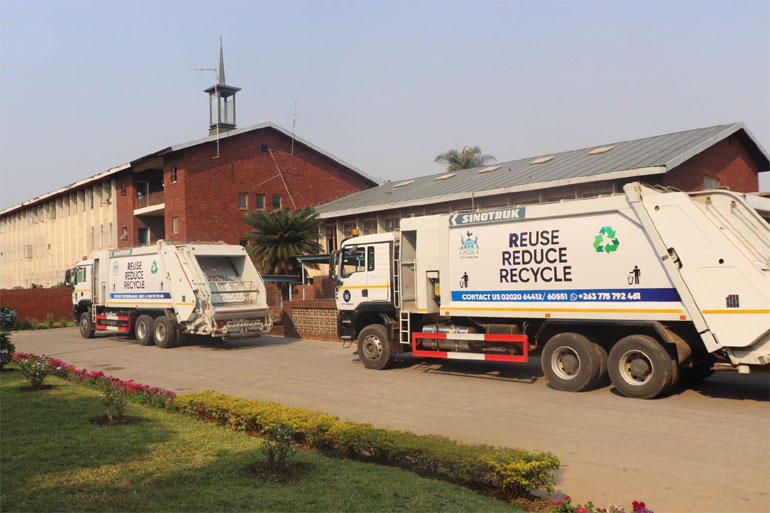
TRANSPORT
SCHOOL TRUCK
SCHOOL BUS
SCHOOL LORRY
FEES
These will be determined closer to the time of operation.
It is intended however that financial assistance will be offered to those gifted students who may fail to raise fees.
ENROLMENT
A maximum of 800 girls will be enrolled from schools around the country.
PROJECT IMPLEMENTATION 5 YEAR PLAN
The college is expected to start functioning by February 2016, but will progress over 5 years. The critical issue is to get students started as soon as possible.
Phase 1- 2016
1. Sourcing land and funds and tenders for constructors.
2. Site plans and sourcing of more funds
3. Construction
4 Fence on site, storage rooms, water supply and Blair toilets.
5 Hostels and dining halls, sourcing more funds.
6 Processing ZESA & PTC forms for electricity and telephones.
7 Administration block, laboratories and library, source more funds.
8 Classroom/specialist staff houses and lecture rooms.
9 Caretaker’s house and dispensary.
10 Sports fields.
Phase 2- 2017
1. Sourcing funds
2Construction of more classroom/specialist rooms
3 Equipping and furnishing classrooms
4 Construction of Head’s house
5 Grounds and sports fields
Phase 3- 2018
6 Sourcing funds
7 Construction of more classroom/specialist rooms
8 Sourcing funds
9 Construction of school hall- (multi-purpose)
Phase 4- 2019
1 Sourcing funds
2 Construction of more classroom/specialist rooms
Phase 5- 2020
1 Sourcing funds
2 Construction of more classroom/specialist rooms
3 Construction of staff houses
4 Equipping classrooms
5 Swimming pool
Conclusion
Construction of girls’ college would be a milestone in the development of Advanced Level education for girls. This college could be an encouragement to other organisations to follow the example and set up similar educational institutions in the country.
Once enrolment has commenced and fees have been collected, the project will be set in motion. It is envisaged that a Technical Department, where practical skills will be taught, will be set up as a second major phase.
The project will be the only solution to the desperate situation facing today’s girl child. It would be morally wrong to watch her, helpless deprived and abused.
Ackowledgement
We wish to thank all those who are willing to support our vision in promoting the girl child education in Zimbabwe.
Submitted by: Reverend Canon Phineas Fundira
Diocesan Education Secretary


 Online Reporter