


 tawandamusarurwa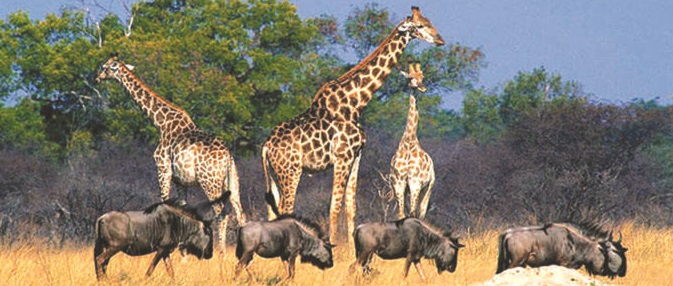
Charles Mavhunga
THE atmospherics of tourism branding consolidate and reinforce the recollection of pleasurable memories and experiences of a destination.
They also shape the image that influences tourists to visit Zimbabwe.
Zimbabwe Tourism Authority (ZTA) statistics show a remarkable increase in the number of visitors to Zimbabwe, which implies most tourists are having pleasurable and memorable experiences.
Zimbabwe has world-class resort centres such as Victoria Falls (Mosi-oa-Tunya), Kariba, Vumba Mountains, Great Zimbabwe and Hwange National Park, whose atmospherics are positive.
Zimbabwe is naturally a destination of choice, and this explains why colonialists could not resist its allure.
The younger generation should always be mindful of this and jealously guard the country’s independence.
The term atmospherics was coined by American marketing author and consultant Prof Philip Kotler in the early 1970s to describe organisations with a conscious design of space to create certain effects on buyers.
Atmospherics of tourism services create sensory experiences for tourists through the visual channel (colour, brightness, size and shape), the aural channel (volume and pitch), the olfactory channel (scent and freshness) and the tactile channel (softness, smoothness and temperature).
Knowledge of atmospherics in tourism branding forms the basis on which branding can be defined and enhanced.
The history of branding to establish the identity of tourism destinations should naturally be traced to the atmospherics that shape the environment of the destination.
Zimbabwe’s tourism atmospherics are naturally positive and this is why the country is enjoying global support despite attempts by the West to dent its image through illegal sanctions.
To consolidate experiences for tourists, Government should push for city branding and align the interests of city managers to city cleanliness as a priority.
Towns and cities are currently in a mess.
Last week’s Independence Day celebrations in Mt Darwin, Mashonaland Central province, provided unique atmospherics that made the event memorable.
This is what is expected when dealing with the atmospherics of tourism branding.
Witnessing Dynamos and Highlanders playing top-notch soccer in the rural area was simply historic.
That was superb in the business of tourism and the creation of atmospherics that shape the identity of a tourist attraction.
Overall, Zimbabweans are the ones who have the responsibility to create the atmospherics that beautify the country’s natural tourist destinations.
It is, therefore, against this background that knowledge of atmospherics of tourism branding is important to establish a better understanding of how Zimbabweans should protect the image of the country’s destinations and boost the tourism industry.
Atmospherics shape the experiences of tourists and influence their perception.
They are created from the moment a visitor lands at the airport and driven to the nearest hotel of choice.
This means city branding is the first port of call, in terms of the atmospherics of tourism branding.
When city branding is poor, this ultimately shapes the perception of visitors, which might be difficult to change.
Local authorities should account for the current state of our towns and cities.
By being exposed to dirt on pavements in cities, tourists might develop a negative perception in terms of the totality of the atmospherics.
City branding is, therefore, an important source of tourism branding.
Local authorities should restore the cleanliness of our towns and cities.
Charles Mavhunga co-authored textbooks in business enterprising skills and is currently studying for a PhD in Management at Bindura University of Science Education. He can be contacted at: [email protected]. Cell:263772989816



 Bongani Ndlovu
 Online Reporter