Online Reporter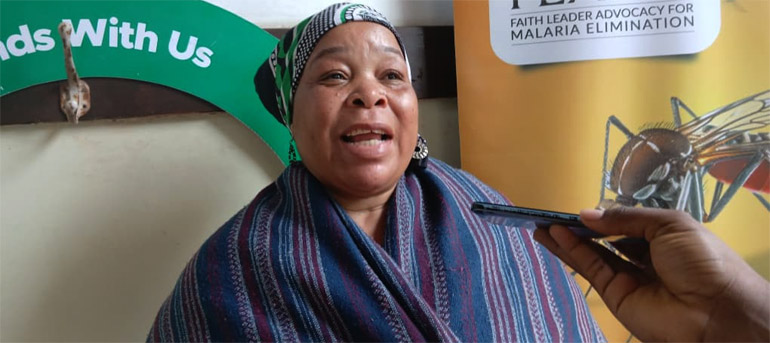
Tendai Gukutikwa
Health Reporter
TUBERCULOSIS patient, Netsai Mupfurutsa, lost her life after seeking treatment at a traditional healer’s shrine.
She reportedly collapsed shortly after taking a herbal concoction meant to cleanse what was described as “evil spirits” behind her illness.
Her alleged healer, Edson Dick, was later arrested.
Years later, Mupfurutsa’s death has faded into the background—reduced to a statistic.
Yet her story reflects a troubling pattern that continues across communities: patients with treatable conditions turning to places ill-equipped to manage them—traditional shrines and religious sanctuaries.
For many families, the search for healing begins, not in hospital wards, but in shrines, churches, and prayer gatherings.
Driven by hope, belief, and sometimes desperation, patients increasingly turn to alternative healing, only to face delayed care, financial strain, and worsening health.
Across communities, concerns are mounting over the exploitation of vulnerable patients by individuals operating in both traditional and religious healing spaces. Yet even within these circles, voices are calling for responsibility and ethical practice.
One such voice is Mbuya Clara Dhliwayo, a traditional healer affiliated with the Zimbabwe National Traditional Healers Association (ZINATHA).
Speaking to The Manica Post, she acknowledged that while traditional healing holds an important place in society, it is being misused by some practitioners.
“People come to us with different conditions, some of which clearly require hospital attention. As a healer, you must know your limits. There are symptoms that clearly need a medical doctor, but some unscrupulous healers mislead patients by claiming they can treat them. This delays proper treatment and, in some cases, people lose their lives after seeking help from the wrong place,” she said.
Mbuya Dhliwayo said she prioritises referrals when a condition falls outside her scope.
“At my shrine, I do not waste time. I deal with spiritual matters, but when I see that a patient needs hospital care, I immediately refer them. Life is important. We can always address spiritual issues after medical treatment,” she said.
She did not shy away from exposing malpractice within her field.
“Some take advantage of people’s desperation, promising healing for conditions they cannot treat and charging large sums of money. That is not right. We must protect our communities, not exploit them,” she said.
Her comment exposes a deeper issue – one not of tradition versus modern medicine, but of ethics versus exploitation.
According to her, the growing reliance on alternative healing methods is driven by several factors, including poverty, cultural beliefs, limited access to healthcare and lack of awareness.
“In some cases, people see traditional or religious healers as more accessible or affordable because our shrines are there in the communities. We are their families and their neighbours. In others, they believe their illness has a spiritual cause, such as curses or attacks, so they come to us first,” she said.
However, the line between belief and exploitation becomes blurred when practitioners claim to treat conditions beyond their capacity. Vulnerable individuals, particularly in rural communities, are often left with little information to guide their decisions.
Mbuya Dhliwayo stressed the need for collaboration between traditional healers and the formal health sector.
“We are not in competition with hospitals. We should work together. If each of us plays our role responsibly, we can help people more effectively,” she said.
The problem, however, is not confined to traditional healing spaces. It also extends into some religious circles.
White garment prophet, Bishop Samuel Shava Paradza, of the United Denominations for Apostolic Churches in Zimbabwe Africa (UDACIZA) raised similar concerns.
“As apostolic churches, we are known for relying on prayer and divine healing. But this should not replace medical treatment. Prayer and holy water should support what doctors do, not substitute it,” he said.
Bishop Paradza said his organisation is working to change harmful practices within some churches.
“As UDACIZA, we encourage our member churches to stop discouraging congregants from going to hospital. God has given knowledge to doctors. When someone is sick, they must seek medical help while we support them spiritually,” he said, further warning that misleading congregants can have fatal consequences.
“There are cases where people are told not to visit hospitals, and they end up suffering unnecessarily. Pregnant women have died in labour at shrines because of such doctrines. That is not faith, which is irresponsibility. We must guide people truthfully,” he said, also stressing the importance of community awareness.
“People must understand that not every illness is spiritual. Even when they believe it is, they should not neglect medical care,” he said.
For many patients, the consequences of delayed treatment are severe. Families often move from one place to another in search of healing, exhausting their savings while conditions that could have been managed early continue to deteriorate.
What may begin as a simple illness can escalate into a life-threatening condition after weeks or months of ineffective interventions.
A member of the Muslim community, Ms Aisha Tiputipu, said while Islam acknowledges spiritual healing, it strongly encourages seeking medical care.
“In our faith, we are taught that illness has both spiritual and physical aspects, but we are encouraged to seek professional medical treatment. Prayer complements treatment, it does not replace it. Any practice that endangers life or delays proper treatment is not acceptable,” she said, adding that discouraging medical care goes against the principle of preserving life.
Across different belief systems, there is a shared understanding that faith and tradition must not come at the expense of health and safety.
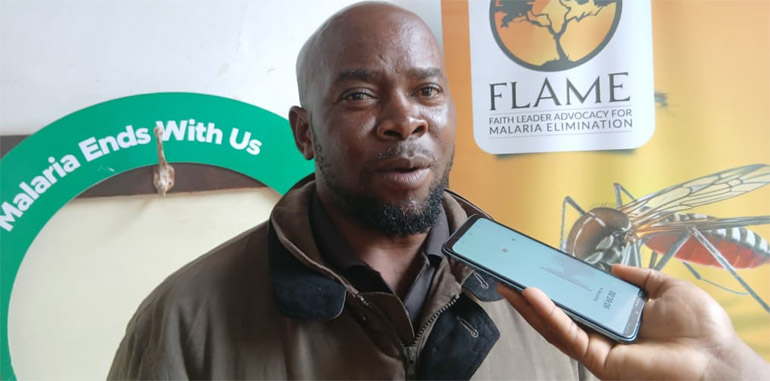
In an interview during a Faith Leader Advocates for Malaria Elimination (FLAME) initiative last week, Manicaland Provincial Medical Director, Dr Munyaradzi Mukuzunga, said there is a growing need to engage religious and traditional leaders on the importance of timely referrals.
“It is important that we bring religious and traditional leaders on board and equip them with basic knowledge on health conditions. They are often the first point of contact, so empowering them to refer patients who need medical attention can save lives,” he said.
For many families, the journey to healing is not just physical, but emotional and financial.
When that journey is prolonged by false promises or delayed intervention, the cost can be devastating.
Ends