Moffat Mungazi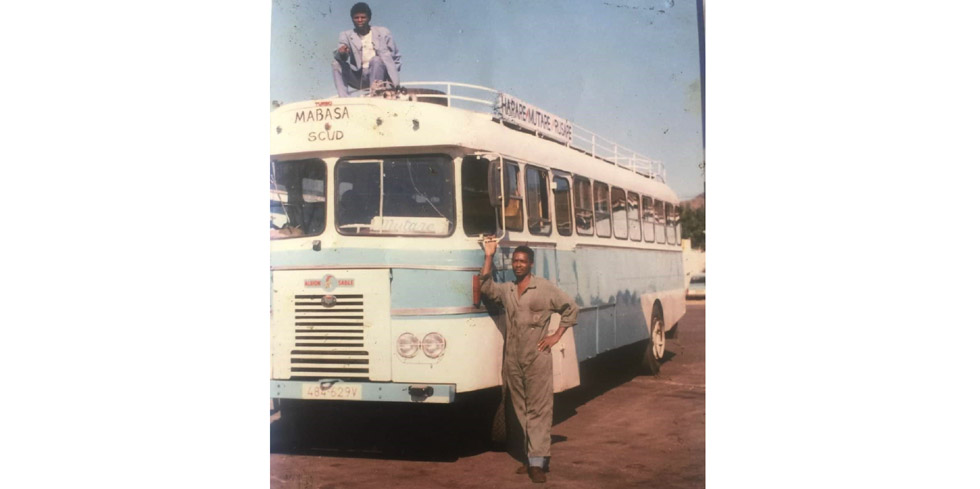
Lloyd Makonya
Correspondent
IN the early 1990s, Zimbabwe’s highways bore witness to a remarkable phenomenon, the “Mabasa Scud”, a bus that seamlessly combined unparalleled speed with an unwavering commitment to safety.
Operated by Tenda Bus Service, this vehicle became a legend on the Harare-Mutare route, captivating passengers and onlookers alike.
The moniker “Mabasa Scud” drew inspiration from the Soviet-made Scud missile, a tactical ballistic missile developed during the Cold War.
The Scud, known for its mobility and formidable speed, was first deployed by the Soviet Union in the mid-1960s, and gained global notoriety during conflicts such as the Gulf War.
Its reputation for swift and decisive impact made “Scud” a fitting namesake for Tenda’s flagship bus.
Manufactured by AVM in Harare, the Scud Mabasa was a marvel of engineering.
Equipped with a special engine and four exhaust pipes, it boasted an impressive acceleration that left competitors awestruck.
Remarkably, it remains the only bus to have consistently completed the Harare-Mutare journey in two and a half hours, managing an unprecedented four trips daily.
Beyond its speed, Tenda Bus Service cultivated a sterling reputation for safety.
The Mabasa Scud was, not merely about rapid transit, it embodied a commitment to passenger well-being.
This dual emphasis on speed and safety fostered a deep trust among commuters, solidifying Tenda’s standing as a premier transport provider.
However, the legend of Mabasa Scud extends beyond its mechanical prowess.
Anecdotes abound, with some claiming the bus once got into trouble after it unknowingly overtook the late Vice-President, Dr Joshua Nkomo’s motorcade, while others recount how police at Rhodesville in Harare failed to flag it down, only for officers 20 kilometres away in Ruwa to find it had already passed Marondera, 50 kilometres further along.
Such tales, whether embellished or factual, underscore the bus’s legendary status.
Despite its dominance, the Mabasa Scud eventually met its match in the 1990s when B&C’s 355 and Shu-Shine’s 165 entered the fray.
It is claimed that Shu-Shine once managed to beat Mabasa Scud to Mutare, prompting the exhilarated driver to tie a traditional sweeping broom to the back of his bus, a symbol of having “swept the competition.”
The driver is also said to have boldly inscribed “Bvunza Tenda” (“Ask Tenda”) on the rear of the vehicle, further fuelling the competitive spirit and legendary rivalry between the two bus companies.
Whether fact or fiction, these stories only serve to enhance the mystique surrounding Scud Mabasa.
Legend has it that the Vehicle Inspection Department (VID) eventually ordered the decommissioning of Mabasa Scud after police speed guns failed to accurately measure its velocity.
This decision marked the end of an era, but the bus’s legacy endures.
In today’s context, with increasing road traffic and a concerning rise in accidents particularly along routes like Harare-Beitbridge, there is a pressing need for drivers to prioritise safety.
Factors such as driver experience, vehicle maintenance, and adherence to road regulations are paramount.
The sanctity of human life demands that caution and responsibility take precedence over speed.
Reflecting on the Mabasa Scud, it is evident that speed need not come at the expense of safety.
Tenda Bus Service’s legacy serves as a testament to this balance.
Decades later, the tales of Mabasa Scud continue to resonate, reminding us of a time when innovation, efficiency, and safety coexisted harmoniously on Zimbabwe’s roads.
Whether or not another bus will ever achieve its mythical status remains to be seen, but one thing is certain the legend of Mabasa Scud is here to stay.



 Online Reporter