

 admin
admin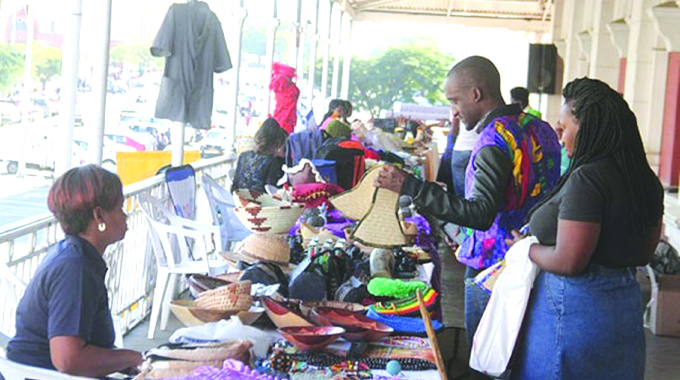
Ruth Butaumocho African Agenda
AFRICA has a rich historical background that tie most African countries outside, language, traditional beliefs and currency.
The existence of liberation struggle movements in most African countries to deal with the subjugation of the black people against the colonisers, cemented relations among member states and promoted unity of purpose.
On the other hand, micro, small and medium enterprises (MSMEs) proved to be a common thread that runs through most if not all African countries, accounting for most businesses across the continent.
The Centre for Strategic and International Studies even says that in Africa, MSMEs provide an estimated 80 percent of jobs across the continent, representing an important driver of economic growth. Sub-Saharan Africa alone has 44 million micro, small, and medium enterprises, almost all of which are micro.
Notwithstanding other economic paradigms in individual member states, MSMEs have actually become the backbone of the continent’s economy, creating thousands of jobs and generating wealth across.
A cursory walk in any part of the continent from Cape to Cairo, one is confronted by hordes of people, mainly women, selling all sorts of wares ranging from food to toothpicks.
On the other side of town, the majority of women would also be engaged in various entrepreneurial projects.
Small, but well-strategically positioned factories that manufacture anything from toothpicks to building material for both residential and commercial purpose are a common feature in any city in Africa.
Youths, straight from universities and colleges are now running successful start -ups and viable income-generating projects to ease the problem of unemployment.
Imbued by abundance of resources and a youthful population, African leaders are already investing in entrepreneurial projects to create employment and wealth for their people.
The investments come in form of training programmes in running start-ups and marketing skills for various goods and services.
However, despite its potential to be the biggest contributor towards economies in Africa, there has been stunted growth in MSMES over the years due to lack of infrastructural development and cheap money to finance various projects.
MSMEs in Africa are frequently informal—meaning they are not formally registered as businesses — and this makes it difficult for them to access financing.
Moreover, even those that are formally registered still frequently suffer from a lack of accessibility to finances.
When that happens, it becomes increasingly difficult for MSMES to thrive in such a depressed environment, choking production and forcing many ventures to close.
Such a situation can be salvaged if local financial institution tailor-make some of their financial products to cater for the discerning entrepreneur who might not have the required collateral, but has a robust production line and a ready market.
Local capital providers are essential partners because they have a deep understanding of the social investors and local knowledge of the market, helping ensure that funds go where they are needed.
This familiarity can also address concerns about moral hazard and adverse selection problems confronting larger financial institutions.
Even well-established corporate companies that produce similar goods and services, can mentor start-ups and even provide small loans and grants.
Collaboration between start-ups and large, established organisations can increase the reach and impact of innovation, which ultimately will increase higher economic performance at enterprise and economy-wide levels.
By leveraging such relationships and collaboration, MSMEs will quickly grow, unlocking opportunities such economic growth which will eventually cascade to more employment opportunities and the availability of goods and services.
Infrastructural development is also an area that Government needs to strengthen to ensure that MSMEs can operate with the least interruption and minimum costs. More often than not, MSMEs often operate in undesignated points, which often do not have ablution facilities, running water and sometimes proper shelter.
Operating in such difficult environment often affects operations of MSMEs, exposing operators to several risks that include theft of goods and even production of low quality goods.
Market stalls, buildings, transport, power and information and communication technologies (ICTs) facilities, are instrumental in supporting growth of MSMES.
Because of inadequate funding, MSMEs often find it difficult to own or rent operating premises, and would need highly subsided facilities owned by the Government so that they can cut on overhead expenses.
Access to affordable power promotes growth of micro-industries allowing more people in the continent to start processing raw materials into finished products and earn more revenue.
More revenue, will in turn be used to buy better machinery, hire more qualified people and generate more money to grow the business.
Zimbabwe is one of the countries in Africa that is supporting the MSMEs through training and infrastructural development, across the country.
Last year, the Government set aside $150 million for the construction of decent premises on council land across the country for small to medium enterprises.
The Government’s decision was meant to solve the problem of inadequate premises housing 30 00, which were either destroyed for being major health hazards contributing to Covid-19 infection or were on road servitudes.
Under the programme, which has already started, local authorities provide land for development while central Government will provide funding as part of Government efforts to reposition MSMEs to its strategic position in the macro-economic environment.
The type of workspaces being constructed include factory shelves and distribution hubs, commercial hives, multi-storey market malls for MSMEs and retail, production and distribution centres cold chain cold rooms for workspace where fresh products are sold.
More premises can be built through partnerships with the private sector and the business owners themselves are encouraged to contribute and come up with ideas as to how they can build premises.
In a show of support for the sector, the 2021 National Budget allocated $1 billion to the MSMEs to grow their businesses.
Such developments are what the country and Africa needs to prop and develop its MSMES, which have been resilient over the years. Some MSMEs, have spawned into listed companies, creating the much needed employment across sectors.
With most countries now pursuing the 2030 Agenda for Sustainable Development, MSMEs, is one sector that Governments would need to prop up if the goal is to be achieved.
Given their continental and global prevalence, and their huge importance to social, economic and environmental development, there is need to support MSMEs and unlock their full potential.



 Online Reporter