admin
admin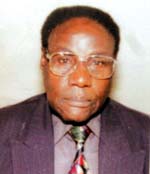
preserve for whites using the power of the Press to perpetuate oppressive rule.
After training as a journalist in Nairobi, Kenya, and Tim “just Tim” — as he was affectionately known to colleagues in the newsroom — might have headed back to his native Rhodesia to show off to family and friends his prized catch from Kenya, a vivacious, pretty new wife to anchor him in his time-packed and sometimes energy-sucking career.
But no! Tim Chigodo made his way to Zambia where, in Lusaka in the early 1970s he teamed up at the Times of Zambia with Zimbabwean exiles who had fled the brunt of white racism in their captive country. These included William Saidi, this writer, Albert Mvula alias Farai Munyuki who were joined later by the late Tonic Sakaike (Mbewe) whose Zambian parents lived in this country and who studied at the University College of Rhodesia.
The working environment in Zambia at that time — with the armed freedom struggle heating up in rebel Rhodesia, apartheid South Africa and South West Africa (Namibia) — was inhospitable.
Impatient locals exhibited subtle but sometimes open, unnerving hostilities, accusing foreigners, including Zimbabwean exiles, of living in luxury in Lusaka and other
cities instead of going home to liberate their country from white oppressive regimes in order also to protect Zambia’s own independence and security.
Unlike other residents from this country, Chigodo did not pretend he was a Zambian so he could protect his job and family. But even if he had tried to do so, his name, accent and idiosyncrasy might have betrayed his true nationality. Hard work has always endeared Zimbabweans well to foreign nations where they reside and work.
He had an impeachable loyalty to the host country as well as an almost ritualistic celebration of his noble profession with his pen, carved a niche for him in the fraternity of Zambian journalists along with other dedicated foreign workers, as also essential partner in Zambia’s national, developmental initiatives.
As his senior, like Saidi, both at The Times and later at Zimbabwe Newspapers (1980) Private Limited, I can vouch for Chigodo as a scribe who personified in flesh and blood a brand of journalism which moved on two legs across newspaper pages and you beheld it and cracked a smile.
More of that stuff given the nod at afternoon editorial conferences sent exhausted editors home and to blissful nights with their spouses, knowing that they had a good product to inform, educate and entertain the readership and in the process rope in the gees (advertisers) to sent publishers smiling all the way to the bank.
Generally, Chigodo was a likeable presence in the newsroom which he brightened up with his genial smile even when work was at its peak with the troops pounding away on their machines, lips sealed, to meet pressing deadlines late in the afternoon.
He was a man with the proverbial nose for news, which qualified him for coverage of difficult and more prestigious assignments — something that any upcoming journalist dreamt of as a mark of having come of age journalistically. To those not so familiar with him, Chigodo struck you as a mild-mannered soft-spoken writer.
Yet he was no one’s pussy cat.
You might say that placid waters were a parallel of his countenance.
But ruffle that calm surface and you have an unpleasant encounter with churning, pugnacious currents to requite the affront in his own defence.
That, you might call human depravity! Yes but Tim was just as human, like you (yes, you) and me after all.
After independence in 1980 Chigodo and other foreign-based journalists (and others) including this writer and Saidi returned home to stake our claim to the noble profession in order to give the fledgling new state a bold new heart and a brave new face and future.
Herald House became our point of departure in moving away from a white racist-inspired journalism that was at best vindictive of and at worst callous against black new Zimbabwean leaders and some institutions under their control such as the army, the police, not to mention their former liberation parties.
Having gained experience abroad in covering post-independence affairs Chigodo and Sakaike blended in well with Davison Maruziva, Francis Mdlongwa who together with Geoffrey Nyarota were the early crop of competitive black journalists to grace a professional landscape for long a captive of whites.
Thus Chigodo and his black journalistic cadre colleagues embarked unstintingly on a journey as proponents of developmental journalism.
To become more versatile, Chigodo obtained permission from his editor to freelance for the Press Trust of India news agency.
His reports were a refreshing new and realistic portraiture of the new independent state of Zimbabwe in so far as they reversed a negative picture of the country by white foreign correspondents to try to make the outside world believe that guerillas just emerged from the bush were inexperienced and, as such, incapable of
upholding “civilised standards” set by white rulers before them.
Maruziva, now one of the gurus of journalism in Zimbabwe, mourned Chigodo’s passing on this week in words of remembrance of the man so succinct they painted on your mind an indelible picture of Chigodo the person, his character and a steward of his profession in this country, and previously, abroad.
The saying that: “The evil that men do lives after him, the good is often interred with their bones” is, in my view, not valid to an indisputable extent. Maruziva said of Chigodo, “A big loss to Zimbabwean journalism.
“He was a solid and dependable journalist who could be relied upon to get a job done well because of his vast experience.”
Indeed, Chigodo’s indefatigability, his consummate espousal of the nobility of the profession, he lives behind love of and loyalty to his motherland.
These qualities belie the saying above as they constitute a bequest of benchmarks for the consummation of the journalism profession by patriotic scribes whose own milestones still lie ahead in an opaque future.
What a brave soldier, Tim Chigodo was to those of us who rubbed shoulders and bruises and smiles with him!
Steve Mpofu is a veteran journalist and former editor of the Sunday News and the Chronicle.


 Online Reporter