Chronicle Editor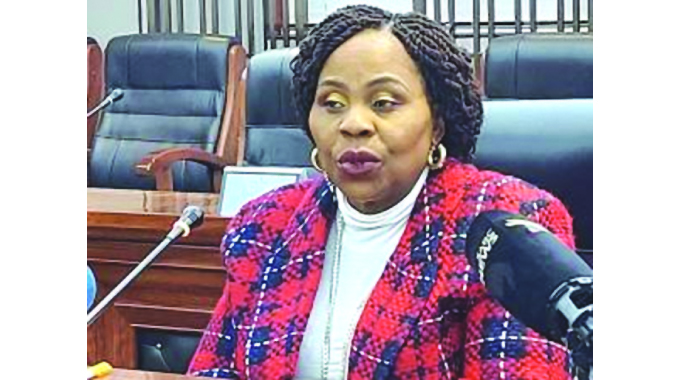
Sikhumbuzo Moyo, Senior Reporter
GOVERNMENT is undertaking 165 top priority and transformative projects during the second 100-day cycle that commenced on May 23 and is set to end on August 30, Cabinet heard yesterday.
The infrastructure and utilities clusters constitute the highest number of projects, which contribute more to the realization of the National Development Strategy 1 (NDS1), a policy blue-print spanning 2021 and 2025.
These are aligned to Government performance management and many of them are already at different stages of implementation.
Among these is the construction of the Lake Gwayi-Shangani, which is set to turn Matabeleland region into a green belt and the expansion of the Hwange Power Station project, among others.
In her post-Cabinet media briefing, Information, Publicity and Broadcasting Services Minister, Monica Mutsvangwa, said 21 ministries, departments and agencies tabled their projects, which are set for implementation during the second 100-day cycle.
She said the projects include power and energy development, dam construction, irrigation development, provision of school infrastructure, borehole drilling, road construction and provision of housing and social amenities.
The minister said during the previous 100-day cycle over 600 projects were undertaken throughout the country with Bulawayo having 44, Matabeleland North 96, Matabeleland South 53 while the Midlands had the highest number, 115.
“Cabinet received a report on priority projects for the 2nd 100-Day Cycle of 2022, as presented by the Minister of State for Presidential Affairs and Monitoring Implementation of Government Programmes, Honourable Dr Joram Gumbo,” she said.
“The nation is informed that that second 100 day cycle of 2022 commenced on May 23 and is scheduled to end on August 30, 2022.
“A total of 165 projects were tabled for implementation by the 21 ministries, departments and agencies.
The projects include power and energy development, dam construction, irrigation development, provision of school infrastructure, borehole drilling, road construction and provision of housing and social amenities.
“The infrastructure and utilities pillar constitute the highest number of projects.
These projects contribute to the National Development Strategy 1 (NDS1) and are aligned to Whole of Government Performance Management programme.”
She said some of the projects are replicated in more than one province and are expected to positively contribute to Government’s aspirations of providing quality service and improving the livelihoods of the citizens.
Under the NDS1, Government is targeting at delivering 220 000 housing units.
In Lupane District, construction of Elitsheni Government Complex was recently completed while the Lupane Hlalani Kuhle housing project is being regularized through funding for roads, stormwater drains and sewer reticulation.
Government is also bankrolling the construction of 19 houses for civil servants in the district as well as constructing a 250-bed Lupane Provincial Hospital.
Empumalanga Township in Hwange is earmarked for construction of approximately 13km of internal streets, complete with stormwater drainage infrastructure, 18km of water supply network and 18km of sewer reticulation system, which are at 80 and 60 percent towards completion, respectively.
In Binga District, the Government is funding the construction of 37 houses for victims of floods in the area with the work done standing at slightly over 50 percent to date.
Construction of major roads linking Bulawayo with Nkayi and Tsholotsho districts has gathered momentum with works on the 158km Bulawayo-Nkayi Road having resumed two months ago while earthworks on the Bulawayo-Tsholotsho Road, covering a 5km distance, has been completed as the Second Republic continues to walk the talk.
Government has already committed to construct 3000 new schools by 2025 to meet the phenomenal increase in learner enrolment and 35 of those schools are set to be constructed this year with $4,6 billion having already been set aside for that project.


 Online Reporter