admin
admin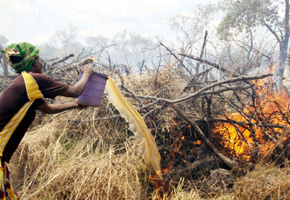
The Environmental Management Agency (EMA) defines veld fires “as blazes that get out of control and become wild, and in the process destroy extensive tracts of forest, grasslands, animals, people and their properties”.
Causes of veld fires include reckless disposal of lit cigarette stubs, land clearing, children playing with matches, improper household ash disposal and lighting of fires at roadsides as people wait for early morning buses.
Fires have destroyed valuable property, pastures and, in some areas, forced people to relocate their livestock to safer zones. Wild animals which survive the fires are also forced to migrate to other areas for better pastures. So far this year, five people have died in the infernos.
Statistics from EMA show that during the 2011 fire season, 713 770 hectares of land were burnt countrywide and of this, 76 629 hectares were gazetted forestland in Matabeleland North.
EMA spokesperson, Mr Steady Kangata, said up to 17 August this year 347 000ha of land had been burnt by veld fires from 799 fires, compared to last year when some 209 000ha were destroyed from 350 fires.
The Matopo area recently experienced veld fires. Farmers who spoke to Chronicle said their livestock is in danger. Those with the means now have to buy stock feed to keep their animals alive but the poorer ones face the threat of losing their animals.
A villager in Mqabuko area in Matopo, Ephraim Maseko (27) said his area is always hit by veld fires. This, he said, is due to lack of unity of purpose among villagers who needlessly make fires. He said their livestock was in danger because there are no more pastures in the area.
“There are no more pastures due to veld fires that we experienced last week,” he said.
Some villagers in the area said stock feed was expensive and they cannot afford it.
Women who earn a living through selling thatching grass are now suffering.
MaMla (28) said: “We used to benefit from our business because we could pay school fees but now we are suffering. Responsible authorities should play their part in fighting veld fires.”
Other areas that have been affected by veld fires of late include Hwange and Mbembesi, both in Matabeleland North.
A blaze in Victoria Falls has reportedly forced wild animals to relocate to Zambia and Botswana.
Zimbabwe Tourism Authority (ZTA) spokesperson Mr Sugar Chagonda said wildlife is an important tourism product as tourists from across the globe go to areas like Hwange and Gonarezhou national parks to see wild animals.
The relocation of the wild animals or even their death due to veld fires and starvation means that the country loses a lot of revenue.
It is not only the tourism and forestry industries, which are affected but also the agricultural sector.
Lupane and Tsholotsho are dominated by timber, which can be used to develop the areas. Veld fires can be a hindrance to the timber industry and national economic development.
Mr Chagonda said veld fires disturb their fifth prestige, which is wildlife and nature.
“Veld fires disturb wildlife and nature which will make it difficult to attract tourists because some tourists come to see wildlife,” said Mr Chagonda.
He urged people to be responsible to protect wildlife by preventing veld fires.
Statutory Instrument 7 of 2007 states that no person is allowed to light a fire outside residential and commercial premises from 31 July to 31 October each year.
Mr Kangata said some people are not taking the environment seriously.
“We have not yet reached a stage where high incidents are reported but less hectares of land being destroyed. This will be a stage where people will be prepared to stop veld fires quickly,” he said.
Mr Kangata added that veld fires lead to migration of wild animals, as their habitats would have been destroyed.
EMA statistics show that Hwange National Park, the country’s largest game sanctuary, had 70 000 hectares of land ravaged by veld fires at the beginning of this month. Veld fires increase the risk of environmental degradation because they reduce land cover thus exposing the land to agents of soil erosion.
Mr Kangata said combating veld fires needs support from all people.
“Veld fires need everyone to combat them and owners of property should also set standard fire guards,” he said.
Mr Kangata said EMA is running a competition together with police to find the most supportive police station in fighting veld fires.
He urged farmers to put standard fireguards around their farms to fight veld fires. To construct the fireguards fire traces should be developed first. A fire trace is a narrow strip cleared on either side of a fireguard to facilitate burning. Fire traces help to stop fire encroaching into the unwanted zones/areas.
He said making of fireguards should be on the calendar of all land users and/or property owners every year.
Mr Kangata also urged traditional leaders to educate their communities about veld fires. Traditional leaders are seen as the best people to raise environmental awareness campaigns as they are close to the community.
EMA is encouraging people to have necessary fire-fighting equipment prior to burning, in case the fire gets out of hand and needs to be suppressed.
Furthermore, before any burning commences the neighbourhood should be informed so that they become alert and prepared to help put out the fire in case it gets out of hand.
People are encouraged to burn their waste during mornings when dew is still present and grass less flammable. Burning when it is windy should be avoided at all costs.


 Online Reporter