admin
admin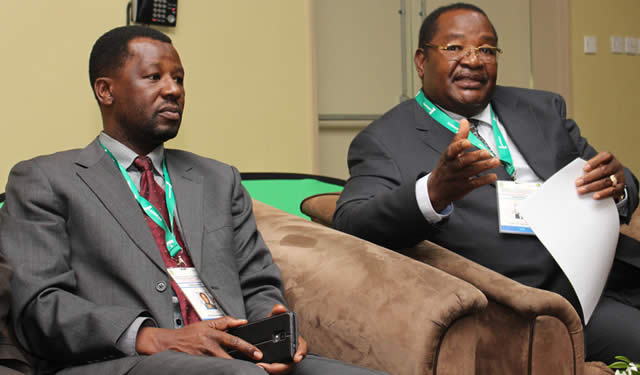

Oliver Kazunga Senior Business Reporter—
TRANSPORT and Infrastructural Development Minister Obert Mpofu has challenged African countries to invest in sustainable transport technologies to address the challenges linked to underdevelopment the region is facing to promote economic growth and stability. Officially opening the 7th Africa Transportation Technology Transfer Conference in Bulawayo yesterday, Mpofu said the event provided a platform to deliberate on what technologies were available that would promote sustainability and resilience in relation to realities of climate change.
“The world needs a shared vision on sustainable transport systems for the future. To realise this, we need long-term, consistent investment and partnership between governments, non-governmental organisations, private investors and commercial operators,” he said.
“My ministry is convinced that a Sustainable Development Goal dedicated to transport is vital, to provide a focal point that can catalyse action, overcome fragmentation and realise a shared vision of sustainable transport systems in the region and beyond.
“As you deliberate, I urge you to take into cognisance what technologies are available that’ll promote sustainability and resilience given the realities of climate change, which knows no boundaries. This is a phenomenon that needs to be addressed by all nations working together by sharing resources and technologies”.
Mpofu said the technologies should also be able to deal with issues related to gender disparities and vulnerable groups such as children and those living with disabilities.
With regards to transportation, the Minister said the disabled and women in rural areas in developing countries were the most vulnerable as they were highly dependent on local natural resources for their livelihood.
“Coupled with unequal access to resources and to decision-making processes, limited mobility places women in rural areas in a position where they are disproportionately negatively affected. It’s thus important to identify gender-sensitive technologies to respond to transportation needs that’ll see a holistic approach to socio-economic development,” Mpofu said.
Against this background, he said, it was important to understand the framework necessary for successful innovation and technology process management.
Mpofu said the consideration of regional and international levels of transportation provides for one objective of improving regional trade through the development of infrastructure resulting in economic growth.
He said it was the responsibility of transport authorities and the Association of Southern African National Road Agencies (Asanra) to enhance regional policy coordination and road transport systems integration to improve intra-regional transport efficiency and lower transport costs.
The five-day conference, which ends on Friday, runs under the theme, “Mobilising Resources for Transport Infrastructural Development and Maintenance for Poverty Alleviation in Africa”.
Mpofu said this year’s conference theme was carefully selected to reflect the links and inter-dependence of effective transport infrastructure management and economic recovery.
He said economic recovery in the region was dependent on the availability of a robust and dynamic enterprise sector to trade successfully with innovative products and services in the competitive global markets.
The enterprise sectors, which include tourism, mining and agriculture, have the potential to generate revenue, employment and improve infrastructure as well as promoting small and medium enterprises.
“Zimbabwe has considered the contributions that drive economic development and produced the Zimbabwe Agenda for Sustainable Socio-economic Transformation, which is aimed at providing direction towards national growth.
“Within the auspices of Zim-Asset, the government focuses on innovation and skills development. In view of this development thrust, I urge delegates going forward to research for simplified and cheaper technology solutions for rural and poor communities to assist in alleviating their way of life,” he said.
Mpofu bemoaned the high cost of doing business across borders in the Common Market for Eastern and Southern Africa, East African Community and the Sadc region saying this was a major constraint to economic development.
He said the cost of transport especially road was directly related to the time taken from the port to the inland destination or vice-versa.
“The longer the journey, the more expensive production becomes, rendering member states less competitive. There’s a need, therefore, for well-coordinated efforts among transport authorities, towards harmonised policies and strategies.
“We should also consider knowledge transfer between industry and the academia.
“In all sectors of the economy, we repeatedly hear that the main barrier to more public to private knowledge transfer is cultural. This is often due to inadequate communication between academia and industry,” Mpofu said.
The conference is being attended by stakeholders in transport and infrastructure sectors from Africa and Europe.


 Online Reporter